狗的种类 (应该有五百多种)

Group
Canadian Kennel Club, National Kennel Club, Continental Kennel Club, American Pet Registry Inc., American Canine Registry
Native Country
Switzerland
Other Names
Appenzeller, Appenzell Mountain Dog.
Breed Description

Head: Slightly wedge-shaped. Stop not pronounced. Rectangular nose bridge. Black or brown nose. Tight lips.
Ears: Set on high, triangular, drop, lying against the head.
Eyes: Small, almond. Dark brown to chestnut color.
Body: Robust, compact. Strong, dry neck. Broad chest is well let down. Prominent forechest. Belly slightly tucked up. Straight, solid back. Short croup.
Tail: Set high, b, moderately long, bushy. In action, carried curled over the croup, falling to the side or along the midline.
Hair: Short, thick, lying close to the skin. Thick undercoat.
Coat: Black or tan background with symmetrical tan or white markings. Tan markings above the eyes, and on the cheeks, forechest, and legs. White flare, white patch from chin to forechest. White markings on the feet and tip of the tail.
Size: Dog: 50 to 58 cm (20-23 in).Bitch: 48 to 56 cm (19-22 in).
Weight: 22 to 25 kg (49-55 lb).

History

Originating in Appenzell canton in Eastern Switzerland, the Appenzeller Sennenhund was first described in an early work as a quite vocal, multi-colored, short-haired drover of medium size.» The breed is thought to be descended from Tibetan Molosser dogs and Nordic breeds. The Appenzeller Sennenhund was established as a distinct breed in 1898. Max Siever, a great promoter of the Appenzeller Sennenhund, worked on the first standard for the breed. The Swiss Appenzeller club was created in 1906. The breed is rare outside of its native Switzerland.

Behavior

This courageous, robust, self-confident dog is energetic and has a lively temperament. The Appenzeller Sennenhund fills many roles. This affectionate, gentle breed makes a good pet. Wary of strangers and possessing the defense instinct, he is also a good guard dog. The breed is also used as a draft dog and rescue dog.

Advice

The Appenzeller Sennenhund is not suited to city living. He needs a lot of exercise and room to run. Regular brushing is required.

Function

Herder (rounds up cattle), draft dog (pulls milk carts), utility dog: (rescue: avalanches, earthquakes, etc.), guard dog, pet.
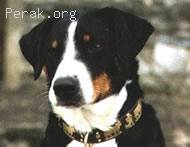
Appenzeller.jpg

Group
Kennel Club of Great Britain, Sloughi Fanciers Association of America, Société Centrale Canine Marocaine, United Kennel Club, New Zealand Kennel Club, Australian National Kennel Club, American Sloughi Association
Native Country
Morocco
Other Names
Sloughi
Breed Description

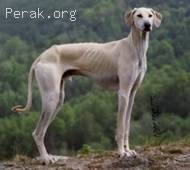
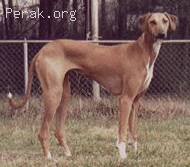
Head: Long, elegant, slender, but fairly large. Skull flat, fairly broad, rounded at the back. Very slightly pronounced stop. Straight nosebridge. Muzzle shaped like an elongated wedge. Strong jaws. Thin, supple lips.
Ears: Set on high, pendulous, lying very flat against the head, not too large, triangular, slightly rounded at the tip.
Eyes: Large. Eyelids slightly slanted. Dark or amber if the coat is light-colored.
Body: Square build. Neck long, without dewlap. Chest deep, not too broad. Flat ribs. Pronounced tuck-up. Bony, slanting croup. Short, nearly level back.
Tail: Thin, bony, carried above the topline.
Hair: Very close-lying, dense, fine.
Coat: Sand. Light sand with or without black mask. Chestnut-sand with or without black mantle. Smoky sand. Brindle.
Size: Dog: 66 to 72 cm (26-28,5 in).Bitch: 61 to 68 cm (24-27 in).
Weight: 30 to 32 kg (66-70,5 lb).

History

The Arabian Greyhound is probably descended from the large Egyptian Greyhound and is associated with the Arab peoples who inhabited northern Africa. Named after a city in Tunisia, it is common especially in Morocco, where it is used to hunt hare and gazelle. French soldiers brought the first Arabian Greyhounds to France around 1860, after the war in Algeria. Currently, the Arabian Greyhound is one of the rarest breeds in the West.

Behavior

Very tough and active, the Arabian Greyhound has great stamina, is an excellent runner and hunts gazelle by sight. Independent, strong-willed and skittish, he is very attached to his owner but subtle in showing affection. He seldom barks but is very reserved toward strangers and perhaps one of the most mistrusting sighthounds. He makes a good watchdog. He needs firm training.

Advice

He can adapt to city life, as long as he gets long, daily walks. He cannot tolerate cold weather. He must be brushed two to three times a week.

Function

Hunting dog. Watchdog. Companion dog.
Arabian_Greyhound.jpg

roup
National Kennel Club, American Pet Registry Inc., American Canine Registry, American Canine Association
Native Country
Argentina
Other Names
Dogo Argentino
Breed Description

Head: Molossian appearance. Strong, well chiseled. Capacious, convex skull. Deep wrinkles on forehead. Slightly hollow muzzle. Powerful jaws.
Ears: Set on high. Held erect or semi-erect, v-shaped. Generally cropped.
Eyes: Dark or hazel color.
Body: Powerful without bulkiness. Arched, strong neck. Deep, full chest. Solid back.
Tail: Long and thick, naturally hanging down.
Hair: Short, thick, lying close to the skin.
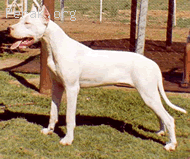
Coat: White. Any color marking is a disqualification.
Size: Dog: 62 to 65 cm. (24.-26.5 in).Bitch: 57 to 60 cm. (22.5-23.5 in).
Weight: 40 to 50 kg. (88-110.5 lb).

History

This breed was created in Argentina by the Martinez brothers in the early twentieth century. The root stock was the Fighting Dog of Cordoba, a ferocious mastiff. As the breed was developed it was crossed with the Spanish Mastiff, the Great Pyrenees, the Great Dane, the Boxer, mastiffs, the Bulldog, pointers, and the Irish Wolfhound. The result was a versatile breed that could be used for hunting, fighting, guard duties, and more. The first standard was written in 1928 and approved by the Argentina Kennel Club in 1965. In 1973, the FCI established a standard for the breed, and, in 1975, officially recognized the first and only breed ever developed in Argentina.

Behavior

This is a very robust, active, energetic, agile, courageous breed. The Dogo Argentino is calm, peaceful, affectionate, and docile. He is very sociable and needs to stay close to his owner. He rarely barks. This breed is aggressive and dominant with other dogs, and is fearsome indeed when defending his owner?s property. Firm training is required, but be gentle with this sensitive dog.

Advice

The Argentinean Mastiff can adjust to life in an apartment if he can get out two or three times each day and get plenty of exercise. He should be outdoors as much as possible. Brushing once or twice per week and bathing two or three times per year is recommended. It is necessary to clean his eyes regularly to avoid streaks.

Function

Hunting dog (large game: boar, puma, etc.). Utility dog: police dog, army dog, customs, search and rescue, guide dog. Guard dog. Pet.
Argentinean_Mastiff.gif

Group
National Kennel Club, American Pet Registry Inc., American Canine Registry, American Canine Association
Native Country
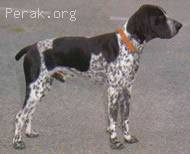
France
Other Names
Braque de l’Ariege. Braque de Toulouse. Braque du Midi.
Breed Description

Head: Long, angular, narrow. Slightly domed skull. Fairly pronounced occipital peak. Slight stop. Long, straight, sometimes slightly convex nosebridge. Fairly thin lips. Pink, reddish (flesh-colored), or chestnut lips, depending on coat color.
Ears: Long, thin, curled, not flat against the head.
Eyes: Slightly oval, dark amber or brown.
Body: Neck not very long, fairly b, slight dewlap. Pronounced withers. Chest broad, high, well let-down. Rounded ribs. Slight tuck-up. Slightly sloping croup. Back straight and somewhat long.
Tail: Thick at the base, tapering toward the tip. Docked by about half. Should not be raised higher than the topline.
Hair: Short, dense, glossy. Finer and lying closer to the body on the head and ears.
Coat: Light orangish fawn or sometimes chestnut with predominant white patching (speckles or flecks). Some dogs are even white with speckles or flecks.
Size: Dog: 60 to 67 cm. (23.6-26.4 in).Bitch: 56 to 65 cm. (22-25.6 in).
Weight: 25 to 30 kg (55-66 lb).

History

The Ariege Pointer is the result of nineteenth-century crosses of the old French Pointing Dog with white- and orange-coated pointers from southern France and perhaps the Saint Germain Pointer for added lightness and vigor. Hunters and breeders in Ariège, France are dedicated to the survival of the breed.

Behavior

This hardy, very energetic dog with an excellent sense of smell is a skilled retriever suited to all kinds of hunting. He is used particularly on partridge and quail. Quick and independent, he needs firm training.

Advice

He needs space and exercise, as well as regular brushing.

Function

Hunting dog.
Ariege_Pointer.jpg

Group
National Kennel Club, American Pet Registry Inc., American Canine Registry, American Canine Association
Native Country
France
Breed Description

Head: Long and chiseled. Slightly domed skull. Slightly pronounced occipital peak. Slight stop. Bridge of nose straight or slightly curved, equal in length to skull. Well-developed nose. Cleanly cut cheeks. Tight, thin lips.
Ears: Set on low. Long, thin, supple, and curled.
Eyes: Wide, brown.
Body: Long. Neck lightly boned, long, slightly arched. Chest long, moderately wide. Ribs moderately curved. Solidly attached, slightly arched loin. Flat flank. Slight tuck-up.
Tail: Hanging down to the hock. Thin at the tip, carried gaily in saber fashion.
Hair: Short, fine, dense.
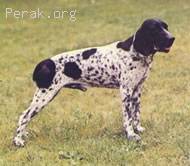
Coat: White with well-defined black spots or flecks. Pale tan markings on the cheeks and above the eyes, forming pips.
Size: Dog: 52 to 58 cm (20,5-22,8 in).Bitch: 50 to 56 cm (19,7-22 in).
Weight: Approx. 30 kg (66 lb).

History

This dog from Ariège in southern France, sometimes called (the Bastard Hound), was produced by crossing medium-sized French hounds with the Blue Gascony Hound and the Gascon Saintongeois (both pack hounds). The Ariégeois has the typical characteristics of a pack hound but is shorter, smaller, and lighter in weight. The breed was recognized in 1907 by France’s Gaston Phoebus Club. It almost disappeared after World War II but was successfully revived by 1970.

Behavior

Hardy, tenacious, energetic, and not very fast, the Ariégeois is merry, docile, friendly, and calm. With his keen sense of smell, superb voice, and determination, he excels at launching the hunt, staying focused and showing initiative. As a small game hound, he is especially skilled on hare but is also used in tracking deer and wild boar. He is very comfortable on the rocky, dry terrain of southern France, and he is easy to train.

Advice

The Ariégeois is not suited to city life and does not like being confined in an apartment. He needs daily exercise. He must be brushed once or twice a week, and his ears should be checked regularly.

Function

Hunting dog.
Ariegeois.jpg

Group
National Kennel Club, American Pet Registry Inc., American Canine Registry, American Canine Association
Native Country
France
Other Names
Basset Artesien Normand
Breed Description

Head: Bony appearance. Domed skull with pronounced occipital peak. Pronounced stop. Slightly curved nosebridge. Cheeks with one or two folds. Upper lip almost completely covering lower lip.
Ears: Set on as low as possible, narrow at the base, well-twisted, very long, supple, thin, and ending in a point.
Eyes: Large, oval, dark. Conjunctiva of lower eyelid sometimes showing. Calm, gentle expression.
Body: Long for its height. Neck fairly long with slight dewlap. Long chest, oval in cross-section. Loin slightly clean-flanked. Full loin. Broad, level back. Rounded croup.
Tail: Fairly long, thick at the base and tapering toward the tip. Carried in saber fashion, never falling onto the back.
Hair: Close-lying, short, and dense but not too fine.
Coat: Tricolor: fawn with white and black mantle. Head mostly covered with reddish-fawn.
Size: 30 o 36 cm (11.8-14.2 in).
Weight: 15 20 kg. (33-44 lb).

History

The Artesian Norman Basset was produced in the nineteenth century by two famous breeders, Louis Lane and Count Le Coulteux de Canteleu, from the Norman Basset (or Lane Basset). The Norman Basset had bandy forelegs and was heavier, slower, and less active than the Artois Basset, a descendent of the old Great Artois Hound. The Artesian Norman Basset was introduced successfully to Great Britain and the United States as the breed was becoming popular in France. The first standard was written in 1898 and modified in 1910 and 1924. A Norman Basset Hound club was created in 1927. For a long time, the breed was the most popular of the bassets, but today it seems less popular as a hunting dog than as a companion dog.

Behavior

This hardy, courageous dog with a great deal of endurance is active and resourceful. He can penetrate the densest vegetation, but terrain that is too rugged should be avoided because of his short legs. With his very keen nose and magnificent voice, he tracks and launches the hunt very confidently, without hurrying. He hunts small game alone or in packs. He excels on rabbit and hare, and can also work on fox and wild boar. Calm, merry, gentle, and affectionate, he is a pleasant companion. He needs firm training because he is tenacious and obstinate.

Advice

The Artesian Norman Basset is one of the rare scenthounds who can live in an apartment, but he still needs space and exercise. He also requires regular brushing and attention to the ears.

Function

Hunting dog. Companion dog.
Artesian_Norman_Basset.jpg

Group
National Kennel Club, American Pet Registry Inc., American Canine Registry, American Canine Association
Native Country
France
Other Names
Briquet d’Artois
Breed Description

Head: Heavy, broad, fairly short. Slightly domed skull. Stop not pronounced. Bridge of nose broad and straight, not very long. Well-developed nose. Lips somewhat thick. Ears: Set on at eye level, large, thick, nearly flat, and fairly long.
Eyes: Large, prominent, very wide
Body: Massive. Neck fairly long, powerful. Very slight dewlap. Wide brisket. Fairly broad, well let-down chest. Ribs fairly rounded. Loin broad and muscular. Flank let-down and very full. Broad, slightly sloping croup. Well-muscled, moderately long back.
Tail: Fairly long, tufted, and carried in sickle fashion.
Hair: Lying close to the body, thick, fairly b.
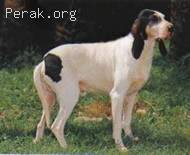
Coat: Tricolor: white, dark fawn to hare or even badger grey, with mantle or large black spots. Head usually fawn, sometimes smoky.
Size: 52 to 58 cm (20.5-22.8 in).
Weight: 25 to 30 kg (55-66 lb).

History

This very old, medium-sized pack hound was nearly extinct by the early twentieth century. It has made a comeback, but is still rare. It was first mentioned in the fifteenth century and is believed to have been used by royalty for deer hunting. The result of crosses between scenthounds and pointers, the Artois Hound was also popular throughout the centuries as a hare-hunting dog. His ancestor is the Great Artois Hound, himself descended from the Saint Hubert. A splash of English blood modified the breed.

Behavior

Hardy, robust, and courageous, the Artois Hound has great stamina and is even-tempered and calm. This medium-sized hound combines the qualities of pointers and scenthounds: a strong sense of direction, a very keen nose, precise pointing, speed, and drive. A hare hunter, he is also used on deer, wild boar, and fox. He needs a firm owner.

Advice

He needs space and exercise and requires regular brushing.

Function

Hunting Dog.
Artois_Hound.jpg

Group
Fédération Cynologique Internationale, National Kennel Club, Continental Kennel Club, American Pet Registry Inc., American Canine Registry, American Canine Association
Native Country
Morocco
Other Names
Aidi, Kabyle Dog.
Breed Description

Head: Like that of a bear. Dry. Size in proportion to the body. Flat, broad skull. Stop not pronounced. Tapered muzzle. Black or brown nose, matching coat color. Strong jaws. Black or brown tight lips.
Ears: Medium size with rounded tips, semi-drop.
Eyes: Medium size. Dark color. Dark, slightly oblique rims.
Body: Powerful. Muscular neck without dewlap. Broad, very deep chest. Broad, muscular back. Ribs slightly sprung. Powerful, arched loin. Belly tucked up.
Tail: Long, carried down, reaching the hock joint, in the form of a scimitar at rest. Very thick fur (plume).
Hair: Very thick, slightly long (6 cm) except on the head and ears where it is very short and not as thick. Mane at the neck (particularly impressive in dogs).
Coat: Wide range of colors: white, tawny, fawn, red, black and white, fawn and white, shades of gray, tri-color, etc…
Size: 52 to 62 cm. (20.5-24.5 in).
Weight: Approx. 30 kg. (66 lb)

History

No sheepdog breed exists in the Atlas mountains. This Moroccan dog, probably originating in the Sahara, lives in the mountains and defends his owner and property from wildcats, but he has never worked as a flock guard. This explains why his 1963 standard, which was published under the name Atlas Sheepdog, was nullified in 1969. Some Atlas Dog’s were introduced in France in 1992.

Behavior

This very rustic breed has remarkable power and agility. He is always on the alert and ready for action. He will protect his owner and loved ones from predators and strangers with great courage. This breed can even sniff out snakes. The sensitive, lively Atlas Dog must receive firm, but kind training.

Advice

The Atlas Dog can live indoors provided he gets exercise every day. Weekly brushing is required.

Function

Guard dog. Pet.

Reference Material Provided By:
Aidi.jpg

Group
Terrier Group - American Kennel Club, United Kennel Club, Kennel Club of Great Britain, Canadian Kennel Club, Australian National Kennel Club, National Kennel Club, New Zealand Kennel Club, Australian Terrier Club of South Australia, Continental Kennel Club, American Pet Registry Inc., American Canine Registry
Native Country
Australia
Other Names
Australian Terrier
Breed Description

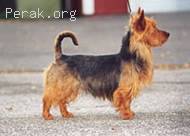
Head: Long. Flat skull. Slight stop. Strong, powerful muzzle. Strong jaws.
Ears: Small, pointed. Held erect.
Eyes: Small, oval, wide set. Dark brown color.
Body: Long, solidly built. Strong, slightly arched neck. Well developed forechest. Deep, moderately broad chest. Ribs well sprung. Strong loin. Horizontal topline.
Tail: Docked. Carried gaily but not over the back.
Hair: Approx. 6 cm (2,4 in) long; straight, rough, and dense. Short, soft undercoat. The muzzle, lower legs, and feet are free of long hair.
Coat: Blue, steel blue, or dark gray-blue with rich tan markings on the face, ears, underbelly, lower legs, feet, and around the anus. Sandy or red.
Size: Approx. 25 cm (9,8 in).
Weight: 3,6 to 6,3 kg (8-14 lb).

History

Descended from British breeds, the Australian Terrier was shown for the first time in Sidney in 1899. The breed’s ancestors include the Cairn Terrier, the Irish Terrier, the Scottish Terrier, and, of course, the Yorkshire Terrier, which looks much like its Australian descendant. The breed was developed for hunting rabbit and rats. The Australian Terrier Club was founded in 1921, and the first standard was published the same year. The Australian Terrier was recognized by The Kennel Club in 1936.

Behavior

This lively, courageous dog is affectionate and cheerful, but has a true terrier personality. Firm training is necessary.

Advice

This active dog needs plenty of exercise. Daily brushing is required.

Function

Hunting dog, Pet.
Australian_Terrier.jpg

Group
Herding Group - American Kennel Club, United Kennel Club, Kennel Club of Great Britain, Canadian Kennel Club, Australian National Kennel Club, National Kennel Club, New Zealand Kennel Club, Continental Kennel Club, American Pet Registry Inc., American Canine Registry
Native Country
Australia
Other Names
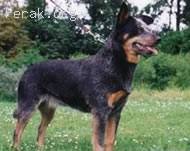
Blue Heeler, Australian Queensland Heeler
Breed Description

Head: Strong. Broad, slightly convex skull. Slight stop. Muscular cheeks. Powerful, medium-length nose bridge. Tight, clean lips.
Ears: Moderately small, pointed, broad at the base, muscular. Held erect.
Eyes: Oval, medium size. Dark brown color.
Body: Longer than tall. Compact, balanced construction. Exceptionally b neck without dewlap. Strong back. Chest well let down and muscular. Ribs well sprung. Shoulders b, sloping, and muscular. Deep flanks. Horizontal topline. Broad, b, muscular loin.
Queue: Hangs down forming a slight curve at rest. Richly clad (brush).
Hair: Weather-resistant. Short (2.5 to 4 cm), straight, smooth, close-lying, dense, harsh. Double coat. Longer on the back of the legs and on the underbody. Short, dense undercoat.
Coat: Blue: blue, blue-mottled or speckled, with or without black, blue, or tan markings on the head. Red speckle: small, even red speckle all over the body.
Size: Dog: 46 to 51 cm (18-20 in). Bitch: 43 to 48 cm (17-19 in).
Weight: 15 to 20 kg (33-44lb).

History

This breed is thought to be the result of crossbreeding of the now extinct Smithfield (closely related to the Old English Sheepdog), the Dingo, the Collie, and the Bull Terrier. Around 1840, Dalmatian and Kelpie blood may have been introduced. The Australian Cattle Dog is also called the Heeler for his ability to nip at the heels of cattle without injuring it. The breed was recognized around 1890, but it was not introduced in the United States and Europe until the 1970s.

Behavior

This dynamic dog is always on the alert. Courageous and vigilant, he was born to the life of herding and guarding cattle. This hardy, remarkably agile dog works in almost complete silence. When he does bark, it is said that he sounds like a hooting owl. The Australian Cattle Dog is indispensable to the Australian farmers who work extremely large ranches in a hot climate. A loyal companion, this dog becomes attached to his owner and the family. Being suspicious of strangers, he makes an excellent guard dog for the home.

Advice

This dog is not a city dweller. If forced to live indoors, he will get up to mischief for lack of space or adequate activity. The Australian Cattle Dog needs considerable exercise every day. Regular brushing is sufficient.

Function

Herder, herd guard, cattle dog, guard dog.
Australian_Cattle_Dog.jpg

Group
Herding Group - American Kennel Club, United Kennel Club, Kennel Club of Great Britain, Canadian Kennel Club, Australian National Kennel Club, National Kennel Club, New Zealand Kennel Club, Continental Kennel Club, American Pet Registry Inc., American Canine Registry
Native Country
Australia
Other Names
Australian Cattle Dog, Blue Heeler
Breed Description

Head: Strong. Broad, slightly convex skull. Slight stop. Muscular cheeks. Powerful, medium-length nose bridge. Tight, clean lips.
Ears: Moderately small, pointed, broad at the base, muscular. Held erect.
Eyes: Oval, medium size. Dark brown color.
Body: Longer than tall. Compact, balanced construction. Exceptionally b neck without dewlap. Strong back. Chest well let down and muscular. Ribs well sprung. Shoulders b, sloping, and muscular. Deep flanks. Horizontal topline. Broad, b, muscular loin.
Queue: Hangs down forming a slight curve at rest. Richly clad (brush).
Hair: Weather-resistant. Short (2.5 to 4 cm), straight, smooth, close-lying, dense, harsh. Double coat. Longer on the back of the legs and on the underbody. Short, dense undercoat.
Coat: Blue: blue, blue-mottled or speckled, with or without black, blue, or tan markings on the head. Red speckle: small, even red speckle all over the body.
Size: Dog: 46 to 51 cm (18-20 in). Bitch: 43 to 48 cm (17-19 in).
Weight: 15 to 20 kg (33-44lb).

History

This breed is thought to be the result of crossbreeding of the now extinct Smithfield (closely related to the Old English Sheepdog), the Dingo, the Collie, and the Bull Terrier. Around 1840, Dalmatian and Kelpie blood may have been introduced. The Australian Queensland Heeler is also called the Heeler for his ability to nip at the heels of cattle without injuring it. The breed was recognized around 1890, but it was not introduced in the United States and Europe until the 1970s.

Behavior

This dynamic dog is always on the alert. Courageous and vigilant, he was born to the life of herding and guarding cattle. This hardy, remarkably agile dog works in almost complete silence. When he does bark, it is said that he sounds like a hooting owl. The Australian Queensland Heeler is indispensable to the Australian farmers who work extremely large ranches in a hot climate. A loyal companion, this dog becomes attached to his owner and the family. Being suspicious of strangers, he makes an excellent guard dog for the home.

Advice

This dog is not a city dweller. If forced to live indoors, he will get up to mischief for lack of space or adequate activity. The Australian Queensland Heeler needs considerable exercise every day. Regular brushing is sufficient.

Function

Herder, herd guard, cattle dog, guard dog.
Australian_Cattle_Dog.jpg

Group
Herding Group - American Kennel Club, Australian Shepherd Club of America, United Kennel Club, National Kennel Club, New Zealand Kennel Club, Continental Kennel Club, American Pet Registry Inc., American Canine Registry
Native Country
United States Of America
Other Names
Australischer Schäferhund
Breed Description

General Appearance: This is an athletic dog of medium size and bone; it is lithe, agile, and slightly longer than it is tall.
Head: Moderate well-defined stop; eye color is brown, blue, amber, in any combination or with flecks; triangular, high-set ears; at attention they break forward and over or to the side.
Tail: Docked close or naturally bobbed.
Color: Blue merle, black, red merle, or red, all with or without white markings and/or tan points.
Size: Weight: Male 50 - 65 lb; Female 40 - 55 lb
Height: Male 20 - 23"; Female 18 - 21"

History

Despite the misleading name, the Australian Shepherd is not Australian at all, but was developed entirely in the U.S. to work as a herding dog on ranches. It is possible that the name was derived from one of the dog’s ancestors.

Behavior

Australian Shepherds are easy going, perpetual puppies that love to play. Courageous, loyal and affectionate, they are excellent children’s companions that are great with active children. A devoted friend and guardian, for they are naturally protective. Very lively, agile and attentive - they are eager to please, with a sixth sense about what the owner wants. Australian Shepherds are highly intelligent and easy to train.

Advice

This breed is not recommended for apartment life. They are moderately active indoors and will do best with at least a large yard. The coat is easy to groom and needs little attention. Brush occasionally with a firm bristle brush and bathe only when necessary. This breed is an average shedder.

Function

Herding, Companion.
Australian_Shepherd.gif

Group
Terrier Group - American Kennel Club, United Kennel Club, Kennel Club of Great Britain, Canadian Kennel Club, Australian National Kennel Club, National Kennel Club, New Zealand Kennel Club, Australian Terrier Club of South Australia, Continental Kennel Club, American Pet Registry Inc., American Canine Registry
Native Country
Australia
Other Names
Aussie
Breed Description

Head: Long. Flat skull. Slight stop. Strong, powerful muzzle. Strong jaws.
Ears: Small, pointed. Held erect.
Eyes: Small, oval, wide set. Dark brown color.
Body: Long, solidly built. Strong, slightly arched neck. Well developed forechest. Deep, moderately broad chest. Ribs well sprung. Strong loin. Horizontal topline.
Tail: Docked. Carried gaily but not over the back.
Hair: Approx. 6 cm (2,4 in) long; straight, rough, and dense. Short, soft undercoat. The muzzle, lower legs, and feet are free of long hair.
Coat: Blue, steel blue, or dark gray-blue with rich tan markings on the face, ears, underbelly, lower legs, feet, and around the anus. Sandy or red.
Size: Approx. 25 cm (9,8 in).
Weight: 3,6 to 6,3 kg (8-14 lb).

History

Descended from British breeds, the Australian Terrier was shown for the first time in Sidney in 1899. The breed’s ancestors include the Cairn Terrier, the Irish Terrier, the Scottish Terrier, and, of course, the Yorkshire Terrier, which looks much like its Australian descendant. The breed was developed for hunting rabbit and rats. The Australian Terrier Club was founded in 1921, and the first standard was published the same year. The Australian Terrier was recognized by The Kennel Club in 1936.

Behavior

This lively, courageous dog is affectionate and cheerful, but has a true terrier personality. Firm training is necessary.

Advice

This active dog needs plenty of exercise. Daily brushing is required.

Function

Hunting dog, Pet.
Australian_Terrier.jpg

Group
Herding Group - American Kennel Club, Australischer Schaferhund Club of America, United Kennel Club, National Kennel Club, New Zealand Kennel Club, Continental Kennel Club, American Pet Registry Inc., American Canine Registry
Native Country
United States Of America
Other Names
Australian Shepherd
Breed Description

General Appearance: This is an athletic dog of medium size and bone; it is lithe, agile, and slightly longer than it is tall.
Head: Moderate well-defined stop; eye color is brown, blue, amber, in any combination or with flecks; triangular, high-set ears; at attention they break forward and over or to the side.
Tail: Docked close or naturally bobbed.
Color: Blue merle, black, red merle, or red, all with or without white markings and/or tan points.
Size: Weight: Male 50 - 65 lb; Female 40 - 55 lb
Height: Male 20 - 23"; Female 18 - 21"

History

Despite the misleading name, the Australischer Schaferhund is not Australian at all, but was developed entirely in the U.S. to work as a herding dog on ranches. It is possible that the name was derived from one of the dog’s ancestors.

Behavior

Australian Shepherds are easy going, perpetual puppies that love to play. Courageous, loyal and affectionate, they are excellent children’s companions that are great with active children. A devoted friend and guardian, for they are naturally protective. Very lively, agile and attentive - they are eager to please, with a sixth sense about what the owner wants. Australian Shepherds are highly intelligent and easy to train.

Advice

This breed is not recommended for apartment life. They are moderately active indoors and will do best with at least a large yard. The coat is easy to groom and needs little attention. Brush occasionally with a firm bristle brush and bathe only when necessary. This breed is an average shedder.

Function

Herding, Companion.
Australian_Shepherd.gif

Group
National Kennel Club, American Pet Registry Inc., American Canine Registry, American Canine Association
Native Country
Austria
Other Names
Ostreichische Tan Hound
Breed Description

Head: Broad skull. Straight nosebridge. Strong muzzle.
Ears: Set on high, medium in length, not too broad, hanging flat against the cheeks.
Eyes: Dark brown.
Body: Long. Strong neck. Well-pronounced withers. Chest broad, well let-down. Long back. Slightly sloping croup. Slight tuck-up.
Tail: Long, gradually tapering, slightly curved. Brush on underside.
Hair: Smooth, very close-lying, dense, tight, about 2 cm in length.
Coat: Black with minimal, clearly defined tan markings ranging from light to dark fawn. Tan pips above the eyes are required.
Size: Dog: 50 to 56 cm. (20-22 in).Bitch: 48 to 54 cm. (19-21 in).
Weight: Approx. 20 kg (44 lb).

History

The Austrian Black and Tan Hound (with pips) is considered a true descendent of Celtic hounds. Similar to Swiss hounds, he hunts primarily in the mountains. The Austrian Black and Tan Hound belongs to FCI Group 6 Section 1B (Medium-sized hounds) and is not well-known outside his native land.

Behavior

Solidly built and with a very keen nose, he is an excellent, elegant runner, has a lovely voice, and tracks hare but is used on all sorts of game. He is good-natured and makes a fine pet.

Advice

He is not a city dweller. He needs daily exercise and regular brushing.

Function

Hunting dog, pet.
Austrian_Black_and_Tan_Hound.jpg

Group
National Kennel Club, American Pet Registry Inc., American Canine Registry, American Canine Association
Native Country
Austria
Other Names
Osterreichischer, Kurzhaariger Pinscher
Breed Description

Head: Pear-shaped. Broad skull. Pronounced stop. Strong, short muzzle. Large nose. Lips smooth, lying close to jaws.
Ears: Rose or v-shaped. Held erect or semi-erect.
Eyes: Large. Dark color.
Body: Thickset. Powerful neck. Long, deep, barrel chest. Long, broad loin. Short, broad back and loin. Broad chest.
Tail: Set high. Typically carried curved over the back. May be docked.
Hair: Short, flat, straight, with undercoat.
Coat: Most common are yellow, golden brown, fawn, reddish-brown, black, black and tan, brindle, almost always with large white markings on the throat, forechest, legs and head (flare).
Size: 35 to 40 cm. 14-19.7 in).
Weight: 12 to 18 kg (26.5-40 lb).

History

The origins of this breed are not known. It is closely related to the Standard Pinscher, but the Austrian Shorthaired Pinscher was raised to be a good farm dog rather than a pet. This breed is rare outside of its native Austria.

Behavior

This spirited, hardy, active animal makes a remarkable guard dog. He is cheerful, kind and very open to training. His terrier instinct drives him to chase rabbits and foxes.

Advice

This breed needs space and plenty of exercise. Weekly brushing is sufficient.

Function

Guard dog, pet.
Austrian_Shorthaired_Pinscher.gif

Group
National Kennel Club, American Pet Registry Inc., American Canine Registry, American Canine Association
Native Country
France
Other Names
Bleu d’Auvergne
Breed Description

Head: Long. Broad, slightly domed skull. Stop not very pronounced. Fairly long, straight nosebridge. Fairly large lips.
Ears: Set on low, fairly long and curled, framing the head well.
Eyes: Medium in size, dark hazel. Black eyelids.
Body: Well-built, can be inscribed inside a square. Neck fairly long and b, slightly arched with a slight dewlap. Chest well let-down. Rounded ribs. Short, slightly arched, and well-muscled loin. Short, straight back. Broad, bony croup, minimally sloping.
Tail: Of medium thickness, carried level to the ground. Docked by about two-thirds.
Hair: Short, not too fine, never hard, glossy.
Coat: Light: white with black blotches and a fair amount of spots.- Dark: called “smoky”, produced by a mixture of white and black, with the more abundant black giving a smoky grey cast to the coat. The color to seek is white with bluish-black blotches, fairly numerous black spots. The head should have regular black markings such that both eyes are surrounded by black. White or blue flare.
Size: Dog: 57 to 63 cm (22.4-24.8 in).Bitch: 55 to 60 cm (21.7-23.6 in).
Weight: 22 to 25 kg (48.5-55 lb).

History

The Auvergne Pointing Dog is thought to be descended from dogs imported to Auvergne, France, in the late eighteenth century by the Knights Templars or the Knights of Malta. Some believe it is more likely that he breed came from the old strain of the French Pointing Dog. Auvergne Pointing Dogs were first bred in Cantal, France. A splash of English Pointer blood was added, and the first standard was written in 1913. The population of Auvergne Pointing Dogs remains small but stable.

Behavior

Known for his incredible hardiness, energy, and speed, his active dog can adapt to almost any environment. He has an excellent nose and is a good pointer and retriever. Prized for wood-cock hunting, he also specializes in partridge. He is kind and easygoing, although a bit stubborn, and makes a gentle, affectionate companion. He needs firm but gentle training.

Advice

He can adapt to city life as long as he gets a daily walk. He needs regular brushing and checking of the ears.

Function

Hunting dog, companion dog.
Auvergne_Pointing_Dog.jpg

Group
National Kennel Club, American Pet Registry Inc., American Canine Registry, American Canine Association
Native Country
Mali
Other Names
Tuareg Greyhound, Tuareg Sloughi, South Saharan Greyhound.
Breed Description

Head: Long, narrow, slender, cleanly cut, chiseled. Skull nearly flat, fairly long. Prominent occipital peak. Stop not very pronounced. Long, straight muzzle. Long, b jaws. Flat cheeks. Black or brown nose.
Ears: Set on high. Thin, pendulous, lying flat against the head, never rose-shaped.
Eyes: Fairly large, almond-shaped. Dark or amber-colored. Pigmented eyelids.
Body: Long. Neck long, slender, muscular, slightly arched, without dewlap. Prominent withers. Brisket not very wide. Chest long, high, not very broad. Long, visible ribs. Short, cleanly cut, slightly arched loin. Prominent hips slightly higher than the withers. Pronounced tuck-up. Short, straight back. Croup slanted but not sloping.
Tail: Set on low, long, thin, cleanly cut, and tapering. Hanging with the tip slightly raised. May be carried above the topline in action.
Hair: Close-lying, fine, sparse to absent on the abdomen.
Coat: Fawn with limited patching on the extremities. All shades are allowed, from light sand to dark fawn. Possible black mask on the head and very uneven flare. White chest and white tuft at the tip of the tail. White stockings required on each leg, at least as a trace on the feet. Black streaks are allowed.
Size: Dog: 64 to 74 cm. (25-29 in).Bitch: 60 to 70 cm. (23.5-27.5 in).
Weight: Dog: 20 to 25 kg. (44-55 lb).Bitch: 15 to 20 kg. (33-44 lb).

History

This African sighthound comes from the middle Nigerian Basin in the Azawakh Valley on the border of Mali. The breed was developed by the Tuaregs of the southern Sahara to trip gazelles so that horsemen could catch them. The Azawakh was also used in ceremonies and kept as a pet. He is a close cousin to the Arabian Greyhound and the Saluki. The first Azawakhs were imported to Europe in the early 1970s. The breed was officially recognized by the FCI in 1981, and a standard was published in 1982.

Behavior

Tough, very hardy, and lively, the Azawakh hunts by sight and is a bounder, chasing after antelope and catching birds in flight. Very reserved toward strangers, vigilant, and ferocious, he makes a good watchdog for nomad camps. Very strong-willed and independent, he is affectionate toward a select few. He needs early and rigorous but patient training.

Advice

He should not be confined to an apartment. He needs space and lots of exercise, as well as weekly brushing.

Function

Hunting dog, companion dog.
Azawakh.jpg

Group
National Kennel Club, American Pet Registry Inc., American Canine Registry, American Canine Association
Native Country
Former Yugoslavia
Other Names
Balkanski Gonic
Breed Description

Head: Long Skull moderately wide. Forehead slightly domed. Well-pronounced brow bones. Slight stop. Straight nosebridge. Long muzzle. Well-developed, tight black lips.
Ears: Medium in length, flat, lying against the cheeks, fairly large.
Eyes: Oval, brown with black eyelids.
Body: Longer than it is tall. Neck slightly arched, very b, without dewlap. Withers not very pronounced. Broad, long chest. Rounded ribs. Slight tuck-up. Long, broad back. Long, powerful, slightly sloping croup.
Tail: Thick at the base, tapering toward the tip. Held low and loosely in saber fashion.
Hair: Short, thick, slightly rough, glossy. Undercoat.
Coat: Background fox-red or wheaten-red with black mantle or saddle. Black coloring extends to the head.
Size: Dog: 46 to 54 cm. (18-21 in).Bitch: 44 to 52 cm. (17.5-20.5 in).
Weight: Up to 20 kg. (44 lb).

History

According to legend, the ancestors of the Balkan Hound came from Egypt and were brought to Europe by the Phoenicians around 1000 B.C.

Behavior

A tireless, tenacious, lively hunter, the Balkan Hound has a fiery temper but is good-natured and docile. He has a high, sometimes booming voice and hunts hare, deer, and wild boar. He is an energetic tracker of wounded animals. He needs a firm owner.

Advice

He needs space and lots of exercise and requires regular brushing.

Function

Hunting Dog.
Balkan_Hound.gif

Group
Hound Group - American Kennel Club, United Kennel Club, Kennel Club of Great Britain, Canadian Kennel Club, Australian National Kennel Club, National Kennel Club, New Zealand Kennel Club, Continental Kennel Club, American Pet Registry Inc., American Canine Registry
Native Country
Afghanistan
Other Names
Afghan Hound, Afghan, Tazi, Barutzy Hound, Baluchi Hound, Kabul Hound.
Breed Description

Tough, hardy, and not as fast as the Greyhound, the Balkh Hound was used in his native land as a watchdog and hunter of antelope, wolf, jackal, and other game. The British Army used the Balkh Hound as a messenger dog in India.

Head: Long. Skull long, not too narrow. Prominent occipital peak. Slight stop. Long muzzle. Powerful jaws.
Ears: Set on low, carried very flat against the head, covered with long, silky hair.
Eyes: Nearly triangular, slightly slanted, preferably dark, but a golden shade is not a fault.
Body: Long. Long, strong neck. Deep chest. Well-sprung ribs. Prominent, fairly widely spaced hip bones. Flat, muscular back sloping slightly toward the hip. Straight, strong, fairly short loin.
Tail: Not too short, forming a ring at the tip, sparsely covered with hair, carried high in action.
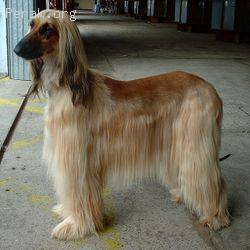
Hair: Very long, silky, fine hair covering the forequarters, hindquarters, and entire body except the back from the withers to the base of the tail, where the hair is short and dense. Long, silky forelock starting on the forehead. Short and dense on the foreface. Ears and legs covered with long, abundant hair.
Coat: All colors are allowed.
Size: Dog: 69 to 74 cm. (27-29 in).Bitch: 62 to 69 cm. (24.5-27 in).
Weight: 25 to 30 kg (55-66 lb).

History

The Balkh Hound’s origins are practically unknown. A cousin of the Saluki (Persian Greyhound), his ancestors are thought to have been brought from Persia (Iran) to Afghanistan, where they might have developed their long coat. A favorite of Afghan royalty, Afghan Hounds were brought to England by British soldiers around 1890, after the second Afghan War. The first specimens shown in London in 1907 were a big hit. An English breed club was founded in 1926, and the breed appeared in France around 1930. Afghan Hounds were a huge fad in the 1980s.

Behavior

Calm, often dominant, sensitive, and not very demonstrative, he does not like to be bothered. Affectionate and very attached to his owner, he is distant and even haughty toward strangers. He needs firm but not harsh training.

Advice

He can adapt to apartment life as long as he has space and lots of exercise. He requires daily brushing and combing, as well as a monthly bath and grooming two or three times a year.

Function

Hunting dog. Companion dog.
Balkh Hound.jpg