狗的种类 (应该有五百多种)

Group
Hound Group - American Kennel Club, United Kennel Club, Kennel Club of Great Britain, Canadian Kennel Club, Australian National Kennel Club, National Kennel Club, New Zealand Kennel Club, Continental Kennel Club, American Pet Registry Inc., American Canine Registry
Native Country
Afghanistan
Other Names
Afghan Hound, Afghan, Tazi, Balkh Hound, Barutzy Hound, Kabul Hound.
Breed Description

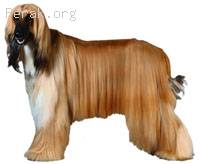
Tough, hardy, and not as fast as the Greyhound, the Baluchi Hound was used in his native land as a watchdog and hunter of antelope, wolf, jackal, and other game. The British Army used the Baluchi Hound as a messenger dog in India.

Head: Long. Skull long, not too narrow. Prominent occipital peak. Slight stop. Long muzzle. Powerful jaws.
Ears: Set on low, carried very flat against the head, covered with long, silky hair.
Eyes: Nearly triangular, slightly slanted, preferably dark, but a golden shade is not a fault.
Body: Long. Long, strong neck. Deep chest. Well-sprung ribs. Prominent, fairly widely spaced hip bones. Flat, muscular back sloping slightly toward the hip. Straight, strong, fairly short loin.
Tail: Not too short, forming a ring at the tip, sparsely covered with hair, carried high in action.
Hair: Very long, silky, fine hair covering the forequarters, hindquarters, and entire body except the back from the withers to the base of the tail, where the hair is short and dense. Long, silky forelock starting on the forehead. Short and dense on the foreface. Ears and legs covered with long, abundant hair.
Coat: All colors are allowed.
Size: Dog: 69 to 74 cm. (27-29 in).Bitch: 62 to 69 cm. (24.5-27 in).
Weight: 25 to 30 kg (55-66 lb).

History

The Baluchi Hound’s origins are practically unknown. A cousin of the Saluki (Persian Greyhound), his ancestors are thought to have been brought from Persia (Iran) to Afghanistan, where they might have developed their long coat. A favorite of Afghan royalty, Afghan Hounds were brought to England by British soldiers around 1890, after the second Afghan War. The first specimens shown in London in 1907 were a big hit. An English breed club was founded in 1926, and the breed appeared in France around 1930. Afghan Hounds were a huge fad in the 1980s.

Behavior

Calm, often dominant, sensitive, and not very demonstrative, he does not like to be bothered. Affectionate and very attached to his owner, he is distant and even haughty toward strangers. He needs firm but not harsh training.

Advice

He can adapt to apartment life as long as he has space and lots of exercise. He requires daily brushing and combing, as well as a monthly bath and grooming two or three times a year.

Function

Hunting dog. Companion dog.
Baluchi Hound.jpg

Group
National Kennel Club, American Pet Registry Inc., American Canine Registry, American Canine Association
Native Country
France
Other Names
Barbillot
Breed Description

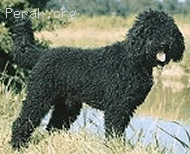
Head: Round. Broad, round skull. Pronounced stop. Short nosebridge. Very angular muzzle. Thick, pigmented lips.
Ears: Set on low, long, flat, furnished with long hair forming tufts.
Eyes: Round, preferably dark brown. Hidden by hair on the skull and nosebridge.
Body: Powerful. Strong, short neck. Broad, well-developed chest. Curved ribs. Short, flat, arched loin. Very slightly domed back. Rounded croup.
Tail: Set on low, raised but not as high as the topline, slightly hooked at the tip.
Hair: Long, woolly, wavy, sometimes curly, forming tufts. This thick fleece is good protection from cold and damp weather. Hair on head should hang down to the nosebridge, hiding the eyes. Long beard, bushy mustache.
Coat: Black, grey, brown, fawn, sable, or white with no markings or with a certain degree of patching. All shades of fawn and sable are allowed.
Size: Dog: at least 54 cm (21 in). Bitch: at least 50 cm (20 in).
Weight: 20 to 25 kg (44-55 lb).

History

The Barbet has existed in Europe since the Middle Ages, when he was known simply as the Waterdog. Mentioned in sixteenth-century writings and represented in several drawings from the same period, the breed was used on duck and swan. Buffon mentioned the breed in Natural History, and Spallanzani used it to conduct the first successful artificial insemination in 1779. The Barbet nearly went extinct in the late nineteenth century, when he was used for hunting only by poachers and country folk. He may be considered the ancestor of all breeds with long, woolly or curly hair (including bichons and the Poodle) and a direct cousin to sheepdogs like the Briard, with whom he has many similarities. The standard for the Barbet was updated in 1986. Still fairly rare, his survival is threatened.

Behavior

Very powerful, tough, and vigorous, the Barbet is resistant to cold and dampness. He loves the water and swims very well. With a good nose and slow gait, he is used by waterfowl hunters. He is a very good retriever and has also been employed as a sheepdog to guide herds. Even-tempered, never aggressive, and gentle, he is an affectionate pet.

Advice

He can live in the city but must not be confined alone for long periods. He needs regular walks. Because of his thick coat, he does not tolerate heat well. Without regular dematting, his hair can become tangled.

Function

Hunting dog, companion dog.
Barbet.gif

Group
Hound Group - American Kennel Club, United Kennel Club, Kennel Club of Great Britain, Canadian Kennel Club, Australian National Kennel Club, National Kennel Club, New Zealand Kennel Club, Continental Kennel Club, American Pet Registry Inc., American Canine Registry
Native Country
Afghanistan
Other Names
Afghan Hound, Afghan, Tazi, Balkh Hound, Baluchi Hound, Kabul Hound.
Breed Description

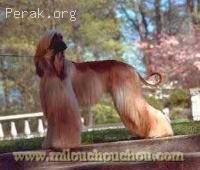
Tough, hardy, and not as fast as the Greyhound, the Barutzy Hound was used in his native land as a watchdog and hunter of antelope, wolf, jackal, and other game. The British Army used the Barutzy Hound as a messenger dog in India.

Head: Long. Skull long, not too narrow. Prominent occipital peak. Slight stop. Long muzzle. Powerful jaws.
Ears: Set on low, carried very flat against the head, covered with long, silky hair.
Eyes: Nearly triangular, slightly slanted, preferably dark, but a golden shade is not a fault.
Body: Long. Long, strong neck. Deep chest. Well-sprung ribs. Prominent, fairly widely spaced hip bones. Flat, muscular back sloping slightly toward the hip. Straight, strong, fairly short loin.
Tail: Not too short, forming a ring at the tip, sparsely covered with hair, carried high in action.
Hair: Very long, silky, fine hair covering the forequarters, hindquarters, and entire body except the back from the withers to the base of the tail, where the hair is short and dense. Long, silky forelock starting on the forehead. Short and dense on the foreface. Ears and legs covered with long, abundant hair.
Coat: All colors are allowed.
Size: Dog: 69 to 74 cm. (27-29 in).Bitch: 62 to 69 cm. (24.5-27 in).
Weight: 25 to 30 kg (55-66 lb).

History

The Barutzy Hound’s origins are practically unknown. A cousin of the Saluki (Persian Greyhound), his ancestors are thought to have been brought from Persia (Iran) to Afghanistan, where they might have developed their long coat. A favorite of Afghan royalty, Afghan Hounds were brought to England by British soldiers around 1890, after the second Afghan War. The first specimens shown in London in 1907 were a big hit. An English breed club was founded in 1926, and the breed appeared in France around 1930. Afghan Hounds were a huge fad in the 1980s.

Behavior

Calm, often dominant, sensitive, and not very demonstrative, he does not like to be bothered. Affectionate and very attached to his owner, he is distant and even haughty toward strangers. He needs firm but not harsh training.

Advice

He can adapt to apartment life as long as he has space and lots of exercise. He requires daily brushing and combing, as well as a monthly bath and grooming two or three times a year.

Function

Hunting dog. Companion dog.
Barutzy Hound.jpg

Group
Hound Group - American Kennel Club, Continental Kennel Club, United Kennel Club, Kennel Club of Great Britain, Canadian Kennel Club, Australian National Kennel Club, National Kennel Club, New Zealand Kennel Club, Canadian Canine Registry, American Pet Registry Inc., American Canine Registry
Native Country
Africa (Congo). Sponsored by Great Britain
Other Names
Congo Dog
Breed Description

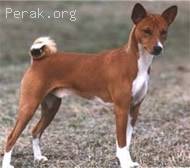
Head: Flat and well chiseled. Slight stop. Fine wrinkles on the forehead. Strong jaws.
Ears: Small, pointed, and slightly hooded. Thin leather. Carried erect.
Eyes: Almond shape, set obliquely in the skull. Dark color.
Body: Balanced proportions. Strong, well arched neck. Chest is well let down. Ribs moderately sprung. Definite waist.
Tail: Set high. Carried tightly curled against the croup.
Hair: Short, shiny, dense, very fine.
Coat: Pure black and white, red and white, black and tan and white with tan markings above the eyes and tan muzzle, fawn and white. White on the feet, forechest, and tip of the tail.
Size: Dog: 43 cm (ideal).Bitch: 40 cm (ideal).
Weight: Dog: 11 kg (ideal).Bitch: 9.5 kg (ideal).

History

Originating in the Congo, the Basenji is one of the oldest breeds in the world. It was named after a native pygmy tribe whose name meant (bushman) The Basenji’s ancestors, the Tesem and the Egyptian Hound, were depicted on the tombstones of the Pharaohs. Its body looks like a miniature version of its cousin, the Ibizan Hound. In Africa, the Basenji is used as a bush or forest guide, for hunting small game, and to guard villages. The breed was imported to Great Britain around 1930 and to the United States around 1940. The Basenji is now very popular in the USA. It was introduced in France in 1966 and has become increasingly popular since 1991 when the Basenji Club was formed.

Behavior

This sturdy, lively, independent, stable dog has a strong personality. He is an affectionate, playful pet and is good with children. The Basenji is aloof with strangers. Blessed with an excellent sense of smell, the Basenji is used as a scenthound. Like cats, he likes high perches. This breed does not bark. Instead, it «yodels» when happy. Firm but gentle, loving training is required.

Advice

The Basenji can adapt to city-living provided he gets out daily for a walk. This breed does not like to be alone. If left in the house alone, it may become destructive. This very clean breed cleans itself like a cat and has no body odor. A glove should be used daily to groom the coat.

Function

Hunting dog (small game). Utility dog: bush guide. Guard dog. Pet.
Basenji.jpg

Group
National Kennel Club, American Pet Registry Inc., American Canine Registry, American Canine Association
Native Country
France
Other Names
Artesian Norman Basset
Breed Description

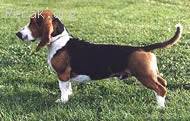
Head: Bony appearance. Domed skull with pronounced occipital peak. Pronounced stop. Slightly curved nosebridge. Cheeks with one or two folds. Upper lip almost completely covering lower lip.
Ears: Set on as low as possible, narrow at the base, well-twisted, very long, supple, thin, and ending in a point.
Eyes: Large, oval, dark. Conjunctiva of lower eyelid sometimes showing. Calm, gentle expression.
Body: Long for its height. Neck fairly long with slight dewlap. Long chest, oval in cross-section. Loin slightly clean-flanked. Full loin. Broad, level back. Rounded croup.
Tail: Fairly long, thick at the base and tapering toward the tip. Carried in saber fashion, never falling onto the back.
Hair: Close-lying, short, and dense but not too fine.
Coat: Tricolor: fawn with white and black mantle. Head mostly covered with reddish-fawn.
Size: 30 o 36 cm (11.8-14.2 in).
Weight: 15 20 kg. (33-44 lb).

History

The Basset Artesien Normand was produced in the nineteenth century by two famous breeders, Louis Lane and Count Le Coulteux de Canteleu, from the Norman Basset (or Lane Basset). The Norman Basset had bandy forelegs and was heavier, slower, and less active than the Artois Basset, a descendent of the old Great Artois Hound. The Basset Artesien Normand was introduced successfully to Great Britain and the United States as the breed was becoming popular in France. The first standard was written in 1898 and modified in 1910 and 1924. A Norman Basset Hound club was created in 1927. For a long time, the breed was the most popular of the bassets, but today it seems less popular as a hunting dog than as a companion dog.

Behavior

This hardy, courageous dog with a great deal of endurance is active and resourceful. He can penetrate the densest vegetation, but terrain that is too rugged should be avoided because of his short legs. With his very keen nose and magnificent voice, he tracks and launches the hunt very confidently, without hurrying. He hunts small game alone or in packs. He excels on rabbit and hare, and can also work on fox and wild boar. Calm, merry, gentle, and affectionate, he is a pleasant companion. He needs firm training because he is tenacious and obstinate.

Advice

The Basset Artesien Normand is one of the rare scenthounds who can live in an apartment, but he still needs space and exercise. He also requires regular brushing and attention to the ears.

Function

Hunting dog. Companion dog.
Artesian_Norman_Basset.jpg

Group
Hound Group - American Kennel Club, Continental Kennel Club, United Kennel Club, Kennel Club of Great Britain, Canadian Kennel Club, Australian National Kennel Club, National Kennel Club, New Zealand Kennel Club, American Pet Registry Inc., American Canine Registry
Native Country
Great Britain
Breed Description

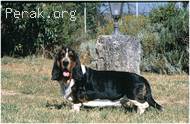
Head: Large, massive. Domed skull. Prominent occipital peak. Moderate stop. Bridge of nose slightly longer than skull. Cleanly cut muzzle. Strong jaws. Skin loose enough to form wrinkles. Flews cover most of lower lip.
Ears: Set on low, very long, longer than tip of muzzle when outstretched. Very supple, thin, narrow, and well-curled.
Eyes: Diamond-shaped. Dark to medium-brown in variety with light-colored coat. Conjunctiva of lower eyelid showing.
Body: Long and deep. Muscular neck with dewlap. Prominent sternum. Broad chest. Well-rounded ribs. Very muscular, well-sprung hindquarters. Fairly broad back.
Tail: Fairly long, thick at the base and tapering toward the tip. In action, carried raised, curved loosely in saber fashion.
Hair: Short, smooth, dense, but not too fine.
Coat: Generally tricolor (black, tan, and white); bicolor (lemon and white), but all hound colors are allowed.
Size: 33 to 38 cm (13-15 in).
Weight: 25-30 kg (33-44 lb).

History

English breeders crossed French bassets (the Artesian Norman Basset, the Artois Basset, and the Ardennes Basset) to arrive at the Basset Hound. The breed was shown for the first time in Paris in 1863 and in England in 1875, where it was developed. A Basset Hound club was founded in England in 1883, and the first standard was published in 1887. Basset Hounds were brought to the United States as early as 1883 and were very popular. In 1967, a Basset Hound club was founded in France to establish the breed.

Behavior

The tenacious Basset Hound hunts with his nose, works instinctively in packs, has a deep, melodious voice, and is not afraid of brambles. He has great endurance and is placid, never aggressive-his strong will and stubbornness are legendary. He is a skilled pack hound, trailing small and medium-sized game (including rabbit, hare, wild boar, and deer). Affectionate and gentle, he is a prized family friend. He needs firm training.

Advice

This athlete needs space and lots of exercise. He does not tolerate solitude or heat very well. He requires regular brushing and attention to the ears and eyes.

Function

Hunting dog, companion dog.
Basset hound.jpg

Group
Fédération Cynologique Internationale, National Kennel Club, Continental Kennel Club, American Pet Registry Inc., American Canine Registry, American Canine Association
Native Country
Austria
Other Names
Alpine Basset Hound
Breed Description

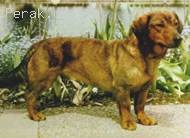
Head: Long. Slightly domed skull. Slight stop. Straight nose-bridge. Muzzle fairly broad. Thin, well joined flews.
Ears: Medium in length, wide, rounded, hanging straight against head.
Eyes: Medium in size, round, dark or light brown.
Body: Long. Muscular neck without dewlap. Pronounced withers. Well-curved chest. Full loin. Pronounced tuck-up. Round, sloping croup. Straight, firm, long back.
Tail: Medium in lenght, thick at the base, usually hanging or raised in a loose curve. Hair forms a brush.
Hair: Short, very thick, lying flat against the body, hard. Sparse undercoat. Long and harsh on the back, abdomen and backs of the tighs.
Coat: Black and red: dark black with rust markings. Brown: brown with lighter markings, brown nose. Red: reddish-fawn, rust, reddish yellow with lighter markings. White: spotted with several colors (Westphalian): all colors allowed for red combined with white. Markings below the eyes, on the muzzle, legs and chest.
Size: 34 to 42 cm (13.4 - 16.5 in).
Weight: Approx. 18 kg (39.7 lb)

History

Similar to the Dachshund, the Basset Pointer is an intermediate form between the pure basset and long-legged pointer. In fact, in 1896 the breed was named the Basset Pointer. It was officially recognized in 1975.

Behavior

This hardy, obstinate, agile dog has great stamina, a fighting spirit, a good voice and a very keen sense of smell. He does not hunt in packs. He is used in hunting hare, fox, and wild boar, retrieving feathered game (wild goose, ect.) and tracking wounded game. He makes a very affectionate pet. He needs firm training.

Advice

He needs space and exercise and requires regular brushing.

Function

Hunting dog.
Alpine_Basset_Hound.jpg

Group
National Kennel Club, American Pet Registry Inc., American Canine Registry, American Canine Association
Native Country
Germany
Breed Description

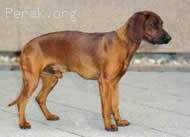
Head: Strong and elongated. Relatively broad, slightly domed skull. Pronouced stop. Slightly curved nosebridge. Sufficiently broad muzzle. Solid jaws. Lips fully covering mouth. Black or dark red nose. Wide nostrils.
Ears: Set on high, medium in length, wide at the base, rounded at the tips, heavy, hanging flat against the head.
Eyes: Neither too large nor too round. Dark brown or somewhat lighter. Pigmented eyelids.
Body: Slightly longer than it is tall. Slightly raised at the rump. Neck medium in length, strong, with a slight dewlap. Topline sloping slightly upward from withers to hindquarters. Chest well-developped, long, moderately wide and well let-down. Slight tuck-up. Long, fairly straight croup. Solid back.
Tail: Set on high, medium in length, hanging to the hock. Carried level to the ground or hanging down.
Hair: Short, dense, lying very flat against the body, moderately harsh. Finer on the head and ears, harsher and longer on the abdomen, legs and tail.
Coat: Fawn, red, reddish-fawn, dark fawn (reddish-brown), light fawn (pale yellow), to sable fawn; fawn grey like a deer’s winter coat, also brindled or ticked with black. The background color on the back is usually more intense. Dark muzzle and ears. Tail generally ticked with black. Small, light-colored markings on the chest (flashings) are allowed.
Size: Dog: 47 to 52 cm (18.5 - 20.5 in). Bitch: 44 to 48 cm (17-19 in).
Weight: 20 to 25 kg (44-55lb).

History

All bloodhounds are descended from primitive hunting dogs (brachet scenthounds). Hunters chose the most loyal dogs of the pack and used them to track game wounded in the hunt. From these dogs, breeders developed bloodhounds (Schweisshunde) used uniquely for trailing wounded game. Crosses were also made with local mountain hound breeds (the Ticolar Bracken, the Brandbracken and Dachsbracken). In 1912, the Bavarian Bloodhound Club was founded. The breed is rare.

Behavior

Courageous, spirited, fast and agile, the Bavarian Moutain Dog is at ease on a rugged terrain. With his superb nose and powerful hunting instinct, he was originally used on chamois but can hunt al other game. Calm, even tempered, docile, attached to this owner, he is a good companion. As with any bloodhound, he needs a patient, experienced trainer.

Advice

The Bavarian Mountain is not suited for city life. He needs space and exercise. He also requires regular brushing.

Function

Hunting dog.
Bavarian_Mountain_Hound.jpg

Group
Hound Group - American Kennel Club, Continental Kennel Club, United Kennel Club, Kennel Club of Great Britain, Canadian Kennel Club, Australian National Kennel Club, National Kennel Club, New Zealand Kennel Club, American Pet Registry Inc., American Canine Registry
Native Country
Great Britain
Breed Description

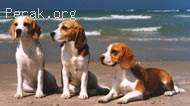
Head: Powerful but not heavy, without wrinkles or puckering. Slightly domed skull. Slight occipital peak. Well-pronounced stop. Straight nosebridge. Strong jaws. Fairly short muzzle. Lips moderately pendulous. Wide nose.
Ears: Set on low, long, thin. Rounded tips. Hang against the cheeks.
Eyes: Dark brown or hazel, fairly large, well spaced with a gentle expression.
Body: Compact, exuding dignity without heaviness. Fairly long neck with slight dewlap. Broad, deep chest. Well-curved ribs. Short, powerful loin. Slight tuck-up. Flat, muscular back. Straight forelegs well-placed under the body, rounded bone structure.
Tail: Thick, moderately long, set on high and carried gaily. Well-covered with hair, especially at the tip (tufted).
Hair: Short, dense, strong.
Coat: All recognized hound colors except liver. - Tricolor (white, black, and rich fawn): white muzzle and tip of the tail. - Bicolor: white and rich fawn, lemon and tan.
Size: 33 to 44 cm (13-15.7 in).
Weight: 15 to 20 kg (33-44 lb).

History

This very ancient English breed was mentioned in the third century by the Scottish bard Ossian. Beagles were highly favored under the reigns of King Henry VIII and Queen Elizabeth I. At that time, three varieties were described:- The Southern Beagle, the largest (45 cm tall, white and black coat);- The Northern Beagle, of medium size; and- The Small Beagle, less than 35 cm tall, including the Elizabeth Beagle (under 20 cm tall), also known as the «Singing Beagle» because of his melodious voice.Beagles were first introduced to France around 1860, and a French Beagle club was founded in 1914. A dog for all kinds of owners, he has become the most popular hound in France and worldwide. People appreciate his small size, even temper, versatility, effectiveness, and speed.

Behavior

According to his standard, the Beagle is a merry, brave dog who is highly active, energetic, and determined. He is quick, intelligent, and even-tempered. He is also courageous, hardy, and very fast, with a hard-hitting voice and a keen nose. He is enthusiastic and effective on the trail, giving tongue often. He can work alone, in pairs, or in packs. This small, versatile pack hound hunts hare, rabbit, fox, deer, and wild boar. In England, he is used exclusively for beagling, or hunting hare. Affectionate and good-natured, he is a great family pet. He needs firm training.

Advice

The Beagle can adapt to city life but needs lots of space to let off steam. He must be brushed once or twice weekly, and his ears need regular attention.

Function

Hunting dog, companion dog.
beagle.jpg

Group
National Kennel Club, American Pet Registry Inc., American Canine Registry, American Canine Association
Native Country
France
Breed Description

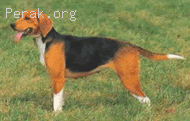
Head: Moderately heavy. Fairly broad skull. Stop not pronounced. Bridge of nose straight. Tapering muzzle. Well-developed nose.
Ears: Fairly short and medium-sized. Slightly folded in the mid-section. Hanging flat against the skull and turning slightly at the bottom edge.
Eyes: Wide, dark in color.
Body: Well-built. Neck open. Chest well let-down but not too flat. Abdomen fairly full, tuck-up never excessive. Short, level, muscular back. Heavy, muscular loin, may be slightly clean-flanked.
Tail: Moderately long, fairly heavy.
Hair: Not too short, fairly thick, flat.
Coat: Tricolor (fawn to black and white): mantle not too pronounced. Pale to deep tan or smoky markings. There are grey Harriers and grey Tricolor Beagle Harriers.
Size: 45 to 50 cm (15.7-19.7 in).
Weight: Approx. 20 kg (44 lb).

History

The Beagle Harrier is a recent creation developed in France in the late nineteenth century by Baron Gérard. The breed is a cross between the Beagle and the Harrier and probably received blood from medium-sized breeds indigenous to southwestern France. Larger and faster than the Beagle, the Beagle Harrier is excellent in small game hunting (hare, fox, deer, and wild boar). Attempts by breeders to upset the balance in favor of the Beagle or the Harrier were unsuccessful. Today?s breeders have stabilized the breed, which is neither a large Beagle nor a small Harrier. The standard was officially registered with the FCI (Fédération cynologique internationale [International Cynological Federation]) in 1974 and is gaining popularity in France.

Behavior

The Beagle Harrier is hardy, vigorous, fast, agile, and courageous but less powerful than the Harrier. With his determination and keen sense of smell, he works well in packs and is not afraid to enter even the thickest brambles. This easygoing, straightforward dog is a pleasant companion.

Advice

He needs space and exercise, as well as regular brushing.

Function

Hunting dog, companion dog.
Beagle_Harrier.gif

Group
Herding Group - American Kennel Club, Continental Kennel Club, , United Kennel Club, Kennel Club of Great Britain, Canadian Kennel Club, Australian National Kennel Club, National Kennel Club, New Zealand Kennel Club, American Pet Registry Inc., American Canine Registry
Native Country
Great Britain
Other Names
Highland Collie. Beardie.
Breed Description

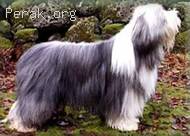
Head: Wide and flat. Strong muzzle. Moderate stop. Large, squarish nose.
Ears: Medium size, hanging close to the head.
Eyes: Large and wide-set. Color varies according to coat color. Eyebrows arched to the sides, framing the head.
Body: Long. Deep chest. Ribs well sprung. Strong loin. Straight back. Underline fairly high off the ground.
Tail: Set low and covered with abundant hair. Not kinked or twisted. Carried low and curving up slightly at the tip.
Hair: Long, flat, harsh, b, and shaggy. Sometimes wavy. Coat increases in length at the cheeks and chin, forming the characteristic beard.
Coat: Slate, dark fawn, black, blue, any shade of gray, with or without white markings. Coat does not take on its definitive color until the age of three, lightening and darkening several times over the first three years.
Size: Dog: 53 to 56 cm.Bitch: 51 to 53 cm.
Weight: 20 to 30 kg.

History

Some writers believe the Bearded Collie’s oldest ancestor is the Magyar Komondor of central Europe. Others contest the fact that this breed is the result of a cross between a Scottish sheepdog and the Polski Owczarek Nizinny, a Polish sheepdog, and was developed in the Highlands of Scotland. This breed almost disappeared in the 20th century, replaced by the Old English Sheepdog. But thanks to the efforts of a Scottish breeder, the breed began a comeback in 1950 and continues to flourish today.

Behavior

This well-balanced, lively dog is neither shy nor aggressive. He is self-confident, affectionate, and always ready to play. The Bearded Collie, which becomes very attached to his owner and adores children, does not like to be left alone. Though he barks a lot, he does not make a very good guard dog. His good sense of smell is put to use searching for truffles. Early, firm (though not harsh) training is required.

Advice

The Bearded Collie can adapt to being a house dog if he has many opportunities to go out and is not left alone. Regular brushing, at least twice per week, is required to keep his coat tangle-free. Otherwise, it will be impossible to brush out all of the knots.

Function

Pet
bearded_collie.jpg

Group
Terrier Group - American Kennel Club, Continental Kennel Club, United Kennel Club, Kennel Club of Great Britain, Canadian Kennel Club, National Kennel Club, New Zealand Kennel Club, Club Español de Terriers (Spanish Terrier Club), Canadian Canine Registry, Australian National Kennel Club, American Pet Registry Inc., American Canine Registry
Native Country
Great Britain
Other Names
Rothbury Terrier
Breed Description

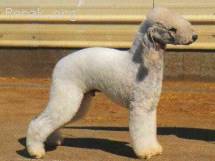
Head: Pear-shaped or wedge-shaped. Narrow, deep and rounded, covered with abundant silky, almost white hair. No stop. Long, tapering jaws.
Ears: Moderate size, set on low and hanging flat against the cheeks. Thin leather, velvety texture; covered with short, fine hair, with a silky, white tassel at the tip.
Eyes: Small, triangular appearance. Blues have dark eyes; Blue and tans are less dark with amber lights; browns and sandies have hazelnut color eyes.
Body: Slightly longer than tall. Muscular and flexible. Long neck without dewlap. Deep, fairly broad chest. Flat-ribbed. Arched loin. Back arching over the loin.
Tail: Set low, moderate length; thick at the root and tapering toward the gently curved tip. Never carried over the back.
Hair: Thick, crisp but not wiry. Tendency to curl, particularly on the head and face.
Coat: Blue, liver or sandy with or without tan. Darkest colors are preferred. Blues and blue and tans must have a black nose. Livers and sandies must have a brown nose.
Size: Approx. 40,6 cm (16 in).
Weight: 8 to 10,5 kg (18-23 lb).

History

The Bedlington Terrier was developed in England in the thirteenth century in Bedlington, a small village near Rothbury in Northumberland. Its ancestors include the Dandie Dinmont Terrier, the Otterhound and the Whippet. This breed was first used to hunt vermin and fox. Later, they worked in the mines clearing rats from the galleries. The Bedlington Terrier was recognized by The Kennel Club in 1873.

Behavior

This robust, fast, energetic, courageous dog has a strong personality. Happy and affectionate with his owners, he is gentle and playful with children. The Bedlington Terrior can be aggressive toward other dogs if attacked. Firm but gentle training is required.

Advice

The Bedlington Terrier makes a good house dog, but he must be walked daily. Weekly brushing is required. This breed should be professionally groomed two or three times per year.

Function

Ratter, guard dog, pet.
Bedlington_Terrier.jpg

Group
American Canine Association
Native Country
Belgium
Other Names
Vlaamse Koehond
Breed Description

Head: Massive, chiseled, size in proportion to the body. Stop not pronounced. Broad, powerful, well filled out muzzle tapering toward the nose. Flat, clean cheeks. Pronounced superciliary arches.
Ears: Held erect, set on high. Triangular if cropped. Naturally drop.
Eyes: Medium size, slightly oval in shape. Dark color.
Body: Short and thickset. Strong, muscular neck. Broad, deep forechest. Deep brisket. Short flanks. Croup almost horizontal. Broad, muscular loin. Short, broad back.
Tail: Docked, leaving two or three vertebrae (approx. 10 cm). Carried gaily in action. Some dogs born tailless.
Hair: Medium length (6 cm). Harsh, dry, dull, and tousled. Shorter on the head. Full mustache and beard. Fine, dense undercoat.
Coat: Black to fawn, often brindle or pepper and salt passing through gray. White star on the chest is allowed. Light, washed out coats not desirable.
Size: Dog: 62 to 68 cm. (24.5-27 in).Bitch: 59 to 65 cm. (23-25.5 in).
Weight: Dog: 35 to 40 kg. (77-88 lb).Bitch: 27 to 35 kg (60-77 lb).

History

Originating in Flanders, the Belgian Cattle Dog was produced by crossing several breeds in order to produce an ideal working dog for the farm. Some believe this breed was brought to Flanders by Spanish invaders. Others think large Barbets, mastiffs, and Picardy Shepherds were crossed to produce the breed, or perhaps that he is descended from the Beauceron and the Griffon. During World War I, the Belgian Cattle Dog was almost eliminated. Flemish breeders rebuilt the breed from the few survivors. Its standard was established by the FCI in 1965.

Behavior

This rustic, energetic, bold breed is dominant and bonds to only one person. He is calm, wise, and steady. He is alert, well behaved, and docile though can be a bit surly. This active dog has energy to spare. He must receive firm, consistent training. Strangers will find his forbidding countenance very dissuasive. This dog has always worked on the farm, guarding and herding the cattle, and as sled dog and even turning a wheel in the butter-churning process. His superb sense of smell makes him useful for police work.

Advice

This breed must be brushed once or twice per week and taken to a professional groomer three or four times per year for stripping. This is not a house dog. He requires considerable space and exercise.

Function

Herder, police dog (tracking, messenger), guard dog.
Belgian_Cattle_Dog.gif

Group
Herding Group - American Kennel Club
Native Country
Belgium
Breed Description

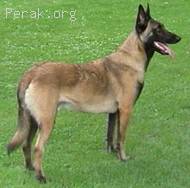
The Malinois is the short-coated variety of the Belgian Shepherd Dog. They are fawn colored with a black mask. In the United States they have been shown as a separate breed since 1959. Dogs are 24 to 26 inches at the shoulder and weigh 60 to 80 pounds. Bitches are 22 to 24 inches and weigh 40 to 60 pounds. This is a “high energy” dog that does best when it has a definite purpose in life. It is generally not a dog for the novice dog owner, for, while it is extremely trainable, it does not do well with poor or insufficient training.

History

Belgian Shepherd Dogs were established as a breed during the latter part of the 19th Century. The Belgian Malinois is in fact a variety of the Belgian Shepherd Dog. Other varieties are the Groenendael, long-haired and black; the Tervuren, long-haired and redbrown or gray with black mask, ears and overlay; and the Laekenois, wirehaired and redbrown or gray, is recognized as a Tervuren if born into a Tervuren litter. Since 1901 The Club Societe Royale de St. Hubert has recognized and registered the Malinois, Groenendael, Tervuren and Laekenois. The wirehaired is not recognized by the American Kennel Club (AKC) in the United States. Malinois, Groenendael, Tervuren and Laekenois are considered different varieties but one breed by The Canadian Kennel Club (CKC) and United Kennel Club (UKC). In 1911 the first two Malinois were imported into the United States: Belgian Blackie AKC #148516 and Belgian Mouche AKC #148517. From 1911 to 1958 Belgians were registered with the AKC as Belgian Sheepdogs. In 1958 the AKC declared the Belgians to be three distinct breeds. From 1959 to 1965 Belgian Malinois were placed in the Miscellaneous Class. Both the Groenendael (registered as the Belgian Sheepdog) and the Tervuren were placed in the Working Group as separate breeds. In 1965 the Belgian Malinois was reinstated in the Working Group. In 1983 all three Belgians were placed in the newly formed Herding Group as separate breeds.

Behavior

Nervous, sensitive, and impulsive, this breed is extremely lively in his response to stimuli. Watchful, attentive, with a strong personality, he is remarkably devoted to his owner and occasionally aggressive toward strangers. He is very energetic, active, and dynamic and needs a lot of exercise. The Belgian Malinois will not accept a leash. These very sensitive dogs cannot tolerate harsh treatment. Training must be firm, but gentle, and undertaken with the greatest patience.

Advice

This breed needs peaceful surroundings and regular exercise to blossom. Long-haired varieties require weekly brushing.

Function

Guard dog, police dog, good trackers, search-and-rescue, customs. Pet (very attached to his owner and environment).
Belgian_Malinois.jpg

Group
Herding Group - American Kennel Club, Continental Kennel Club, United Kennel Club, Kennel Club of Great Britain, Canadian Kennel Club, Australian National Kennel Club, National Kennel Club, New Zealand Kennel Club, American Pet Registry Inc., American Canine Registry
Native Country
Belgium
Other Names
Groenendael, Laekense, Malinois, Tervuren
Breed Description

Head: Long, filled-up, and finely chiseled. The muzzle tapers gradually. Straight forehead. Moderate, though marked, stop. Lips well closed. Smooth, flat cheeks.
Ears: Set on high, straight, rigid, triangular.
Eyes: Medium size, almondlike. Brown color. Black rims.
Body: Powerful without being bulky. Long neck. The chest is not broad. Tight, strong musculature. Proud carriage of the head. Straight, broad, powerful back. Slight sloping of the croup.
Tail: Medium length, strong at the base. Carried down when relaxed; does not form a hook or curve.
Hair: Always abundant and dense. Wooly undercoat. Collarette, culottes on the thighs. Long-haired (short on the head) – Groenendael and Tervuren. Short-haired (flat on the head) – Malinois. Wire-haired (harsh, dry, shaggy, 6 cm long) – Laekenois.
Coat: The mask must cover the face with a solid area of black.- Tervuren: warm fawn well-filled with black (preferred). - Malinois: only fawn tinged with black with black mask.- Groenendael: only solid black. - Laekenois: fawn with flecks of black on the muzzle and tail.
Size: Dog: 60 to 66 cm. (23.5-26 in).Bitch: 56 to 62 cm. (22-24.5 in).
Weight: 28 to 35 kg. (61.8-77.3 lb).

History

The four varieties of the large Belgian Sheepdog are thought to be descended from herders from central Europe or from interbreeding of local breeds of Mastiff and Deerhound brought over from England in the 13th century. In the 19th century, there were many sheepdog-looking native dogs of varied coloration and hair type. The first breeds were recognized around 1885. The Belgian Shepherd Club was formed in 1891 after A. Reul, a professor of animal breeding, cataloged four distinct varieties. In 1898, the long-haired black Belgian Sheepdog was given the name Groenendael. At the same time, at the Royal Castle of Laeken, the wire-haired, fawn Belgian Sheepdog was named the Laekenois. This last variety is now very rare. Most short-haired Belgian Sheepdogs from the area of Malines were named Malinois. A brewer near Tervuren bred long-haired, fawn Belgian Sheepdogs and produced what came to be called the Tervuren.

Behavior

Nervous, sensitive, and impulsive, this breed is extremely lively in his response to stimuli. Watchful, attentive, with a strong personality, he is remarkably devoted to his owner and occasionally aggressive toward strangers. He is very energetic, active, and dynamic and needs a lot of exercise. The Belgian Sheepdog will not accept a leash. These very sensitive dogs cannot tolerate harsh treatment. Training must be firm, but gentle, and undertaken with the greatest patience.

Advice

This breed needs peaceful surroundings and regular exercise to blossom. Long-haired varieties require weekly brushing.

Function

Sheepdog, guard dog, police dog, good trackers, search-and-rescue, customs. Pet (very attached to his owner and environment).
Belgian_Sheepdog.jpg

Group
Herding Group - American Kennel Club
Native Country
Belgium
Breed Description

There should be no feature of the dog which is excessive. Ideal size, measured at the withers, is 25 inches for males and 23 inches for females. The head is elegant and long, without being excessively so, and is set off by high-set, erect ears of small to medium size. The body is evenly proportioned, being neither too long nor too short, so that its length is approximately equal to its height at the withers. The total visual effect of the ideal dog is that it is perfectly balanced and stands squarely on all four feet.

History

Like all herding dogs, the ancestors of the modern Tervuren were chosen for breeding more on the basis of intelligence, trainability, and temperament than for physical beauty or uniformity. As dog shows became popular, however, breeders began paying greater attention to uniformity of appearance and “type.” Type is that combination of characteristics which make a breed unique and distinctive from all other breeds. When the early breeders of Tervuren established type they produced an animal stamped with Its own special qualities of beauty and grace, while retaining its intelligence and aptitude for work.

Although there almost surely were a few Tervuren In the United States before 1950, the first Tervuren brought to this country for breeding purposes were imported in 1953. Because the Tervuren was regarded to be a color variety of the Belgian Sheepdog, these first Imports were registered as Belgian Sheepdogs. In fact, the Tervuren still is considered to be a variety of Belgian Sheepdog in other countries.

In 1959, however, the American Kennel Club chose to grant the Belgian Tervuren status as a separate breed. At that time there was a small handful of Tervuren owners in the country, and in 1960, they formed the first national breed club, the Belgian Tervuren Club. There were about 12 charter members. Since that modest beginning, the club has grown to a membership of over 1000 persons. Its name has been changed to the “American Belgian Tervuren Club” (ABTC), and it has been granted formal recognition by the AKC as the parent club of the breed.

Behavior

Nervous, sensitive, and impulsive, this breed is extremely lively in his response to stimuli. Watchful, attentive, with a strong personality, he is remarkably devoted to his owner and occasionally aggressive toward strangers. He is very energetic, active, and dynamic and needs a lot of exercise. The Belgian Tervuren will not accept a leash. These very sensitive dogs cannot tolerate harsh treatment. Training must be firm, but gentle, and undertaken with the greatest patience.

Advice

This breed needs peaceful surroundings and regular exercise to blossom. Long-haired varieties require weekly brushing.

Function

Its quick intelligence, stamina, and agility ideally suit it to an extraordinary array of tasks. It is used as a guide for the blind and the deaf, as helper for the handicapped, as a search and rescue dog, including avalanche rescue work, as sentry and courier in wartime, and as a tracking dog. In lighter pursuits, it is of course a top obedience contender and has even proven to be an enthusiastic sled dog. Finally, it is a conscientious and talented baby sitter.
Belgian_Tervuren.jpg

Group
National Kennel Club, American Pet Registry Inc., American Canine Registry, American Canine Association
Native Country
Italy
Other Names
Cane de Pastore Bergamasco, Bergamese Shepherd.
Breed Description

Head: Large appearance. Capacious skull. Pronounced superciliary arches. Marked stop. Fairly short, blunt muzzle. Large nose.
Ears: Soft, triangular drop ears. Thin leather
Eyes: Large and oval. Brown color. Darkness of shade varies with color of coat. Black rims. Long fall covering the eyes.
Body: Square body outline. No dewlap on the neck. Full brisket. Short, powerful loin. Straight, well-muscled back. Broad, sloping, solid, well-muscled croup.
Tail: Thick and strong at the base tapering toward the tip. Covered in slightly wavy, shaggy hair. Hangs in the shape of a saber when relaxed.
Hair: Very long and wiry (goat hair) on the front portion of the body. Corded over the rest of the body. Short, dense, soft undercoat.
Coat: Gray flecked with black, tan, or white. Uniform black coat is acceptable, though uniform white is not. White spots covering no more than 1/5 of the body are permitted.
Size: Dog: 58 to 62 cm. (22.8-24 in).Bitch: 54 to 58 cm. (21.2-22.8 in).
Weight: Dog: 32 to 38 kg. (70.5-83.8 lb).Bitch: 26 to 32 kg. (57.5-70.5 lb).

History

This ancient sheepdog spread throughout the Alps region of Italy, but were most concentrated in the Bergamo area where sheep farming was particularly developed. Some believe the Bergamasco is descended from the Briard. Others hypothesize that the Bergamasco came to Italy from Asia, stating that sheepdogs of this type arrived in Western Europe during the Mongol invasions.

Behavior

Alert, keen, and well-balanced, this dog has an ideal personality for flock guarding. This breed’s friendly disposition, gentleness, and patience also make him an excellent pet. His impressive size makes him a good guard dog. This often stubborn dog requires early, firm training.

Advice

This is not a city dweller. He needs space and a lot of exercise. Groom the coat by running your fingers through the hairs to separate the cords.

Function

Sheepdog, guard dog, search-and-rescue dog (avalanches, natural disasters), pet
Bergamasco.jpg

Group
National Kennel Club, American Pet Registry Inc., American Canine Registry, American Canine Association
Native Country
France
Other Names
Beauceron, Bas Rouge, French Shorthaired Shepherd.
Breed Description

Head: Long (2/5 of height), chiseled, with a flat skull. Stop not pronounced. Slightly convex forehead. Muzzle neither straight nor pointed.
Ears: Set on high. Naturally drop, short and flat, but not close against the head. Carried erect if cropped.
Eyes: Round, dark color. Frank regard.
Body: Solid, powerful, well-developed and muscled, but not heavy. Muscular neck. Broad, deep chest. Straight back. Croup barely sloped. Broad loin.
Tail: Carried straight down reaching the hocks and forming a slight J-hook. Slightly bushy.
Hair: Flat on the head. Heavy and dense, lying close to the body (3 to 4 cm long). Slight fringing on thighs and along underline. Very short, fine, dense, soft undercoat preferably of slate color.
Coat: - Black and tan (bi-color), bas rouge (most common). Glossy black. Tan is squirrel red. Tan markings: spots above the eyes, on sides of muzzle, throat, and under the tail. Tan extends down legs to feet and wrists (coloration pattern forms a «sock,» whence the name Bas Rouge, or Red Socks).- Harlequin: Gray, black, and tan (tri-color): even amounts of gray and black in spots with the same characteristic tan spots.
Size: Dog: 65 to 70 cm. (25.6-27.5 in).Bitch: 61 to 68 cm (24-26.7 in).
Weight: 27 to 37 kg. (60-82.8 lb).

History

The Berger de Beauce is descended from the “Plains Dogs” that guarded the flocks near Paris. At the end of the 19th century, the short-haired «Plains Dogs» were named Beaucerons; long-haired varieties were named Briards. E. Boulet (best known for his Griffons) introduced the breed and helped set up the French Shepherd Club in 1896. In 1911, the Friends of the Beauceron Club was founded. The name «Bas Rouge» was given to the Beauceron because of the tan markings on its legs, that look like socks (bas). Breed selection has vacillated between working dogs, show dogs, dogs bred to compete in guard and defense events. Nevertheless, the Berger de Beauce is above all a herder. Very popular in France, this breed is almost unknown in other countries, except Belgium.

Behavior

This breed is forthright, courageous, fast, hardy, and alert, and has amazing dissuasive powers. He is wary with strangers and not easily won over.This dog is loyal to his owner and gentle with children. He bonds to the entire family, but guarded is when strangers are present. Owners are warned that this breed openly exerts its dominance over other male dogs. His well-developed sense of smell is used to sniff out truffles. A wise breed, he is forthright, dynamic, and courageous when working, yet is obedient and easy to handle.

Advice

This hardy “country gentleman” needs space to run and is not suited to apartment living. Do not leave him leashed; he cannot tolerate being closed in. This dog needs firm training, discipline, and lots of exercise to burn off energy. He matures late. Two to three brushings per month are sufficient. Dewclaws must be trimmed regularly.

Function

Herder (Sheep and Cattle), guard dog, defense dog, army dog, tracker, search and rescue pet.
Berger_de_Beauce.jpg

Group
Working Group - American Kennel Club, Continental Kennel Club, United Kennel Club, Kennel Club of Great Britain, Canadian Kennel Club, National Kennel Club, New Zealand Kennel Club, Canadian Canine Registry, Australian National Kennel Club, American Pet Registry Inc., American Canine Registry
Native Country
Switzerland
Other Names
Berner Sennenhund
Breed Description

Head: Powerful. Slightly domed skull. Well-defined stop.
Ears: Set on high, triangular, drop when at rest.
Eyes: Almond shape. Dark brown color.
Body: Thickset. Broad chest is well let down. Belly not tucked up. Straight, solid back. Slightly rounded croup.
Tail: Bushy, carried low at rest.
Hair: Long, straight or slightly wavy.
Coat: Tri-color. Black background with tan (rich rust) markings on the checks, above the eyes, and on the legs and chest. White markings on the head (flare), on the neck extending down the forechest, on the feet, and tip of the tail.
Size: Dog: 64 to 70 cm (25-27,5 in).Bitch: 58 to 66 cm (23-26 in).
Weight: 40 to 50 kg (88-110,5 lb).

History

This ancient breed was developed near Bern, primarily in Duerrbach and Burgdorf. The Bernese Mountain Dog is descended from the Roman molussus fighting dog brought with the Roman legions, and later used to guard the flock. This breed began appearing in dog shows in 1902, and a standard was published in 1907. In 1949, Newfoundland blood was introduced. The Bernese Mountain Dog is now the most common of the Swiss mountain dogs. In 1990, the Bernese Mountain Dog was crossed with the Labrador, creating the still experimental Boulab.

Behavior

This hardy, well-balanced, peaceable dog naturally has a sweet, happy temperament. He is loyal and affectionate with his owners, but is wary around strangers and will courageously defend his owners and their property if necessary. Yet he is not aggressive and does not bark often. This breed dislikes being left alone. Firm, but gentle, training must be undertaken with patience because the breed does not reach emotional maturity until eighteen months to two years of age.

Advice

The Bernese Mountain Dog does not like to be locked up in a house. He loves wide open spaces and exercise. Weekly brushing is sufficient.

Function

Herder (large animals), guard dog, police dog, draft dog (light carts), pet.
Bernese_Mountain_Dog.jpg

Group
Non-Sporting Group - American Kennel Club, Continental Kennel Club, United Kennel Club, Kennel Club of Great Britain, Canadian Kennel Club, National Kennel Club, The Bichon Frise Club of America, New Zealand Kennel Club, Australian National Kennel Club, American Pet Registry Inc., American Canine Registry
Native Country
France - Belgium
Other Names
Tenerife Dog, Bichon Tenerife.
Breed Description

Head: In proportion to the body. Skull fairly flat, longer than the muzzle. Stop not very pronounced. Flat cheeks. Thin lips. Black nose.
Ears: Pendulous, furnished with long, finely curled hair. When alert, carried fairly forward.
Eyes: Rounded, dark. Edges of eyelids dark.
Body: Slightly elongated. Neck fairly long, raised high and carried proudly. Well-developed chest. Broad, muscular, slightly domed loin. Slightly rounded croup.
Tail: Raised and curving gracefully without curling onto the back.
Hair: 7 to 10 cm long, fine, silky, curly, very loose, similar to that of the Mongolian goat, neither flat nor wavy.
Coat: Pure white.
Size: 25 to 30 cm.
Weight: 2.5 to 3 kg.

History

The Bichon Frise was once thought to be a Spanish breed introduced to the Canary Islands in the fourteenth century. For this reason, he was long called the Tenerife Dog or the Bichon Tenerife, after the capital of the islands. The Bichon Frisé was developed during the Italian Renaissance by crossing the Maltese with other small Barbets and Poodles. His name comes from the French diminutive barbichon. He was introduced to France during the reign of King François I, and he must have been all the rage under King Henry III, since he was this king’s favorite breed. He was brought to Belgium during the Spanish occupation of Flanders. He strutted through the literary salons of the seventeenth century and of France’s Second Empire and Belle Époque. Recognized in France in 1933, he became a French-Belgian breed in 1960. The Bichon Frisé is enjoying renewed popularity after a brief decline in the 1970s.

Behavior

Stout, lively, exuberant, and very merry, the Bichon Frise is quite strong-willed. Very adaptable, intelligent, and gentle, he is a charming pet. He needs firm training.

Advice

He does well in an apartment but needs long walks and does not like being left alone. He requires daily brushing and monthly baths. The hair on his feet and muzzle should be lightly trimmed, and he should be groomed every three months. He hardly sheds and is very clean. His ears and eyes require regular attention.

Function

Pet.
Bichon_Frise.gif