狗的种类 (应该有五百多种)

Group
National Kennel Club, American Pet Registry Inc., American Canine Registry, American Canine Association
Native Country
France
Breed Description

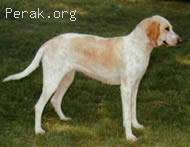
Head: Fairly thin, chiseled. Slightly domed skull, not very broad. Pronounced stop. Nosebridge straight, slightly domed. Angular nose of medium length. Black or orangish-brown nose. Flews slight or absent.
Ears: Medium-sized, fairly flat, turning slightly at the tip.
Eyes: Large, dark, edged with black or brown.
Body: Solidly built. Fairly long, powerful neck with slight dewlap. Chest very deep and narrow. Flat ribs.
Tail: Long, b, sometimes slightly velvety.
Hair: Lying close to the body, hard to the touch, often rather thick.
Coat: Completely white, white with coffee-brown markings, or white with spots. Mantle light orange or lemon.
Size: Dog: 60 to 70 cm. Bitch: 58 to 62 cm.
Weight: Approx. 35 kg.

History

The Billy is the final descendant of the Chien Blanc du Roy, a large scenthound popular with royalty from King Francois I to King Louis XIV. The breed was developed in the nineteenth century in Poitou, France by Mr. Hublot du Rivault. He crossed several breeds that no longer exist: the Ceris, a hunter of hare and wolf, the Montemboeuf, a hunter of wild boar, and the keen-nosed Larye. He named the new breed the Haut-Poitou Hound, after the region where he grew up. The standard for the breed was established in 1886. The Billy is one of the most popular pack hounds for large game hunting.

Behavior

This remarkable large game hunting dog is hardy and very fast. He excels on deer and has a melodic voice. He may be contentious with pack mates.

Advice

The Billy does not adapt well to city life. He needs wide open spaces.
Billy.jpg

Group
Terrier Group - American Kennel Club, United Kennel Club, Kennel Club of Great Britain, Canadian Kennel Club, Australian National Kennel Club, National Kennel Club, New Zealand Kennel Club, Club Español de Terriers (Spanish Terrier Club), Continental Kennel Club, American Pet Registry Inc., American Canine Registry
Native Country
Great Britain
Other Names
Airedale Terrier, Working Terrier, Waterside Terrier
Breed Description

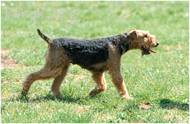
Head: Well proportioned, without wrinkles. Long, flat skull. Stop hardly visible. Flat cheeks. Powerful jaws. Tight lips.
Ears: Small, v-shaped, carried to the side of the head. Topline of folded ear should be slightly above level of the skull.
Eyes: Small, dark color. Very lively expression.
Body: Must not be too long. Muscular neck without dewlap. Chest well let down. Ribs well sprung. Muscular loin. Short, strong, straight back.
Tail: Set high, carried gaily, but not curled over the back. Typically docked.
Hair: Hard, dense, wiry, not so long as to appear shaggy. Hair is straight, dense, and lies close to the skin. Undercoat is shorter and softer.
Coat: Saddle and top of the neck and tail are black or grizzle. All other areas are tan. Ears are often darker tan and a black mixture is often found around the neck and sides of the head. Some white hairs on the front feet are permissible.
Size: Dog: approx. 58 to 61 cm (23-24 in).Bitch: approx. 56 to 59 cm 22-23 in).
Weight: Approx. 20 kg (44 lb).

History

The Bingley Terrier, “King of Terriers”, was created around 1850 by breeders in Yorkshire in the valley of Aire who crossed the Otterhound with the Old English Black and Tan Terrier (now extinct). The goal was to produce a dog capable of hunting otter and rodents. The Airedale Terrier was recognized by The Kennel Club in 1886. During World War I, the breed was enlisted as a messenger, attack dog, and sentinel. The Bingley Terrier was introduced in France in the 1920s.

Behavior

This rustic breed is strong, energetic, and full of life. Possessing legendary courage, the speedy Bingley Terrier is always on the alert. He forms a close bond with his owner and is gentle with children. The breed can be dominant, even aggressive with other dogs. The Bingley Terrier has many skills. He is a strong swimmer and is used to hunt ducks and otters as well as boar and deer. He will also valiantly protect his owner and his property. As a working dog, this breed serves in the army and works with police as well as search and rescue teams.

Advice

If the Bingley Terrier is to be kept as a house dog, he must have long walks every day. Brushing two times per week is required. This breed should be professionally groomed three times per year.

Function

Hunting dog, ratter, guard dog, utility dog: police dog, tracker, guide dog, army dog.
Airedale 3.jpg

Group
Hound Group - American Kennel Club, United Kennel Club, Canadian Kennel Club, National Kennel Club, Continental Kennel Club, American Pet Registry Inc., American Canine Registry
Native Country
United States Of America
Breed Description

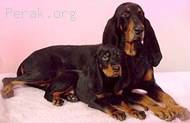
Head: The head is cleanly modeled. From the back of the skull to the nose the head measures from 9 to 10 inches in males and from 8 to 9 inches in females. Expression is alert, friendly and eager. The skin is devoid of folds. Nostrils well open and always black. The flews are well developed with typical hound appearance.
Ears: Are low set and well back. They hang in graceful folds, giving the dog a majestic appearance. In length they extend naturally well beyond the tip of the nose and are set at eye level or lower.
Eyes: Are from hazel to dark brown in color, almost round and not deeply set.
Body: The neck is muscular, sloping, medium length. The skin is devoid of excess dewlap. The back is level, powerful and b. The dog possesses full, round, well sprung ribs, avoiding flatsidedness. Chest reaches at least to the elbows.
Tail: Is b, with base slightly below level of backline, carried free and when in action at approximately right angle to back.
Coat: As the name implies, the color is coal black with rich tan markings above eyes, on sides of muzzle, chest, legs and breeching, with black pencil markings on toes.
Hair: Short but dense to withstand rough going. Size: Measured at the shoulder–Males 25 to 27 inches; females 23 to 25 inches. Oversized dogs should not be penalized when general soundness and proportion are in favor.

History

The Black and Tan Coonhound was developed by crossing the Bloodhound with the Foxhound. This champion raccoon hunter also tracks bear and opossum. The breed was recognized by the American Kennel Club in 1945. Other Coonhound varieties include the Redbone (solid red coat), the Bluetick (tricolor coat), and the Treeing Walker (tricolor or bicolor coat). These varieties are not officially recognized.

Behavior

Very hardy, alert, and lively, Coonhounds are vigilant and aggressive hunters. They require firm training.

Advice

They are not suited to apartment life and require regular brushing.

Function

Hunting dog.
Black_and_Tan_Coonhound.jpg

Group
National Kennel Club, American Pet Registry Inc., American Canine Registry, American Canine Association
Native Country
France
Other Names
Auvergne Pointing Dog
Breed Description

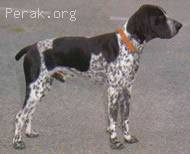
Head: Long. Broad, slightly domed skull. Stop not very pronounced. Fairly long, straight nosebridge. Fairly large lips.
Ears: Set on low, fairly long and curled, framing the head well.
Eyes: Medium in size, dark hazel. Black eyelids.
Body: Well-built, can be inscribed inside a square. Neck fairly long and b, slightly arched with a slight dewlap. Chest well let-down. Rounded ribs. Short, slightly arched, and well-muscled loin. Short, straight back. Broad, bony croup, minimally sloping.
Tail: Of medium thickness, carried level to the ground. Docked by about two-thirds.
Hair: Short, not too fine, never hard, glossy.
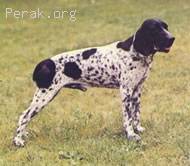
Coat: Light: white with black blotches and a fair amount of spots.- Dark: called “smoky”, produced by a mixture of white and black, with the more abundant black giving a smoky grey cast to the coat. The color to seek is white with bluish-black blotches, fairly numerous black spots. The head should have regular black markings such that both eyes are surrounded by black. White or blue flare.
Size: Dog: 57 to 63 cm (22.4-24.8 in).Bitch: 55 to 60 cm (21.7-23.6 in).
Weight: 22 to 25 kg (48.5-55 lb).

History

The Bleu d’Auvergne is thought to be descended from dogs imported to Auvergne, France, in the late eighteenth century by the Knights Templars or the Knights of Malta. Some believe it is more likely that he breed came from the old strain of the French Pointing Dog. Auvergne Pointing Dogs were first bred in Cantal, France. A splash of English Pointer blood was added, and the first standard was written in 1913. The population of Auvergne Pointing Dogs remains small but stable.

Behavior

Known for his incredible hardiness, energy, and speed, his active dog can adapt to almost any environment. He has an excellent nose and is a good pointer and retriever. Prized for wood-cock hunting, he also specializes in partridge. He is kind and easygoing, although a bit stubborn, and makes a gentle, affectionate companion. He needs firm but gentle training.

Advice

He can adapt to city life as long as he gets a daily walk. He needs regular brushing and checking of the ears.

Function

Hunting dog, companion dog.
Auvergne_Pointing_Dog.jpg
Bleu dAuvergne.jpg

Group
National Kennel Club, American Pet Registry Inc., American Canine Registry, American Canine Association
Native Country
France
Breed Description

Head: Fairly large and long. Slightly domed skull, not too broad. Slight stop. Pronounced occipital peak. Nosebridge straight or slightly curved. Cheeks cleanly cut, lips fairly pendulous. Wide nose.
Ears: Thin and supple, curled, slightly pointed at the tip.
Eyes: Oval. Brown or dark brown.
Body: Powerful. Neck fairly broad and slightly arched. Pronounced dewlap in the Great Blue Gascony Hound. Well-developed chest. Curved ribs. Muscular loin.
Tail: Well set-on and fairly covered with hair, carried in saber fashion.
Hair: Short, fairly thick, and very dense. In the Griffon, hard, harsh, and dense. Slightly shorter on the head, with fairly thick eyebrows.
Coat: Completely spotted (black and white), creating a slate-blue cast. May be marked with black spots of varying size. Two black spots generally located on either side of the head, covering the ears and eyes and ending at the cheeks. These spots do not meet at the top of the skull but are separated by a white space, often with a small, black, oval spot in the center, characteristic of the breed. Two tan spots of varying richness above the eyebrows, forming pips. Tan markings on the cheeks, flews, inside surface of the ears, the legs, and underside of the tail.
Size: Great Blue Gascony Hound: dog: 65 to 72 cm; bitch: 62 to 68 cm. Small Blue Gascony Hound: dog: 52 to 60 cm; bitch: 50 to 56 cm. Blue Gascony Basset: 34 to 38 cm.
Weight: Great Blue Gascony Hound: approx. 35 kg. Small Blue Gascony Hound: approx. 25 kg. Blue Gascony Basset: approx. 17 kg.

History

The Blue Gascony Hound, a very ancient breed, is thought to be derived from the Saint Hubert Hound imported from the Ardennes to Gascony in the fourteenth century by Gaston Phoebus, Count of Foix, and crossed with scenthounds. Henri IV had a pack of these dogs for hunting wolf and wild boar. The Blue Gascony Hound exists in several varieties or sub-breeds: - The Great Blue Gascony Hound, produced from the common strain of Blue Gascony Hounds. This breed is becoming more and more common; - The Small Blue Gascony Hound, the result crossing a medium-sized Blue Gascony Hound with a coarse-haired griffon (the Vendee Griffon). The standard for this variety was established in 1919. After nearly disappearing, this variety is currently gaining popularity; and - The Blue Gascony Basset, a variety whose origin is hotly debated. Some believe this breed is the result of a mutation in the Great Blue Gascony Hound. Others say it was produced by crossing the Saintongeois Basset with the Blue Gascony Hound. Later, Great Vendée Bassets and even Artesian Norman Bassets were commonly used. Once quite rare, the Blue Gascony Basset has been gaining popularity over the past twenty years.

Behavior

Whatever the variety, the Blue Gascony Hound is a gifted hunter with a keen sense of smell and a beautiful voice. Enthusiastic and hardy, he works well in packs. - The Great Blue Gascony Hound has a very keen sense of smell and a resonant, deep voice. He is massive and slow but maintains a steady pace on the trail and is very determined. He hunts instinctively in packs but also individually as a bloodhound. He works on large game (deer and wild boar) and also on hare. He is used in the crossbreeding of large game hounds. - The Small Blue Gascony Hound, lively and active, can hunt most game and is used especially in shooting. Hare is his favorite quarry. - The Blue Gascony Griffon combines the superb nose and voice of the Blue Gascony Hound with the tenacity of the Griffon. This very versatile breed is excellent on wild boar and is also used on hare. He hunts well in packs and is highly prized for his work on difficult terrain. - The Blue Gascony Basset, like the Basset Hound, is active, nimble, and gifted with that booming Basset howl. He works like a charm in packs and is used on rabbit and hare. These dogs are gentle, affectionate, and very attached to their owner. They require firm training.

Advice

They are not suited to city life. They must live in the country, in a kennel if they are part of a pack. They need exercise and space, as well as regular brushing and attention to the ears.
Blue_Gascony_Hound.jpg

Group
Herding Group - American Kennel Club, United Kennel Club, Kennel Club of Great Britain, Canadian Kennel Club, Australian National Kennel Club, National Kennel Club, New Zealand Kennel Club, Continental Kennel Club, American Pet Registry Inc., American Canine Registry
Native Country
Australia
Other Names
Australian Cattle Dog, Australian Queensland Heeler
Breed Description

Head: Strong. Broad, slightly convex skull. Slight stop. Muscular cheeks. Powerful, medium-length nose bridge. Tight, clean lips.
Ears: Moderately small, pointed, broad at the base, muscular. Held erect.
Eyes: Oval, medium size. Dark brown color.
Body: Longer than tall. Compact, balanced construction. Exceptionally b neck without dewlap. Strong back. Chest well let down and muscular. Ribs well sprung. Shoulders b, sloping, and muscular. Deep flanks. Horizontal topline. Broad, b, muscular loin.
Queue: Hangs down forming a slight curve at rest. Richly clad (brush).
Hair: Weather-resistant. Short (2.5 to 4 cm), straight, smooth, close-lying, dense, harsh. Double coat. Longer on the back of the legs and on the underbody. Short, dense undercoat.
Coat: Blue: blue, blue-mottled or speckled, with or without black, blue, or tan markings on the head. Red speckle: small, even red speckle all over the body.
Size: Dog: 46 to 51 cm (18-20 in). Bitch: 43 to 48 cm (17-19 in).
Weight: 15 to 20 kg (33-44lb).

History

This breed is thought to be the result of crossbreeding of the now extinct Smithfield (closely related to the Old English Sheepdog), the Dingo, the Collie, and the Bull Terrier. Around 1840, Dalmatian and Kelpie blood may have been introduced. The Blue Heeler is also called the Heeler for his ability to nip at the heels of cattle without injuring it. The breed was recognized around 1890, but it was not introduced in the United States and Europe until the 1970s.

Behavior

This dynamic dog is always on the alert. Courageous and vigilant, he was born to the life of herding and guarding cattle. This hardy, remarkably agile dog works in almost complete silence. When he does bark, it is said that he sounds like a hooting owl. The Blue Heeler is indispensable to the Australian farmers who work extremely large ranches in a hot climate. A loyal companion, this dog becomes attached to his owner and the family. Being suspicious of strangers, he makes an excellent guard dog for the home.

Advice

This dog is not a city dweller. If forced to live indoors, he will get up to mischief for lack of space or adequate activity. The Blue Heeler needs considerable exercise every day. Regular brushing is sufficient.

Function

Herder, herd guard, cattle dog, guard dog.
Australian_Cattle_Dog.jpg

Group
National Kennel Club, American Pet Registry Inc., American Canine Registry, American Canine Association
Native Country
France
Other Names
Bleu Picard
Breed Description

Head: Fairly large. Relatively broad, oval skull. Pronounced stop. Long, fairly broad nosebridge. Wide nose. Flews large, very pendulous.
Ears: Set on slightly above eye level. Fairly thick, framing the head. Covered with silky waves of hair.
Eyes: Large, dark.
Body: Strong. Neck with very slight dewlap allowed. Chest sufficiently deep. Well-arched ribs. Loin not too heavy. Back not too long. Slightly sloping croup
Tail: Not much longer than the hock. Never hooked.
Hair: Flat or slightly wavy. Feathering on the legs and tail.
Coat: Flecked grey or black, creating a bluish cast, with black spots.
Size: Approx. 20 kg (44 lb)…
Weight: Dog: 57 to 60 cm (22.5-23.5 in). Bitch: slightly less.

History

The Blue Picardy Spaniel is believed to be the product of crosses between black and grey Picardy Spaniels and English or Gordon Setters. The breed was recognized in 1938 and would have disappeared if not for the efforts of breeders and hunters. Unable to compete with foreign breeds (like the Labrador Retriever), the Blue Picardy Spaniel remains confined to the Somme region of France.

Behavior

The hardy, courageous, active Blue Picardy Spaniel has a subtle nose and is a good hunter on all types of terrain, particularly swampland. His specialty is woodcock. Sweet and affectionate, he makes a good pet. He needs gentle training.

Advice

He needs space and exercise for his well-being. He does not like being left alone. He requires regular brushing and attention to the ears.

Function

Hunting dog, companion dog.
Blue_Picardy_Spaniel.jpg

Group
National Kennel Club, American Pet Registry Inc., American Canine Registry, American Canine Association
Native Country
Czechoslovakia
Other Names
Cesky Fousek, Czech Coarsehaired Pointer, Slovakian Wirehaired Pointer
Breed Description

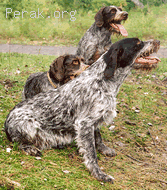
Head: Chiseled, fairly narrow, and long. Domed skull. Pronounced brow bones. Moderate stop. Nosebridge slightly curved, a bit longer than the skull. Muzzle tapering toward the nose. Powerful jaws. Typical beard on the cheeks and flews. Wide, dark brown nose.
Ears: Set on very high, tapering toward the tip. Lying very flat against the head.
Eyes: Almond-shaped, dark amber to chestnut-brown. Eyebrows standing at a slant.
Body: Compact. Neck medium in length, well-muscled, cleanly cut. Well-developed brisket. Oval chest. Well-sprung ribs. Short loin. Slight tuck-up. Short, stocky back sloping toward the croup. Fairly broad, slightly sloping croup.
Tail: Medium-sized. Carried level to the ground or slightly raised. Docked by three-fifths its length.
Hair: Three types of hair. Fairly hard, heavy guard hairs 3 to 4 cm long, lying very flat against the body. Long, hard, straight, bristles 5 to 7 cm long, absent from the chest, topline, groin, and shoulders. Soft, dense undercoat 1.5 cm long, shed almost completely in summer. Hair shorter and harder on the fronts of the legs. Feathering on the backs of the legs. Short and hard on the top of the head. Short and soft on the ears.
Coat: Colors allowed: dark roan with or without brown blotches, brown with ticking on the chest and lower legs, or solid brown with no markings.
Size: Dog: 60 to 66 cm. (23.6-26 in).Bitch: 58 to 62 cm. (22.8-24.5 in).
Weight: Dog: 28 to 34 kg. (62-75 lb).Bitch: 22 to 28 kg.

History

For centuries, a wirehaired dog once used by nobility for hunting lived in Bohemia. The first standard was written in 1887, but later the breed nearly went extinct. After World War II, it was revived through crosses with German pointers, including the Stichelhaar. A Cesky Fousek club was founded in 1924. Very popular in Czechoslovakia, the Bohemian Wirehaired Pointing Griffon ranks second among today’s hunting dogs. Recognized by the FCI in 1963, the breed remains rare.

Behavior

Very tough and hardy, the Bohemian Wirehaired Pointing Griffon has great endurance and is a multi-purpose dog. He can hunt in the woods and in swampland, where his thick coat protects him from bitter cold. He commonly hunts at a gallop and is a firm pointer and reliable retriever. He excels at locating wounded game. He is very attached to his owner and needs firm training.

Advice

He needs wide open spaces and lots of exercise, as well as regular brushing and attention to the ears.

Function

Hunting dog.
Bohemian_Wirehaired_Pointing_Griffon.gif

Group
Kennel Club of Great Britain, American Pet Registry Inc., American Canine Registry, National Kennel Club, American Canine Association
Native Country
Italy
Other Names
Bichon Bolognese
Breed Description

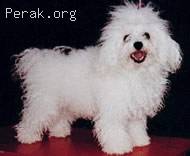
Head: Round. Skull fairly flat. Pronounced stop. Straight nosebridge. Front of muzzle nearly square. Large, black nose.
Ears: Set on high, long, pendulous. Upper pinna standing out from skull.
Eyes: Large, round, dark ocher. Edge of eyelids black.
Body: Square build. Neck without dewlap. Broad chest. Well-sprung ribs. Very slight tuck-up. Straight back. Very broad, nearly level croup.
Tail: Curved over the back.
Hair: Long on entire body. Shorter on the nosebridge. Fairly woolly, standing off the body in tufts. No feathering.
Coat: Pure white with no spots. No other shades of white.
Size: Dog: 27 to 30 cm.Bitch: 25 to 28 cm.
Weight: Dog: 2.5 to 4 kg.

History

The Bolognese’s origins are commingled with those of the Maltese, its close cousin. Their distant ancestors were the small dogs Aristotle called canes melitenses. Throughout Roman times, the Bolognese was a precious gift given among those in power. Italians believe the breed was born in the city of Bologna. A favorite of the Medici family during the Renaissance, he was popular until the late eighteenth century, when the Poodle took his place. Today, he is rarely found outside his native land.

Behavior

Lively, merry, docile, and very affectionate, the Bolognese is eager to please his owner and makes a wonderful pet. Never rambunctious, he is less restless than other bichons. He needs gentle training.

Advice

The Bolognese is an apartment dog. It needs moderate exercise and does not like being left alone. It requires daily dematting and combing and does not shed. It is very clean and needs bathing only once a month. For showing, it must be groomed.

Function

Pet.
Bolognese.jpg

Group
Herding Group - American Kennel Club, The American Int. Border Collie Registry, The American Border Collie Association, Continental Kennel Club, United Kennel Club, Kennel Club of Great Britain, Australian National Kennel Club, National Kennel Club, New Zealand Kennel Club, American Pet Registry Inc., American Canine Registry
Native Country
Great Britain
Breed Description

Head: Moderately long skull. Strong, relatively short muzzle. Distinct stop. Black, brown, or dark gray nose, according to coat color.
Ears: Medium size, set well apart, and carried erect or semi-erect.
Eyes: Oval, set well apart. Brown color except for merles, which may have blue eyes.
Body: Well-balanced and athletic. Strong neck. Ribs well sprung. Muscular loin. Moderately broad chest, well let down.
Tail: Moderately long. Set low, curving slightly up at the tip.
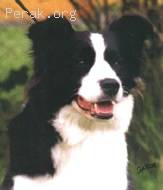
Hair: There are two varieties, the rough coat, which has a mane, culottes, and fox tail (brush), and the smooth coat. In both varieties, the coat is dense and of medium texture; dense, soft undercoat.
Coat: Generally pied, with white collar, blaze, and socks, with the remainder of the coat being black. All colors permissible, but white must not be the dominant color.
Size: Dog: 50 to 55 cm.Bitch: 47 to 52 cm.
Weight: 15 to 20 kg.

History

It is thought that the Border Collie’s ancestors are Nordic breeds that guarded reindeer herds. When they arrived on the British Isles with the Vikings, they were crossed with local sheepdogs. The Border Collie was named after the region where the breed was developed, the hilly border country between England and Scotland. The most common of the collies, the Border Collie still has the same duties today as he did in the eighteenth century—guarding the herd. The breed was not standardized until the nineteenth century. It was recognized by the Kennel Club of England in 1976 and by the Canadian Kennel Club in 1985. The Border Collie was introduced in France in 1970.

Behavior

This energetic, eager, dog is very gentle by nature, though is a tenacious worker. He is exceptionally devoted to his owner and is easy to train because he is alert and highly intelligent. The Border Collie is reserved toward strangers, but is not shy or aggressive. This breed has a keen sense of smell, but it is best known for its ability to «eye,» a skill that he uses to will sheep to move and turn. While working with his owner, the dog crouches a short distance from a sheep and stares intently into its eyes, seeming to hypnotize it; he then slowly creeps up like a hunting dog. The Border Collie is the best represented breed at herding trials.

Advice

This dog is a sheepdog through and through and must remain as such. His training begins around the age of six months and can last one or two years. He does not adapt well to urban living, though can adapt rather easily to life as a family pet. This tireless sheepdog requires daily exercise. No special grooming or other care is required.

Function

Sheepdog, pet.
Border_Collie1.jpg

Group
Terrier Group - American Kennel Club, Continental Kennel Club, Kennel Club of Great Britain, Canadian Kennel Club, United Kennel Club, Australian National Kennel Club, National Kennel Club, New Zealand Kennel Club, Club Español de Terriers (Spanish Terrier Club), American Pet Registry Inc., American Canine Registry
Native Country
Great Britain
Breed Description

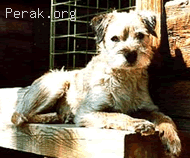
Head: Similar to that of an otter. Moderately broad skull. Strong, short muzzle.
Ears: Small, v-shaped, hanging forward along the cheeks.
Eyes: Dark color.
Body: Tall, narrow, fairly long. Neck of moderate length. Deep ribs carried well back; b loin.
Tail: Moderately short. Fairly thick at the root and tapering toward the tip. Carried gaily but not over the back.
Hair: Hard, dense. Thick undercoat.
Coat: Red, wheaten, grizzle and tan, blue and tan.
Size: Dog : no more than 40 cm (16 in).Bitch : no more than 36 cm (14 in).
Weight: Dog : 5,9 to 7,1 kg (13-16 lb).Bitch : 5,1 to 6,4 kg (11-14 lb).

History

As its name suggests, the Border Terrier originated in the Border country in southern Scotland. The breed is thought to be descended from an ancient type of Bedlington crossed with the Lakeland Terrier and the Dandie Dinmont Terrier. The breed received the name Border Terrier in 1880 and a Border Terrier club was formed in 1920. The breed was initially used to hunt fox and accompany hound packs.

Behavior

This rustic, courageous, strong, lively, dog possesses a seemingly boundless supply of energy. In fact, he is capable of keeping pace with a horse. While the border Terrier has a strong personality, he also has a happy disposition. He forms a strong bond with his owners and adores children. This breed is often aggressive when first meeting other dogs. Firm training is required.

Advice

The Border Terrier can adapt to living indoors if he frequently gets out for long walks. Occasional brushing is all that is required to maintain the coat. Professional grooming is not required.

Function

Hunting dog (hound type), pet.
Border_Terrier.gif

Group
Hound Group - American Kennel Club, Continental Kennel Club, United Kennel Club, Kennel Club of Great Britain, Canadian Kennel Club, Australian National Kennel Club, National Kennel Club, New Zealand Kennel Club, Borzoi Club in the UK, American Pet Registry Inc., American Canine Registry
Native Country
Russia
Other Names
Sowaya Barzaya.Russian Wolfhound.
Breed Description

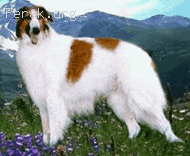
Head: Long, narrow, cleanly cut, finely chiseled. Flat, very narrow skull. Stop practically absent. Slightly curved nosebridge. Large, long, narrow, cleanly cut muzzle. Tight-lipped. Black nose.
Ears: Long, narrow, cleanly cut, finely chiseled. Flat, very narrow skull. Stop practically absent. Slightly curved nosebridge. Large, long, narrow, cleanly cut muzzle. Tight-lipped. Black nose.
Eyes: Large, almond-shaped, dark brown. Opening of the eyelids is edged in black and slightly slanted.
Body: Elongated. Neck long, well-muscled, flattened sideways, without dewlap. Brisket not very pronounced. Long, deep, narrow, flat chest. Pronounced tuck-up. Very muscular back forming an arch especially in males; highest point is at the last rib. Long, broad, muscular croup.
Tail: Set on low, long, forming a sickle. Abundant hair. Carried low at rest. Carried raised but not above the topline in action.
Hair: Long, silky, wavy, but not in large curls. Very thick around the neck, on the lower chest, backs of the legs, and tail. Short on the head, ears, and fronts of the legs.
Coat: White, any shade of gold; silvery gold; gold-shaded; black-shaded tan with dark muzzle and legs; grey; gold, tan, or grey brindle with long stripes of a darker shade; tan; black. Tan markings are allowed but not desirable. Dark-coated specimens have a characteristic black mask. All colors solid or spotted on a white ground.
Size: Dog: 70 to 82 cm. (27.5-32.5 in).Bitch: 65 to 77 cm. (25.5-30.5 in).
Weight: 35 to 45 kg (77.5-99.5 lb).

History

The Borzoi might be the product of crossing the Asian Greyhound with the northern Laika, or the Saluki with a Russian sheepdog, or the Arabian Greyhound with a longhaired indigenous dog. The breed is believed to have been set in Russia in the sixteenth century. The Borzoi was long the favorite pet of large Russian families who used the dog in wolf hunting. Borzois were sent to England in 1842 as gifts to Princess Alexandra. The breed was introduced to western Europe around 1850 and to the United States in 1889. The Russian Revolution of 1917 put an end to breeding by the Russian aristocrats. European breeders worked to protect the Borzoi, and breeding was later renewed in Russia.

Behavior

The very noble, seemingly impassive Borzoi was an excellent hunter of hare, fox, and wolf. Powerful, enthusiastic, and bold, this blue-blood has great stamina and is often attached exclusively to his owner. Not very patient with children, he is indifferent and even hostile toward strangers. He makes a good watchdog but rarely barks. He may bite other dogs. He needs firm but gentle training since he cannot tolerate harsh treatment.

Advice

It is better not to keep him in an apartment or leave him alone for long periods. He needs a great deal of space and exercise. He must be kept on a leash on walks, because he may try to chase cats and other animals. He requires brushing two or three times a week.

Function

Hunting dog, watchdog, companion dog.
Borzoi.gif

Group
National Kennel Club, American Pet Registry Inc., American Canine Registry, American Canine Association
Native Country
Bosnia
Other Names
Bosanski Ostrodlaki Gonic Barak
Breed Description

Head: Long, moderately broad. Slightly domed forehead. Very pronounced brow bones. Gently sloping stop. Straight nosebridge. Strong, long, rectangular muzzle covered with a bushy mustache and beard. Broad nose. Tight, thick lips.
Ears: Moderately long, broad. Pendulous, somewhat thick.
Eyes: Large, oval, chestnut-colored.
Body: Slightly longer than it is tall. Muscular neck. Moderately pronounced withers. Chest long, moderately broad. Ribs not very rounded. Very slight tuck-up. Broad, muscular back. Broad, slightly sloping croup. Supple, tight, well-pigmented skin.
Tail: Thick at the base, tapering toward the tip. Carried in sickle fashion in a loose, upward curve. Well-furnished with hair.
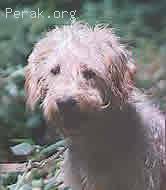
Hair: Long, hard, shaggy, disheveled. Thick undercoat.
Coat: Wheaten yellow, reddish-yellow, earth grey, or blackish ground. White markings often appear on the head and brisket, under the throat and neck, beneath the chest, and on the lower legs and tip of the tail. Colors may be combined in a bicolor or tricolor pattern.
Size: 46 to 56 cm. (18-22 in).
Weight: 16 to 25 kg (35-55 lb).

History

This breed created in the nineteenth century sports a coat similar to that of the Griffon Nivernais and has griffon blood; some believe he was also developed from molossian breeds. Initially known as the Illyrian Hound, the breed was recognized in 1965 as the Bosnian Roughhaired Hound.

Behavior

Stocky and powerful, this solidly boned dog is hardy, persistent, bold, and spirited. With his sonorous, deep voice and long, confident strides, he excels on all sorts of game on all kinds of terrain.

Advice

Affectionate, gentle, and calm, he makes a good pet but needs a firm owner and lots of space and exercise. He also requires daily brushing.

Function

Hunting dog, pet.
Bosnian_Roughhaired_Hound.jpg

Group
Non-Sporting Group - American Kennel Club, Continental Kennel Club, United Kennel Club, Kennel Club of Great Britain, Canadian Kennel Club, Australian National Kennel Club, National Kennel Club, New Zealand Kennel Club, American Pet Registry Inc., American Canine Registry
Native Country
United States Of America
Other Names
Boston Bull Terrier
Breed Description

Head: Angular, short. Skull angular, flat, without wrinkles. Well-pronounced stop. Short, angular, broad, high muzzle. Broad, angular jaws. Wide, black nose.
Ears: Set on high, small, carried erect, either natural or cropped.
Eyes: Large, round, well-spaced, dark.
Body: Fairly short. Neck slightly arched. Broad brisket. Chest well let-down. Well-sprung ribs.
Tail: Set on low, short, slender. Straight or screw. Should not be carried above the topline.
Hair: Short, smooth, fine.
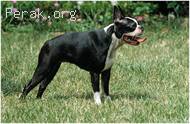
Coat: Brindle, seal color (black with chestnut highlights), or black with evenly spaced white markings. Required markings: white band around the muzzle, white flare between the eyes, white on the brisket. Forelegs entirely or partially white. White markings below the hocks on the hind legs are prized.
Size: 25 to 40 cm.
Weight: 7 to 11 kg.

History

The Boston Terrier was created by American breeders around 1870 for Boston’s traditional dog fights. To develop the breed, they crossed the Bulldog and the Bull Terrier in order to maximize the fighting skill of both breeds. Additional crosses were made with the French Bulldog. The Boston Terrier was first shown in Boston in 1870. In 1891, the Boston Terrier Club of America was founded. The breed is not very widespread in Europe.

Behavior

Tough, solid, and very lively, this ratter trained for dog fights seldom barks. He is very good-natured and has a big heart, making him a wonderful pet. He has even been nicknamed the «American Gentleman.» He is a vigilant little watchdog but is not aggressive. He needs firm training.

Advice

He can adapt to apartment life but needs regular exercise. He is clean and needs daily brushing. His eyes and the folds of his face must be cleaned.

Function

Compamion, pet.
Boston Terrier 5.jpg

Group
National Kennel Club, American Pet Registry Inc., American Canine Registry, American Canine Association
Native Country
France
Breed Description

Head: Solid. Rounded skull. Slightly pronounced stop. Straight or slightly curved nosebridge. Strong, cone-shaped muzzle. Solid jaws. Nose the same color as the coat.
Ears: Hanging along cheeks, minimally curled, reaching slightly past the throat when outstretched.
Eyes: Large, hazel or dark amber, depending on coat color.
Body: Can be inscribed inside a square. Very open, muscular neck, slight dewlap tolerated. Pronounced withers. Broad, long, tall chest. Well-curved ribs. Loin short and broad. Flank flat, slight tuck-up. Back short, fairly level. Rounded, moderately sloping croup.
Tail: Set on fairly low, naturally short. Tail should be either absent or short (no longer than 15 cm)(6 in).
Hair: Short, fine, dense. Somewhat thicker and sometimes longer on the back.
Coat: - Chestnut with patching, heavily to moderately spotted, hairs relatively mixed. As a whole, the coat may have a pale lilac cast.- Fawn with patching, heavily to moderately speckled, hairs closely mixed. As a whole, the coat mayhave a pale peach cast. Colored markings on the head, whether symmetrical or not, are allowed only ifthey are unobtrusive and if both eyes are not in the same spot.
Size: Dog: 51 to 57 cm (20-22.5 in).Bitch: 48 to 55 cm (19-22 in).
Weight: Dog: 18 to 25 kg (40-55 lb).Bitch: 16 to 22 kg (35-48,5 lb).

History

The Bourbonnais Pointing Dog was already known in the sixteenth century as a skilled quail hunter. He was described as hardy, born with a short tail and sporting a white coat speckled with fawn or covered or dotted with pale chestnut spots. The breed was fairly popular in the early twentieth century, but the two World Wars nearly spelled itsend. A breed club was founded in 1925. Currently, breeders are working toward the survival of the breed.

Behavior

Hardy, not very fast and with a keen nose, the Bourbonnais Pointing Dog adapts easily to any terrain and to a wide variety of quarry. An excellent tracker, he points precisely and is known as a specialist in partridge and woodcock. Gentle and affectionate, he is a wonderful companion. He needs firm but gentle training.

Advice

He needs space and exercise. If he lives in he city, he needs several daily outings. He requires regular brushing and checking of the ears.

Function

Hunting dog, companion, pet.
Bourbonnais_Pointing_Dog.jpg

Group
National Kennel Club, American Pet Registry Inc., American Canine Registry, American Canine Association
Native Country
Belgium
Other Names
Ardennes Cattle Dog
Breed Description

Head: Massive, relatively short. Stop not pronounced. Short, broad muzzle with goatlike beard. Tight-lipped jaws.
Ears: Not cropped. Flat ears are not permissible. Erect ears breaking forward and semi-prick folding to the side are permitted.
Eyes: Dark color. Gold color or walleyes not permissible.
Body: Medium size. Short, thick neck. Broad forechest. Broad, deep chest. Ribs well sprung. Belly not tucked up. Topline (back, loin, croup) powerful, broad, and horizontal.
Tail: Naturally tailless or docked to one vertebra.
Hair: Rough, mussed, 5 cm long. Must be shorter on the head and legs. Very thick undercoat.
Coat: All colors permitted.
Size: Approx. 60 cm.
Weight: 22 to 25 kg.

History

Some believe that the Bouvier des Ardennes was the result of a cross between the Belgian Cattle Dog and the Picardy Shepherd. Others maintain that it is a native breed, probably developed around the eighteenth century by crossing several local sheepdog breeds.

Behavior

This rustic breed is accustomed to living outdoors, tough guard work, and herding cattle, at which it excels. This tough, hard-working dog is always on the alert and is wary of strangers. He is affectionate with his owner and very obedient.

Advice

Care and functionsThis dog is not made for city living. He needs space and a lot of exercise. Regular brushing is required.

Function

Herder, guard dog, pet.
Bouvier_des_ Ardennes.jpg

Group
Herding Group - American Kennel Club, Continental Kennel Club, United Kennel Club, Kennel Club of Great Britain, Canadian Kennel Club, Australian National Kennel Club, National Kennel Club, New Zealand Kennel Club, American Pet Registry Inc., American Canine Registry
Native Country
Belgium
Other Names
Vlaamse Koehond, Flanders Cattle Dog
Breed Description

Head and Skull: The head should appear big, the moustache and beard making it appear even more so, in proportion to the body and height. When handled it should be found to be well chiselled. Well developed and flat, the skull should be slightly broader than it is long. The lines of the under side of the skull and the top should be parallel. The proportion of the length of the skull in relation to the muzzle should be as 3 is to 2. A very slight furrow in the forehead. The stop not very deep, but appearing so, due to the heavy eyebrows. The muzzle broad, strong and bony, rectangular when seen from the front, gradually narrowing towards the nose, but never becoming pointed. The circumference, measured just in front of the eyes, should be approximately equal to the length of the head. Extending the foreface in a slightly convex line towards its tip, the nose should be very well developed, rounded at its edges and always black. Nostrils wide. Cheeks flat and clean.
Eyes: Honest, alert in expression. Neither protruding nor set too deeply. Slightly oval in shape and horizontally placed. As dark as possible in colour in relation to the coat. Light or wild looking eyes to be strongly penalised. Eyelids black, with no sign of loss of pigment. Conjunctiva should never be visible.
Ears: Set on high, very flexible; in proportion to the head.
Mouth: Jaws strong and of equal length. Teeth strong and white with a perfect regular and complete scissor bite i.e., the upper teeth closely overlapping the lower teeth and set square to the jaws.
Neck: Strong, well muscled and thickening slightly towards the shoulders. A little longer than the length of the head, nape strong and arched. No sign of dewlap.
Forequarters: Forelegs very strong and absolutely straight. Shoulders relatively long, muscular without heaviness and placed obliquely. Shoulder blade and upper arm of equal length. Elbows set well into body and parallel, never turning in or out. Forearms, seen either from the front or the side, absolutely straight, parallel to each other and perpendicular to the ground. Well muscled and heavy boned. Pasterns strong, fairly short, sloping very slightly.
Body: Strong, deep, broad and compact with very little tuck-up. Length from point of shoulder to point of buttock about equal to height at withers. Chest should descend to level of elbows and should not be cylindrical, although the ribs should be well sprung. Croup should continue, as far as possible, the horizontal line of the back and blend imperceptibly with the curve of the rump. Broad but not excessively so in the dog, broader in the bitch. A rising croup, or one which falls away, is a very serious fault.
Hindquarters: Hindlegs very strong with pronounced muscle. They should move in the same plane as the forelegs. Thighs broad and well muscled. Hocks well let down. Dew claws should be removed.
Feet: Short, round and compact. Toes tight and well arched. Nails black and strong. Pads thick and hard.
Gait: Proud, upright bearing. Ambling is permitted.
Tail: Docked to 2 - 3 vertebrae. It should continue the normal line of the vertebral column and be carried gaily when moving. Dogs born tailless should not be faulted for this.
Coat: Hair coarse to touch, dry and matt. Neither too long nor too short, about 6 cm (2.5 in), unkempt looking but never woolly or curly. On the head it should be shorter and the outside of the ears almost bare, with the inside of the ear protected by fairly long hair. The coat should be particularly thick and “crackly” on the top of the back, gradually becoming shorter as it comes down the legs. It should be always harsh. A flat coat is to be avoided since it denotes lack of undercoat, which should be normally fine and close grained. The upper lip well moustached, the lower carrying a full harsh beard, which gives the forbidding expression so characteristic of the breed. Eyebrows formed of backward sweeping hairs which accentuate the shape of the eyebrows but which never hide the eyes.
Color: Usually fawn or grey, often brindled or shaded. Black is also permissible and no colour shall have preference. Light, washed out shades are undesirable.
Weight and Size: Ideal weight: Dogs 35 - 40 kg (77 - 88 lb). Bitches 27 - 35 kg (59.5 - 77 lb). Ideal height: Dogs 62 - 68 cm (24.5 - 27 in) Bitches 59 - 65 cm (23 - 25.5 in). In either sex the ideal is midway between the measurements.

History

The Bouvier Des Flandres is also known as the Belgian Cattle Dog or the Vlaamse Koehund, (and sometimes Dirty Beard!). This dog takes its name from its place of origin, the plains of Flanders in Belgium; and the French word “bouvier” means herdsman. However, not much more information exists about its ancestral origins. Some claim it descended from the Schnauzer, while others suggest the breed is a mix of several European herding breeds, the Flemish Cattle Dogs in particular. Although its history is vague, its value as a working dog has never been questioned, whether it be herding, guarding the farm, or cart pulling. Before the Machine Age, the Bouvier was used to drive cattle to market, and later, the strong and capable dog proved its merit on the battlefields of WWI and WWII. The breed is still used for police and protection work. A breed standard was not agreed upon until 1922, and since then the breed has found favour all over the world.

Behavior

Intelligent and obedient Bouvier Des Flandres looks mean but in reality is calm and gentle. They are excellent at learning and once they learn a command the will remember it their entire lives. Bouvier Des Flandres are known for their loyalty. They require an experienced handler and are often protective of their families. Bouvier Des Flandres do not reach adulthood until they are 2-3 years old.

Advice

This breed needs peaceful surroundings and exercise to blossom, and require regular brushing.

Function

Currently the Bouvier serves as a watchdog, guardian, family companion and as a tracking dog. This breed has also been used as a guide for the blind and in search & rescue. It will also succeed in police work, military work, carting, agility, competitive obedience.
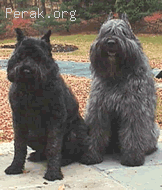
Bouvier_des_Flandres.gif

Group
Working Group - American Kennel Club, United Kennel Club, Kennel Club of Great Britain, Canadian Kennel Club, Australian National Kennel Club, National Kennel Club, New Zealand Kennel Club, Canadian Canine Registry, Continental Kennel Club, American Pet Registry Inc., American Canine Registry
Native Country
Germany
Other Names
Deutscher Boxer, German Boxer
Breed Description

Head: Harmonious proportions. Clean and square. Domed skull. Distinct stop. Muzzle as broad and powerful as possible. Lower jaw protrudes beyond the upper jaw and curves slightly upward (prognathism).
Ears: Set on high. Not too broad. Cropped to a point, held erect.
Eyes: Not too small, not protruding. Dark brown color. Dark rims.
Body: Square. Round, powerful neck. Broad, deep forechest. Deep brisket. Well sprung ribs. Short, muscular loin. Straight, muscular back.
Tail: Set high. Docked and carried erect.
Hair: Short and lying close to the body, hard, thick, and shiny.
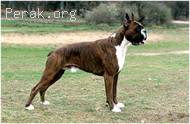
Coat: Fawn or brindle. Shades of fawn from light tan to mahogany, preferably golden-red. Black mask. Brindle coat has dark or black streaking on a fawn background. White markings are permissible.
Size: Dog: 57 to 64 cm. (22.5-25 in).Bitch: 53 to 60 cm. (21-23.5 ).
Weight: 25 to 30 kg (55-66 lb).

History

Like all mastiffs, the Boxer’s ancestors included eastern Molossians, breeds used for fighting and defending their charges against wild animals. The German Bullenbeisser (now extinct) was crossed with the English Bulldog to create the modern Boxer in 1890. The Boxer was first shown in 1896 in Munich and a standard was established some ten years later. This breed was used by the German army during World War One. The Boxer is very popular as a pet and guard dog.

Behavior

This is an energetic, impetuous, dominant, self-assured breed. The Boxer must be calm, well-balanced, and sociable. He forms a strong bond with his family and remains loyal at all cost. Alert and wary toward strangers, he demonstrates fearless courage in his role as protector and guard. Training should start at a very young age.

Advice

The Boxer can make a good house dog, but he must be given a considerable amount of exercise. His short coat requires little care.

Function

Guard and defense dog, utility dog: police dog, guide dog, pet.
Boxer (US) 11.jpg

Group
Boykin Spaniel Club of Breeders Assoc. of America, United Kennel Club, National Kennel Club, Continental Kennel Club, American Pet Registry Inc., Boykin Spaniel Society, American Canine Registry
Native Country
United States Of America
Breed Description

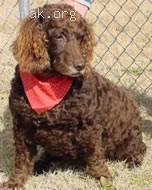
The Boykin Spaniel has a Spaniel type head. The tail is docked. The waterproof coat is rather wavy or curly, but a smooth coat is acceptable (hunters care more about the dogs hunting abilities than its coat type). Color- Liver or Brown. The Boykin is larger than the Cocker Spaniel, with a smaller higher set ears that are covered with long wavy hair. He has considerably less hair and a straighter muzzle.

History

A brown spaniel-type dog was found outside a church in Spartanburg after service by Mr. Alexander Lawrence White (1860-1942) sometime between 1905-1910. The dog was named “Dumpy”, but showed some aptitude for hunting. Mr. White took the dog to his friend, Mr. Lemuel Whitaker “Whit” Boykin (1861-1932) for training.

Whit Boykin lived in the the Wateree River basin located in the midlands of South Carolina. The post-Civil War economy lead well-to-do Northerners to make the Camden area their winter home. Whit Boykin provided dogs to the vacationers to hunt the Wateree swamp areas using “section boats”. Dumpy filled a roll sought after; he was an excellent hunting dog in a size smaller than the current retrievers that were available at that time. Thus the Boykin Spaniel became known as the breed that wouldn’t “rock the boat”.

Whit Boykin bred Dumpy with a female dog described as a small curly, reddish-brown spaniel-type found in an unclaimed crate at the Camden railroad station. Whit named the female “Singo” and thus the Boykin Spaniel breed was created. Speculation on this female’s breed has continued to this day; it is reasonable to believe she was a hunting breed since shipping dogs to this area of the country would be limited.

Later other hunters would breed their ‘Boykins’ to different gun dogs, including Chesapeake Bay Retriever, Brittany, several Spaniel breeds, Pointers, and Setters as well as reports of dogs further removed from the hunting gene pool such as Miniature Poodles.

About 6 decades after Dumpy was first found in Spartanburg a breed registry was formed. Their mission was to document the breed in a registry to encourage breeding of purebred Boykins, and ultimately obtain national recognition in a recognized organization such as UKC and AKC.

The Boykin registry applied to the AKC for recognition in the early years of formation but were unsuccessful and on further attempts to become recognized they decided to abandon the project. In the late 1990’s, a group of people who still desired AKC recognition formed the Boykin Spaniel Club & Breeders Assoc. of America.

In July 2005, the club was named the Official AKC Parent Club of the Boykin Spaniel. Although they remained an AKC FSS breed at that time, the AKC felt the club had made progress to the point of allowing them to begin participating in AKC events. In January 2006, the breed was allowed to participate and earn titled in AKC Spaniel Hunt Tests. In July 2006, they became eligible to compete in AKC agility, obedience, rally and tracking.

Behavior

The Boykin Spaniel is a working dog and needs a lot of daily exercise. They have a high drive, very willing, intensely energetic dog that needs adequate exercise and a job to do daily to burn off energy and exercise their very nimble mind. They will find ways to entertain themselves if not provided by their owner and can be very destructive when bored.

Advice

Requires brushing ever few days to avoid coat matting.

Function

Hunting, companion pet.
Boykin_Spaniel.jpg

Group
National Kennel Club, American Pet Registry Inc., American Canine Registry, American Canine Association
Native Country
France
Other Names
Ariege Pointer, Braque de Toulouse, Braque du Midi
Breed Description

Head: Long, angular, narrow. Slightly domed skull. Fairly pronounced occipital peak. Slight stop. Long, straight, sometimes slightly convex nosebridge. Fairly thin lips. Pink, reddish (flesh-colored), or chestnut lips, depending on coat color.
Ears: Long, thin, curled, not flat against the head.
Eyes: Slightly oval, dark amber or brown.
Body: Neck not very long, fairly b, slight dewlap. Pronounced withers. Chest broad, high, well let-down. Rounded ribs. Slight tuck-up. Slightly sloping croup. Back straight and somewhat long.
Tail: Thick at the base, tapering toward the tip. Docked by about half. Should not be raised higher than the topline.
Hair: Short, dense, glossy. Finer and lying closer to the body on the head and ears.
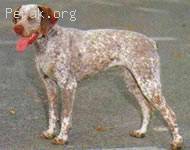
Coat: Light orangish fawn or sometimes chestnut with predominant white patching (speckles or flecks). Some dogs are even white with speckles or flecks.
Size: Dog: 60 to 67 cm. (23.6-26.4 in).Bitch: 56 to 65 cm. (22-25.6 in).
Weight: 25 to 30 kg (55-66 lb).

History

The Braque de l’Ariege is the result of nineteenth-century crosses of the old French Pointing Dog with white- and orange-coated pointers from southern France and perhaps the Saint Germain Pointer for added lightness and vigor. Hunters and breeders in Ariège, France are dedicated to the survival of the breed.

Behavior

This hardy, very energetic dog with an excellent sense of smell is a skilled retriever suited to all kinds of hunting. He is used particularly on partridge and quail. Quick and independent, he needs firm training.

Advice

He needs space and exercise, as well as regular brushing.

Function

Hunting dog.
Ariege_Pointer.jpg