狗的种类 (应该有五百多种)

Group
National Kennel Club, American Pet Registry Inc., American Canine Registry, American Canine Association
Native Country
France
Other Names
Ariege Pointer, Braque de l’Ariege, Braque du Midi
Breed Description

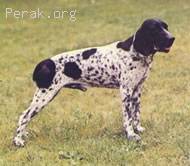
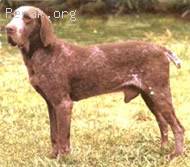
Head: Long, angular, narrow. Slightly domed skull. Fairly pronounced occipital peak. Slight stop. Long, straight, sometimes slightly convex nosebridge. Fairly thin lips. Pink, reddish (flesh-colored), or chestnut lips, depending on coat color.
Ears: Long, thin, curled, not flat against the head.
Eyes: Slightly oval, dark amber or brown.
Body: Neck not very long, fairly b, slight dewlap. Pronounced withers. Chest broad, high, well let-down. Rounded ribs. Slight tuck-up. Slightly sloping croup. Back straight and somewhat long.
Tail: Thick at the base, tapering toward the tip. Docked by about half. Should not be raised higher than the topline.
Hair: Short, dense, glossy. Finer and lying closer to the body on the head and ears.
Coat: Light orangish fawn or sometimes chestnut with predominant white patching (speckles or flecks). Some dogs are even white with speckles or flecks.
Size: Dog: 60 to 67 cm. (23.6-26.4 in).Bitch: 56 to 65 cm. (22-25.6 in).
Weight: 25 to 30 kg (55-66 lb).

History

The Braque de Toulouse is the result of nineteenth-century crosses of the old French Pointing Dog with white- and orange-coated pointers from southern France and perhaps the Saint Germain Pointer for added lightness and vigor. Hunters and breeders in Ariège, France are dedicated to the survival of the breed.

Behavior

This hardy, very energetic dog with an excellent sense of smell is a skilled retriever suited to all kinds of hunting. He is used particularly on partridge and quail. Quick and independent, he needs firm training.

Advice

He needs space and exercise, as well as regular brushing.

Function

Hunting dog.
Ariege_Pointer.jpg

Group
National Kennel Club, American Pet Registry Inc., American Canine Registry, American Canine Association
Native Country
France
Other Names
Ariege Pointer, Braque de l’Ariege, Braque de Toulouse
Breed Description

Head: Long, angular, narrow. Slightly domed skull. Fairly pronounced occipital peak. Slight stop. Long, straight, sometimes slightly convex nosebridge. Fairly thin lips. Pink, reddish (flesh-colored), or chestnut lips, depending on coat color.
Ears: Long, thin, curled, not flat against the head.
Eyes: Slightly oval, dark amber or brown.
Body: Neck not very long, fairly b, slight dewlap. Pronounced withers. Chest broad, high, well let-down. Rounded ribs. Slight tuck-up. Slightly sloping croup. Back straight and somewhat long.
Tail: Thick at the base, tapering toward the tip. Docked by about half. Should not be raised higher than the topline.
Hair: Short, dense, glossy. Finer and lying closer to the body on the head and ears.
Coat: Light orangish fawn or sometimes chestnut with predominant white patching (speckles or flecks). Some dogs are even white with speckles or flecks.
Size: Dog: 60 to 67 cm. (23.6-26.4 in).Bitch: 56 to 65 cm. (22-25.6 in).
Weight: 25 to 30 kg (55-66 lb).

History

The Braque du Midi is the result of nineteenth-century crosses of the old French Pointing Dog with white- and orange-coated pointers from southern France and perhaps the Saint Germain Pointer for added lightness and vigor. Hunters and breeders in Ariège, France are dedicated to the survival of the breed.

Behavior

This hardy, very energetic dog with an excellent sense of smell is a skilled retriever suited to all kinds of hunting. He is used particularly on partridge and quail. Quick and independent, he needs firm training.

Advice

He needs space and exercise, as well as regular brushing.

Function

Hunting dog.
Ariege_Pointer.jpg

Group
Herding Group - American Kennel Club, Continental Kennel Club, United Kennel Club, Kennel Club of Great Britain, Canadian Kennel Club, Australian National Kennel Club, National Kennel Club, New Zealand Kennel Club, American Pet Registry Inc., American Canine Registry
Native Country
France
Other Names
Berger de Brie
Breed Description

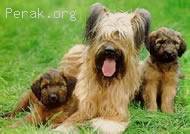
Head: Strong and long. Pronounced stop. Rectangular forehead. Squarish nose. Head covered in hairs forming a beard and mustache with fall shading the eyes.
Ears: Set on high. Preferably cropped and carried erect.
Eyes: Set horizontally. Large and of dark color. Long fall covering the eyes.
Body: Solid, muscular, well constructed and of good length. Broad, deep chest. Muscular loin. Slightly sloped croup. Straight back.
Tail: Not docked. Well-feathered, forming a hook at the tip. Carried low, not falling to the right or left.
Hair: Coarse, dry (goat hair), light undercoat no more than 7 cm long. (2.8 in).
Coat: All uniform colors (except white), brown, mahogany, and bi-color. Dark colors are preferred.
Size: Dog: 62 to 68 cm. (24.4-26.8 in).Bitch: 56 to 64 cm. (22-25 in).
Weight: 30 to 40 kg. (66-88 lb).

History

Like the Berger de Beauce, the Briard descended from (Plains Dogs) from the region around Paris. The name Chien de berger de Brie describing long-haired sheepdogs was first used in 1809 at the Agriculture Show at the Rozier Abby. In 1863 at the first dog show in Paris, a bitch resembling a Briard placed Best in Show. In 1888, P. Megnin wrote in L’Eleveur (Breeder), (The Briard is a cross of the Barbet with the Berger de Beauce, the Briard’s distinguishing trait being his long, wooly coat.) The Briard was registered for the first time in 1885 with the LOF. The first standard was written by the French shepherd dog club in 1897, describing a variety with wooly hair and another with goat hair. The goat hair variety won out and is the breed described in the current 1988 FCI standard. During WW I, the Briard was used as a guard dog. Cropping this breed’s ears is an old practice. Originally, the ears were cropped so there would be fewer exposed areas where other dogs or wolves attempting to attack the flock could get a grip.

Behavior

Though he looks a bit like a teddy bear, this dog is a proud, powerful athlete. He is agile, well-balanced, courageous, wise, and vigorous. Underneath his hard exterior lies a heart of gold. The Briard is very affectionate, loyal, and playful. He is very attached to his owner and plays well with children. He is reserved with strangers. The male is dominant. Strict training from a very young age is required for this somewhat stubborn, independent dog. He does not reach full maturity until the age of two or three.

Advice

This robust, active, powerful dog needs lots of space and exercise. He is not a city-dweller. His coat should be brushed and combed regularly to keep it mat-free: two to three times per week if he in an outdoor dog; once per week if he is an indoor dog.

Function

Sheepdog, pet.
Briard.jpg

Group
National Kennel Club, American Pet Registry Inc., American Canine Registry, American Canine Association
Native Country
France
Other Names
Artois Hound
Breed Description

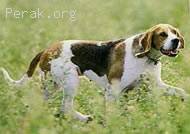
Head: Heavy, broad, fairly short. Slightly domed skull. Stop not pronounced. Bridge of nose broad and straight, not very long. Well-developed nose. Lips somewhat thick. Ears: Set on at eye level, large, thick, nearly flat, and fairly long.
Eyes: Large, prominent, very wide
Body: Massive. Neck fairly long, powerful. Very slight dewlap. Wide brisket. Fairly broad, well let-down chest. Ribs fairly rounded. Loin broad and muscular. Flank let-down and very full. Broad, slightly sloping croup. Well-muscled, moderately long back.
Tail: Fairly long, tufted, and carried in sickle fashion.
Hair: Lying close to the body, thick, fairly b.
Coat: Tricolor: white, dark fawn to hare or even badger grey, with mantle or large black spots. Head usually fawn, sometimes smoky.
Size: 52 to 58 cm (20.5-22.8 in).
Weight: 25 to 30 kg (55-66 lb).

History

This very old, medium-sized pack hound was nearly extinct by the early twentieth century. It has made a comeback, but is still rare. It was first mentioned in the fifteenth century and is believed to have been used by royalty for deer hunting. The result of crosses between scenthounds and pointers, the Briquet d’Artois was also popular throughout the centuries as a hare-hunting dog. His ancestor is the Great Briquet d’Artois, himself descended from the Saint Hubert. A splash of English blood modified the breed.

Behavior

Hardy, robust, and courageous, the Briquet d’Artois has great stamina and is even-tempered and calm. This medium-sized hound combines the qualities of pointers and scenthounds: a strong sense of direction, a very keen nose, precise pointing, speed, and drive. A hare hunter, he is also used on deer, wild boar, and fox. He needs a firm owner.

Advice

He needs space and exercise and requires regular brushing.

Function

Hunting Dog.
Artois_Hound.jpg

Group
National Kennel Club, American Pet Registry Inc., American Canine Registry, American Canine Association
Native Country
France
Breed Description

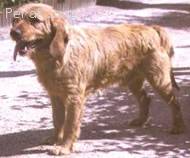
Head: Fairly long skull, never flat. Pronounced occipital peak. Long, straight or slightly curved nosebridge. Stop not very pronounced in the Brittany Fawn Griffon, more pronounced in the Brittany Fawn Basset. Nose black or dark brown.
Ears: Set on at eye level, nearly reaching the muzzle when outstretched, turning slightly and with a pointed tip. Covered with close-lying hair.
Eyes: Dark brown.
Body: Vigorous. Compact in the Brittany Fawn Basset. Fairly short, muscular neck. Tall, broad chest. Fairly rounded ribs. Slight tuck-up.
Tail: Carried loosely in sickle fashion, medium in length. Thick at the base, tapering toward the tip, often tufted.
Hair: Very hard, crisp, fairly short, never woolly or frizzy. Foreface should never be bushy.
Coat: Fawn. The best shades are wheaten gold and brick red, sometimes with flashings on the chest.
Size: - Brittany Fawn Griffon: dog: 50 to 56 cm (19.7-22 in); bitch: 48 to 52 cm. (19-20.5 in).- Brittany Fawn Basset: 32 to 38 cm. (12.5-15 in).
Weight: - Brittany Fawn Griffon: approx. 23 kg. (51 lb).- Brittany Fawn Basset: approx. 15 kg. (33 lb).

History

The Great Brittany Fawn, which currently comes in two varieties—the Brittany Fawn Griffon and the Brittany Fawn Basset—is a very ancient breed. It was once used in famous large packs, such as that of Anne de Beaujeu, the daughter of King Louis XI. These spirited, strong-willed, yellowish- and reddish-fawn dogs standing 60 to 65 cm tall were the best wolf hunters around. The breed nearly went extinct in the late nineteenth century, when wolves became scarce. Crossbreeding produced a more lightweight hound, the Brittany Fawn Basset, for which the first standard was established in 1921. The Brittany Fawn Griffon—a medium-sized version of the Great Brittany Fawn—was declared extinct in 1928. But after World War II in 1949, a Medium-sized Brittany Fawn club was created. In 1981, the club saved the breed when it decided to include the Brittany Fawn Griffon (now the breed’s official name), standing 48 to 56 cm tall at the withers, and the Brittany Fawn Basset, standing 32 to 38 cm tall. The rapidly increasing popularity of these varieties, especially the basset, is encouraging.

Behavior

The Great Brittany Fawn gave its modern-day descendents its hardiness, courage, vigor, spirit, speed, keen nose, strong will, and independent personality. The Brittany Fawn Basset, with his difficult character and stubbornness (crosses with the Vendée Griffon Basset have calmed him down), hunts alone, in pairs, in small groups, or in packs. He works in thickets, and rabbit is his specialty. When well-trained, he makes a good bloodhound. The Brittany Fawn Griffon is a very courageous, excellent pack leader with a glorious voice. He excels at wild boar and fox. Some also use him on hare and deer. Both varieties are calm and affectionate with their owner. These strong-willed hounds need firm training.

Advice

The Brittany Fawn Griffon, raised chiefly in packs, is usually kept in a kennel. The Brittany Fawn Basset can live with his owner inside the house or in an outdoor run. Both need space and lots of exercise, as well as regular brushing and attention to the ears.

Function

Hunting dog.
Brittany_Fawn.jpg

Group
Sporting Group - American Kennel Club, Continental Kennel Club, United Kennel Club, Kennel Club of Great Britain, Canadian Kennel Club, Australian National Kennel Club, National Kennel Club, New Zealand Kennel Club, American Pet Registry Inc., American Canine Registry
Native Country
France
Other Names
Épagneul Breton
Breed Description

Head: Round. Rounded skull. Gently sloping stop. Straight nosebridge. Thin lips.
Ears: Set on high, fairly short, slightly rounded, covered with wavy hair.
Eyes: Dark amber, matching coat color.
Body: Square build. Neck medium in length. Deep chest. Fairly rounded ribs. Short, broad loin. Tuck-up. Short back. Slightly receding croup.
Tail: Straight or hanging down (unless the animal is tailless). Always short, about 10 cm in length. Often slightly twisted with a tuft at the tip.
Hair: Not too fine, fairly flat or very slightly wavy, never curly.
Coat: White and orange. White and brown. White and black. Tricolor (white, black, and tan) or roan (colored hair mixed with white).
Size: Dog: 48 to 50 cm (19-20 in). Bitch: 47 to 49 cm (18.5-19 in).
Weight: Dog: 15 to 18 kg (33-40 lb). Bitch: 14 to 15 kg (31-37.5 lb).

History

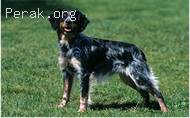
The Brittany Spaniel is one of the descendents of the Chien d’Oysel, a breed trained in the Middle Ages for netting game birds. He is the product of the initially accidental nineteenth-century crossbreeding of Brittany farm dogs—short, broad-backed, hardy, and used on woodcock—with English Setters, English Pointers, and English Springer Spaniels left in France during the off-season by British hunters in order to improve the new breed’s nose and speed. The Brittany Spaniel became increasingly popular. Mr. de Pontavic and Mr. de Combouz presented the breed in 1896 in Paris, and a breed club was founded in 1907 in Londéac. The first standard was adopted in 1908 and revised in 1938. The Brittany Spaniel is the second most popular dog in France, and the most popular French breed abroad. He is one of the most common pointers in the United States.

Behavior

This hardy, enthusiastic, tireless dog with a fighting spirit can hunt on any type of terrain. (Maximum quality for minimum size) could be the motto of the breed club for this lightweight dog. With an excellent nose, he tracks rapidly, points firmly, and is a very good waterfowl retriever. A multi-purpose dog, he hunts game birds, preferring woodcock and snipe. Even-tempered, gentle, intelligent, and good-natured, he is a delightful pet. He needs gentle training.

Advice

He can adapt to apartment life as long as he gets long, daily walks to let off steam. He requires brushing once or twice a week, as well as regular attention to the ears.

Function

Hunting dog companion dog.
Brittany Spaniel.jpg

Group
Toy Group - American Kennel Club, Continental Kennel Club, United Kennel Club, Kennel Club of Great Britain, Canadian Kennel Club, Australian National Kennel Club, National Kennel Club, New Zealand Kennel Club, American Pet Registry Inc., American Canine Registry
Other Names
Belgian Griffons, Griffon Belge, Griffon Bruxellois, Petit Brabancon
Breed Description

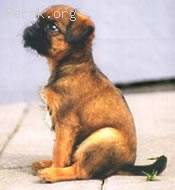
Head: Broad and round. Well-domed forehead. Prominent chin. Lower incisors cover upper incisors in an underbite. Hard, tousled hair, long around the eyes, nose, cheeks, and chin. Wide, black nose.
Ears: Very straight, always cropped to a point.
Eyes: Very large, round, black. Eyelids edged with black.
Body: Square build. Chest fairly broad and deep.
Tail: Raised, docked by one-third.
Hair: Brussels and Belgian Griffons: medium in length, hard, tousled, dense.- Small Brabant: short.
Coat: Brussels Griffon: Reddish-brown. Minimal black markings on the mustache and chin are tolerated.- Belgian Griffon: Black, black and tan, and a combination of black and reddish-brown are the only colors allowed.- Small Brabant: reddish-brown and black and tan are the only colors allowed. A black mask is not a fault.
Size: Large variety: approx. 28 cm.Small variety: approx. 24 cm.
Weight: Large: dog: less than 4.5 kg; bitch: less than 5 kg.Small: dog: less than 3 kg; bitch: less than 3 kg.

History

There are three varieties of small Belgian dogs that differ only in coat type and color:- The Brussels Griffon (Brussels Griffontje) has hair of medium length;- The Belgian Griffon (Belgische Griffontje) also has hair of medium length; and- The Small Brabant (Kleine Brabandere) has short hair.- The Brussels Griffon, the oldest variety, is descended from the Barbet (Belgian kennels). Selection and improvement of the variety began before 1880 in Brussels. Numerous crosses were made with the Barbet (Belgian kennels), griffons (Belgian kennels), the Brussels Griffon , the Yorkshire Terrier, the Pug, and the solid ruby (reddish-brown) King Charles Spaniel. The Brussels Griffon was first shown in Brussels in 1880. The first standard was published in 1883 and modified in 1904. Belgium’s Royale Saint-Hubert recognizes the Brussels Griffon and its two varieties, the Belgian Griffon and the Small Brabant. Specimens were first shown in France in 1889, in the city of Roubaix. In 1894, the Central Canine Society created a class for Brussels Terriers. Breeding was interrupted by both World Wars. Great Britain is the country with the highest population of small griffons. In France, the population remains very limited.- The Belgian Griffon was developed by crossing the Brussels Griffon with the Pug and perhaps with toy terriers. The type was set in 1905, and the Central Canine Society recognized it as a distinct «breed» in 1908. The Belgian Griffon nearly went extinct during World War I. Breeding resumed in 1928, but the Belgian Griffon is the least common of the small Belgian dogs.- The Small Brabant is also descended from a cross between griffons (Belgian kennels) and other breeds, particularly the Pug. The Small Brabant is very uncommon.

Behavior

Brussels Griffon: Tough, energetic, lively, and merry, this dog is very attached to his owner. He rarely barks, but his vigilance makes him a good little watchdog.- Belgian Griffon: This lively, merry, even-tempered dog is quite tough and vigorous and makes a very good pet. Vigilant and vocal, he makes a good watchdog. He is also a good eliminator of pests.- Small Brabant: This very confident, lively, strong-willed dog is quite intelligent and makes a good pet.These dogs need firm training.

Advice

The Brussels Griffon is well-suited to apartment life but does not like being left alone. This very clean dog requires regular brushing and must be groomed every three months to maintain his handsome appearance. He does not tolerate heat well. His eyes must be checked regularly.- The Belgian Griffon can live in an apartment, as long as he gets regular walks. He requires daily brushing and regular grooming. His eyes and the folds on his face must be checked regularly.- The Small Brabant is a very clean city dog. Regular brushing is enough to maintain his wiry coat.

Function

Pet.
Brussels_Griffon.jpg

Group
Terrier Group - American Kennel Club, United Kennel Club, Kennel Club of Great Britain, Canadian Kennel Club, Australian National Kennel Club, National Kennel Club, New Zealand Kennel Club, Continental Kennel Club, American Pet Registry Inc., American Canine Registry
Native Country
Great Britain
Other Names
English Bull-Terrier
Breed Description

Head: Long, strong, oval (egg-shaped). Top of skull is almost flat. No stop. Strong lower jaw.
Ears: Small, thin leather, close set. Held erect.
Eyes: Appear narrow, set obliquely in the skull, triangular. Black or very dark brown color (the darker the better).
Body: Massive. Very muscular neck. Broad, deep chest. Ribs well sprung. Broad heavily muscled loin. Short, extremely muscular back.
Tail: Short, set low, carried horizontally. Thick at the root and tapering to a thin tip.
Hair: Short; flat, hard with tight-fitting skin. Soft undercoat in winter.
Coat: Whites have solid white coat; pigmentation of the skin and markings on the head are not faults. In colored varieties, color must be dominant over the white. Black brindle, red, fawn and tri-color are acceptable.
Size: No limit.
Weight: No limit. Miniature Bull Terriers must measure 35,5 cm (14 in) or less and weigh 9 kg (20 lb) or less. The head is foxlike, with a slightly domed, broad skull. The stop is pronounced and the muzzle is chiselled. Tight lips.

History

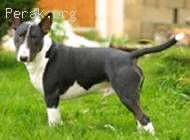
The Bull Terrier was bred from crosses of Bulldogs with terriers to create the “gladiator of the dog race”. The new breed was first used for bull-baiting then for dog fighting. In 1835, this practice was outlawed. The Bull Terrier’s silhouette was refined around 1860. A white variety was selectively bred, giving birth to the modern breed. The Bull Terrier was recognized by The Kennel Club in 1933.

Behavior

This very robust, eager, courageous dog is stable and well-balanced, but rather obstinate. He is an affectionate, playful pet that does not bark often. Strict, firm but gentle training is necessary.

Advice

This breed adapts well to life as a house dog but does not like to be left alone and requires plenty of exercise. Weekly brushing is required.

Function

Guard dog, pet.
Bull_Terrier.jpg

Group
Non-Sporting Group - American Kennel Club, Continental Kennel Club, United Kennel Club, Kennel Club of Great Britain, Canadian Kennel Club, Australian National Kennel Club, National Kennel Club, New Zealand Kennel Club, American Pet Registry Inc., American Canine Registry
Native Country
Great Britain
Other Names
English Bulldog
Breed Description

Head: Massive. Short face. Broad skull. Loose, wrinkled skin. Deep stop. Well developed cheeks. Short, broad, upturned muzzle. Broad nostrils. Thick, pendulous flews. Broad, square jaws. Lower jaw protrudes beyond the upper jaw and curves slightly upward.
Ears: Set on high and placed wide apart. Small and thin. Rose ear, in which the ear folds in such a way as to show the inside of the burr.
Eyes: Very wide set. Medium size, round. Very dark color.
Body: Short, well-knit. Very thick neck with dewlap. Shoulders broad and slanting outward. Capacious, round brisket. Ribs well sprung. Elevated, b hindquarters. Belly tucked up. Short, b back. Arched loin
Tail: Set low, round, moderate length. Carried low, hanging straight, not curving up.
Hair: Fine, short, smooth, and thick.
Coat: Uniform color with black mask or muzzle. Uniform colors: red, fawn. Brindle, white, or piebald (white with the above colors). Liver, black, and tan are undesirable.
Size: 30 to 40 cm (12-16 in).
Weight: Dog: 24 to 25 kg (53-55 lb).Bitch: 22 to 23 kg (48.5-51 lb).

History

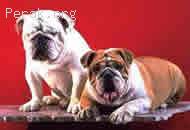
The Bulldog is thought to be descended from ancient Mastiffs of Asiatic blood, combat dogs that were introduced in Great Britain by early Phoenician navigators. Its name reflects its original purpose; the bulldog was used for bull-baiting. Organized dog fights were also the rule of the day. In 1835, the cruel practice of bull-baiting was outlawed in England. In 1875, the first Bulldog standard was published. Selective breeding since that time has turned the Bulldog into a loving family pet.

Behavior

The Bulldog is vigorous, courageous, hardy, equable, and dignified. Despite his frightening appearance, he is an affectionate, calm, quiet dog of excellent character. He makes a marvelous playmate for children and develops a strong bond with his owner. Firm training is required.

Advice

The Bulldog can adapt to city living provided he exercises regularly. He does not tolerate heat well. Daily brushing is required. Special attention must be given to the folds on his face to ward off possible skin irritation.

Function

Guard dog, police dog, army dog, pet.
bulldog.jpg

Group
Working Group - American Kennel Club, Continental Kennel Club, United Kennel Club, Kennel Club of Great Britain, Canadian Kennel Club, Australian National Kennel Club, National Kennel Club, New Zealand Kennel Club, American Pet Registry Inc., American Canine Registry
Native Country
Great Britain
Breed Description

Head: Broad. Strong, square skull. Skin on face is wrinkled when dog is alert. Distinct stop. Well developed cheeks. Short, broad muzzle. Flews must not be pendulous.
Ears: Small, V-shaped, set on high and placed wide apart. Darker color than the rest of the coat.
Eyes: Medium size. Dark or hazel color.
Body: Powerful. Very muscular neck. Broad chest. Muscular shoulders.
Tail: Set high, strong at the base and tapering to the tip. Carried straight or curved and reaching the hocks.
Hair: Short, hard, close-lying.
Coat: Any shade of brindle, red, or fawn. White spot on the chest is acceptable. Black mask on the muzzle. Dark markings around the eyes.
Size: Dog: 63 to 68 cm. (25-27 in).Bitch: 61 to 66 cm. (24-26 in).
Weight: Dog: 50 to 59 kg. (110-130 lb).Bitch: 41 to 50 kg. (90-110 lb).

History

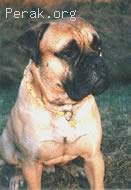
Created by crossing the Bulldog and a Mastiff, the Bullmastiff is fast and active like the Bulldog, large and heavy like a Mastiff. This breed was developed in the nineteenth century to guard large estates. The breed was recognized in 1924.

Behavior

Active, agile, showing great endurance and of solid build, the Bullmastiff has a symmetrical appearance. He is earnest, courageous and alert, making him an excellent guard dog. However, he is loyal and gentle, an excellent playmate for children. The Bullmastiff has a very keen sense of smell and a dominant personality. Early, firm, (though gentle) training is required.

Advice

The Bullmastiff is not a good house dog. He needs a lot of space and exercise. Regular brushing of the coat and cleaning of his folds are required.

Function

Guard and defense dog, police and army dog, pet.
Bullmastif.jpg

Group
American Canine Association
Native Country
Spain
Other Names
Perdiguero de Burgos
Breed Description

Head: Large, broad. Wide skull. Arched forehead. Prominent brow bones. Slight stop. Muzzle almost square. Thick lips, not too pendulous.
Ears: Set on high, large, long, folding from base to pointed tip, very supple.
Eyes: Almond-shaped, fawn or dark in color.
Body: Compact, b. Round, b neck with slight folds on the jabot. Slightly pronounced withers. Broad chest. Well-rounded ribs. Moderate tuck-up. Well-rounded, low, broad croup.Powerful, muscular back.
Tail: Thick at the base, tapering toward the tip, docked to one-third its length, carried gaily.
Hair: Short, dense, smooth.
Coat: Predominately white with liver spots or flecks or a shade of liver with white flecks.
Size: Dog: 65 to 75 cm. (25.6-29.5 in).Bitch: slightly smaller.
Weight: Approx. 30 kg (66 lb).

History

Descended from the old Spanish Pointing Dog, the Burgos Pointing Dog is an old breed that has remained very pure. He was once very popular among the Spanish pointers but is now becoming extinct.

Behavior

Hardy and adapted to all types of terrain, with a superb nose, the Burgos Pointing Dog points and retrieves like a charm. He is equally skilled on quarry with feathers and fur. He needs firm training.

Advice

He needs space and exercise, as well as regular brushing.

Function

Hunting dog.
Burgos_Pointing_Dog.jpg

Group
Terrier Group - American Kennel Club, Continental Kennel Club, United Kennel Club, Kennel Club of Great Britain, Canadian Kennel Club, Australian National Kennel Club, National Kennel Club, New Zealand Kennel Club, American Pet Registry Inc., American Canine Registry
Native Country
Great Britain, Scotland
Other Names
Short-haired Skye
Breed Description

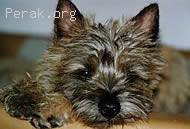
Head: Small. Broad skull. Pronounced stop. Powerful muzzle. Strong jaws.
Ears: Small, pointed. Held erect.
Eyes: Medium size, wide set. Dark color. Bushy eyebrows.
Body: Long. Strongly coupled neck. Ribs well sprung. Solid hindquarters.Straight back. Strong, supple loin.
Tail: Short, richly clad, but without brush. Carried gaily but not curling up toward the back.
Hair: Long, coarse, abundant. Short, soft, thick undercoat.
Coat: Cream, wheaten, red, gray, or near black. All brindle colors acceptable. Pure black, white, or black and tan are not permitted. Darker extremities, such as the ears and muzzle, are typical.
Size: Dog : 28 to 31 cm (11-12 in).Bitch : 25 to 30 cm (10 to 12 in).
Weight: 6 to 7.5 kg (14-16,5 lb).

History

The Cairn Terrier, one of the oldest Scottish terriers, is mentioned in writings from the fifteenth century. The breed was named for its ability to move about in the cairns (piles of stones where the dog hunted rabbit and fox). The breed was developed in the western highlands and the Isle of Skye, west of Scotland. The Cairn Terrier is an ancestor of the Scottish Terrier and the West Highland White Terrier. The Kennel Club recognized the breed in 1912.

Behavior

This rustic, lively, spirited, game dog has a dominant personality - it is a cheerful, mischievous pet. The Cairn Terrier makes a good guard dog, coming alert at the least noise, barking to raise the alarm, but not becoming aggressive. This excellent swimmer hunts otter and vermin. Very firm training is required.

Advice

Though the Cairn Terrier is more at home in the country than in the city, it can adapt well to any environment. This small dog needs regular outings and plenty of exercise. Brushing two or three times per week is required. No professional grooming is required.

Function

Hunting dog, pet.
Cairn_Terrier.jpg

Group
Herding Group - American Kennel Club, Continental Kennel Club, Canadian Kennel Club, National Kennel Club, Canaan Dog Club of America, Kennel Club, The Canaan Dog Club (UK), Israel Canaan Dog Club of America, Australian National Kennel Club, American Pet Registry Inc., American Canine Registry
Native Country
Israel
Other Names
Kelef K’naani
Breed Description

Head: Moderate length. Skull neither domed nor flat. Stop not pronounced. Muzzle of moderate length and width. Powerful jaws.
Tight lips.Ears: Short, fairly wide, slightly rounded tips. Wide set low on the head. Carried erect.
Eyes: Almond shape. As dark as possible. Dark rims.
Body: Square body outline. Straight neck. Pronounced withers. Moderately broad chest. Ribs well sprung. Belly well tucked up. Arched loin.
Tail: Medium length. Bushy. Carried over the back.
Hair: Short to moderately long. Straight, harsh texture. Dog has a ruff. Undercoat varies with the seasons.
Coat: Tawny to reddish brown, white or black, black, white and brown, with or without mask.
Size: 50 to 60 cm (19.7-23.6 in).
Weight: 18 to 25 kg (39.7-55.2 lb).

History

This very ancient breed originated in Canaan (modern day Israel). It was the result of crosses of various half-wild pariah dogs from regions of Northern Africa and the Near East. Selective breeding of the Canaan Dog began in the 1930s. It has been used as a messenger and rescue dog in the army. The Canaan Dog was only recently recognized by the American Kennel Club. The breed is also being developed in Europe.

Behavior

This rustic, lively dog has great endurance. He forms a strong bond with his owner and is very gentle with children. The Canaan Dog is extremely vigilant and wary of strangers. He is a good defense dog, though is not naturally aggressive toward humans. This breed is aggressive with other dogs. Firm training is required.

Advice

The Canaan Dog needs exercise and space to run. Regular brushing is required.

Function

Herder. Guard dog. Utility dog: army dog, guide dog.
Canaan_Dog.jpg

Group
National Kennel Club, American Pet Registry Inc., American Canine Registry, American Canine Association
Native Country
Spain
Other Names
Podenco Canario
Breed Description

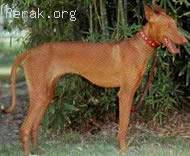
Head: Long, shaped like a blunt cone. Parallel cranio-facial wrinkles. Skull flat, longer than it is wide. Stop not very pronounced. Broad muzzle. Flesh-colored nose. Tight-lipped.
Ears: Fairly large, erect, wide at the base and pointed at the tip.
Eyes: Almond-shaped, small, slanted. A shade of amber.
Body: Slightly longer than it is tall. Neck well-muscled, without dewlap. Well-developed chest. Oval ribs. Tuck-up. Strong back. Solidly boned croup. Strong back.
Tail: Round, hanging down or raised in sickle fashion. Usually white.
Hair: Short, smooth, dense.
Coat: Preferably red and white, with red ranging from orange to dark red (mahogany). All combinations of colors.
Size: Dog: 54 to 64 cm. (21-25 in).Bitch: 53 to 60 cm. (21-23.5 in).
Weight: Approx. 25 kg. (55 lb).

History

This dog of Egyptian origin was probably brought to the Canary Islands by the Phoenicians, the Greeks, the Carthaginians, and the Egyptians themselves. The Canary Warren Hound is one of the oldest breeds—its remains have been found in the tombs of the pharaohs. The Canary Warren Hound belongs to FCI Group 5 Section 7 (Primitive type hunting dogs). He is used on rabbit.

Behavior

Long-backed and slender, he is extremely hardy, bold, and energetic. He moves at an extended, very light-footed trot. He is eager, fast, and active. He is a pleasant, peaceful pet but not a watchdog. His marvelous nose makes him an excellent tracker.

Advice

He needs space and exercise, as well as regular brushing.

Function

Hunting dog (rabbits), pet.
Canary_Warren_Hound.jpg

Group
National Kennel Club, American Pet Registry Inc., American Canine Registry, American Canine Association, American Rare Breed Association
Native Country
Portugal
Other Names
Portuguese Cattle Dog
Breed Description

Head: Medium size, dry, no wrinkles. Stop not pronounced. Long, b, straight nose bridge. Powerful jaws.
Ears: Medium size, slightly thick, almost triangular with rounded tips, drop.
Eyes: Set obliquely in the skull. Medium size. Light brown color in light-coated varieties and dark brown in dark-coated varieties.
Body: Rectangular. Short neck without dewlap. Broad, deep chest. Broad, short, b, muscular loin. Croup slightly sloped. Narrow through the belly.
Tail: Thick and bushy, carried in the shape of a saber, reaching the hock joint.
Hair: Thick, coarse, short, 5 cm (2 in), harsh, close-lying, and smooth. No undercoat.
Coat: Wolf gray most common. Any shade of gray, with or without a black mask; brindle.
Size: Dog: 55 to 60 cm. (21.5-23.5 in).Bitch: 52 to 57 cm. (20.5-22.5 in).
Weight: Dog: 30 to 40 kg. (66-88 lb).Bitch: 20 to 30 kg. (44-66 lb).

History

The Cao de Castro Laboreiro is one of the oldest breeds on the Iberian peninsula. Springing from the village Castro Laboreiro, this typical Portuguese breed is widespread in the region bordered by the Minho and Lima rivers between the Peneda and Suajo mountain chains in northern Portugal. The Cao de Castro Laboreiro, a mastiff, protects herds from wolves. He is also used as a guard dog and police dog.

Behavior

This robust, loyal, docile breed is affectionate, calm, and even-tempered. Constantly on the alert, this dog’s great courage and wariness of strangers make him a superb guard dog. Firm training is required.

Advice

The Cao de Castro Laboreiro needs exercise and room to run. Regular brushing is required.

Function

Herder, guard dog, police dog, pet.

Group
National Kennel Club, American Pet Registry Inc., American Canine Registry, American Canine Association
Native Country
Spain
Other Names
Catalonian Shepherd
Breed Description

Head: Strong, slightly convex. Pronounced stop. Straight, short forehead. Cone-shaped muzzle.
Ears: Set on high. Fine leather. Drop, triangular ending in a point. Cropped ears are acceptable for working dogs.
Eyes: Round. Dark amber eyes. Black rims.
Body: Strong with length being slightly greater than height. Deep chest. Ribs well sprung. Straight back. Powerful, slightly sloped croup.
Tail: Attached low. Long or short (maximum length 10 cm). Some varieties are naturally tailless. Docked tail is permitted for working dogs. Hangs in a hook when relaxed. Richly clad with hair.
Hair: Long, flat, and rough. Thick undercoat. Full beard, mustache, forelock, and fall. Seasonal shedding occurs in two stages, beginning with the front half of the body, followed by the back half of the body.
Coat: Color created by a mixture of hairs of various shades – fawn, reddish-brown, gray, black, and white. The base colors are fawn, gray, and sable.
Size: Dog: 47 to 55 cm.Bitch: 45 to 53 cm.
Weight: Dog: approx. 18 kg.Bitch: approx. 16 kg.

History

This breed came from Catalonia, Spain. It is presumed that he is descended from the ancient Pyrenees sheepdogs. During the Spanish Civil War, the Catalan Sheepdog served as messenger and sentry.

Behavior

The Catalan Sheepdog is courageous, intelligent, and energetic. His greatest traits shine through when herding; not only is he obedient to the commands of his handler, but he often takes the initiative, directing the sheep with remarkable ease. This brave, alert breed also makes an excellent guard dog. As a pet, he is loyal and gentle with children. This breed is well adapted to living outdoors.

Advice

While this dog can live indoors, he needs a lot of exercise. Daily brushing is required.

Function

Sheepdog (guard and herder), guard dog, police dog, pet.
Catalan_Sheepdog.jpg

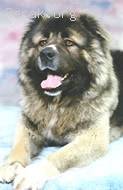
Group
National Kennel Club, American Pet Registry Inc., American Canine Registry, American Canine Association
Native Country
Russia
Other Names
Kavkazskaya Ovtcharka, Caucasian Owtcharka.
Breed Description

Head: Massive and broad. Distinct stop. Relatively short muzzle with large black or brown nose. Thick, though tight, lips.
Ears: Set on high, drop, cropped short.
Eyes: Small, oval. Dark color.
Body: Slightly longer than tall. Powerful, short neck. Deep, broad, slightly rounded chest. Short loin. Belly moderately tucked up. Broad, muscular back. Broad, muscular, almost horizontal croup.
Tail: Set high, hanging down in the shape of a sickle, hook, or ring. Docked tails are permitted.
Hair: Straight and coarse. Shorter on the head and front of the legs. Extremely thick undercoat of lighter color.Three types:- Long hair with mane, feathering, culottes, and plume.- Short hair without mane, feathering, etc.- Medium length hair, long, but without mane, feathering, culottes, or plume.
Coat: Gray in patches with a variety of nuances, normally light and tending toward red, white, reddish-brown, brindle and piebald and speckled.
Size: Dog: at least 65 cm. (26 in).Bitch: at least 62 cm. (24 in).
Weight: 45 to 65 kg. (99-143.5 lb).

History

Originating in the Caucasus, this large sheepdog is most likely one of the most direct descendants of the Tibetan Mastiff, which was introduced in Russia during the Asian invasions. This dog can be found throughout most of the former Soviet Union. The Caucasian Sheepdog of the steppes is taller and rangier than the Caucasian Sheepdog found in mountainous regions.

Behavior

This very rustic breed requires little care and adapts easily to all climates. The Caucasian Sheepdog is well-balanced, active, and even-tempered. However, he is suspicious of strangers and may bite. Firm training is required.

Advice

The Caucasian Sheepdog requires space and exercise. Weekly brushing is sufficient.

Function

Herder, guard and defense dog, pet.
Caucasian_Sheepdog.jpg

Group
Toy Group - American Kennel Club, United Kennel Club, Kennel Club of Great Britain, Canadian Kennel Club, Australian National Kennel Club, National Kennel Club, New Zealand Kennel Club, Continental Kennel Club, American Pet Registry Inc., American Canine Registry
Native Country
Great Britain
Other Names
English Toy Spaniel
Breed Description

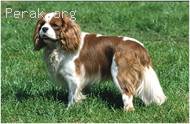
Head: Round. Skull nearly flat. Stop not very pronounced. Cone-shaped muzzle. Strong jaws. Lips not pendulous. Well-developed, black nose.
Ears: Set on high, long. Abundant feathering.
Eyes: Large, round, not protruding, dark.
Body: Long. Neck moderately long, slightly arched. Medium-sized chest. Well-sprung ribs.
Tail: Carried gaily but never much above the topline. Natural or docked by more than one-third.
Hair: Long, silky, not curly. Slightly wavy. Abundant feathering.
Coat: Black and tan (King Charles): raven-black with tan markings above the eyes, on the cheeks, insides of the ears, chest, legs, and underside of the tail. White markings not allowed. - Ruby (the rarest variety): solid, rich red. White markings not allowed. - Blenheim: rich chestnut markings well-distributed over a pearly white ground. Markings should be divided evenly on the head, with a characteristic kissing spot between the ears. - Tricolor (Prince Charles): well-spaced and well-distributed black and white markings with tan markings above the eyes and on the cheeks, insides of the ears, inner legs, and underside of the tail.
Size: 25 to 34 cm.
Weight: 5 to 9 kg.

History

This dog’s history is both recent and ancient, since the breed existed by the sixteenth and seventeenth centuries. In 1926, an American dog fancier noticed that today’s King Charles differs from the spaniel depicted in tapestries of yore. British breeders then re-created the ancient toy spaniel that was once a favorite of British kings and princes. Crosses with the King Charles Spaniel, the Pekingese, and the Pug established the first strains of the Cavalier King Charles Spaniel, officially recognized as a breed in 1945. The Cavalier King Charles is stockier and has a longer muzzle than the King Charles Spaniel. The Cavalier King Charles, which has eclipsed the King Charles, is becoming increasingly popular.

Behavior

Tough, lively, athletic, energetic, and very spirited, this mini-spaniel was a hunting dog who tracked game by scent and sight. Very good-natured, intelligent, and gentle, he is a great companion. He does not bark excessively and is not a watchdog. He needs firm but gentle training.

Advice

He adapts well to city life but needs long walks. He does not like being left alone, and he cannot tolerate cold and dampness. He requires brushing and combing two or three times a week, but no grooming. His ears and eyes must be checked regularly.

Function

Pet.
Cavalier King Charles Spaniel.jpg

Group
National Kennel Club, American Pet Registry Inc., American Canine Registry, American Canine Association, American Rare Breed Association
Native Country
Russia
Other Names
Sredneasiatskaya Ovtcharka, Alabai. Mid Asian Ovtcharka, Central Asian Ovcharka
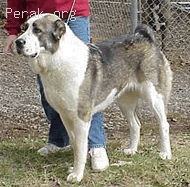
Breed Description

Head: Massive, broad. Flat forehead. Very slight stop. Large black or brown nose.
Ears: Cropped unless it is banned in specific countries
Eyes: Wide set, round. Dark color.
Body: Powerful. Short neck. Deep, broad brisket. Rounded ribs. Short, broad, slightly arched loin. Belly moderately tucked up. Broad, muscular, almost horizontal croup. Strong, straight, broad back.
Tail: Docked unless banned in specific countries.
Hair: Harsh, straight, and coarse. Long-haired variety: 7 to 8 cm in length (2.5-3 in); Short-haired variety: 3 to 5 cm in length (1-2 in), smooth. Thick undercoat.
Coat: White, gray, black, straw, reddish-brown, tiger, pied or mottled.
Size: Dog: Dog 26-34 in. Bitch: Bitch 24-28
Weight: Weight 90lbs to 140lbs.

History

This breed is most likely descended from the Asian molussus. The Central Asian Shepherd is found in all Central Asian republics and in some neighboring regions. The dog is used to defend herds from wolves and thieves.

Behavior

This rustic breed requires little care and adapts easily to all climates. The Central Asian Shepherd is well-balanced and peaceable. Nevertheless, he is bold and suspicious of strangers and will react instantaneously to defend his charges with valor. Firm training is required.

Advice

The Central Asian Shepherd is not a house dog. He needs exercise and room to run. Weekly brushing is sufficient. The Central Asian Shepherd is not an apartment dog, seasonal coat care is required. All dogs must be evaluated for genetic disorders, certified by FCI-RKF as very good or excellent; pass a temperament test designed for protection and stability prior to breeding.

Function

Livestock guardian, personal protection.
Central_Asian_Shepherd.gif

Group
Sporting Group - American Kennel Club, Continental Kennel Club, United Kennel Club, Kennel Club of Great Britain, Canadian Kennel Club, National Kennel Club, New Zealand Kennel Club, Australian National Kennel Club, American Pet Registry Inc., American Canine Registry
Native Country
United States Of America
Other Names
Chessie, Chessy Dog
Breed Description

Head: Broad and round. Wide, domed skull. Moderate stop. Short, pointed muzzle. Lips thin, not pendulous.
Ears: Small, hanging loosely.
Eyes: Medium-sized, very pale yellowish.
Body: Medium in length (not cobby). Neck medium in length. Deep, broad chest. Tuck-up.
Tail: Medium in length, 27 to 37 cm long (10.514.5 in). Fairly thick at the base. Feathering allowed.
Hair: Thick, short, under 3.7 cm long (1.5 in). Very short on the foreface and legs. Topcoat and oily undercoat are virtually waterproof.
Coat: From dark brown to pale tan, or deadgrass ranging from tan to straw. Small white spots on the chest and toes are allowed.
Size: Dog: 58 to 66 cm. (22.8-26 in).Bitch: 53 to 61 cm. (21-24 in).
Weight: Dog: 29 to 34 kg. (64-75 lb).Bitch: 25 to 29 kg. (55-64 lb).

History

This breed was developed in the northeastern United States, in the Chesapeake Bay region of Maryland, where he is used for his exceptional hunting skill in swampland. He is thought to have been developed by crossing the canine survivors of a shipwreck off the coast of Maryland in 1807 with the Curly-coated Retriever, the Flat-coated Retriever, the Otterhound, the Irish Setter, and Irish water dogs. He was first shown in Baltimore in 1876. The first standard was written in 1890, and a breed club was founded in 1918. He is rare in Europe, despite being a fairly old breed. He arrived in France in 1948.

Behavior

Tough, very hardy, tireless, courageous, and lively, the Chesapeake Bay Retriever is a remarkable swimmer, even in icy waters. He is used on duck. Calm and devoted to his owner, he is rough-mannered but never brutal. He makes a good watchdog. He needs very firm training.

Advice

He needs space and lots of exercise, as well as regular brushing.

Function

Hunting dog.
Chesapeake_Bay_Retriever.jpg