狗的种类 (应该有五百多种)

Group
Fédération Cynologique Internationale, National Kennel Club, Continental Kennel Club, American Pet Registry Inc., American Canine Registry, American Canine Association
Native Country
France
Other Names
Anglo-French Hound
Breed Description

Head: Fairly short in the Great Chien Anglo-Francçais, longer in the Small Game Chien Anglo-Francçais. Broad, flat skull. Slight occipital peak. Pronounced stop. Nosebridge approximately as long as skull.
Ears: Set on at least at eye level, short, flat, slightly folded toward the tip. Set on low in the Small Game Chien Anglo-Francçais.
Eyes: Large, dark brown.
Body: Balanced and well-proportioned. Strong neck with a slight dewlap in the Great Chien Anglo-Francçais. Broad, well let-down chest. Curved ribs. Broad, short loin.
Tail: Thick at the base, fairly long, well covered with hair.
Hair: Lying flat against the body and fairly thick. Short, dense, and smooth in the Small Game Chien Anglo-Francçais. Skin white with black or orange patches, depending on variety.
Coat: White and black: large mantle, black spots of varying size, sometimes with black or steel-grey flecks (or tan flecks, only on the legs). Pale spots above the eyes (pips), light tan markings on the cheeks, below the eyes and ears, and at the base of the tail. - White and orange: white and lemon or white and fairly light orange. - Tricolor: usually with a black mantle or spots of varying size. Rich or coppery tan, not smoky. A mixed wolf grey coat is not a fault.
Size: Great Chien Anglo-Francçais: 60 to 70 cm. Small Game Chien Anglo-Francçais: 48 to 56 cm.
Weight: Great Chien Anglo-Francçais: 30 to 35 kg. Small Game Chien Anglo-Francçais: approx. 25 kg.

History

The Chien Anglo-Francçais is the result of crossing English and French hounds. The first crosses most certainly occurred in the sixteenth century. By the late nineteenth century, huntmasters highly prized this all-terrain dog as a multi-purpose pack hound for hunting deer, wild boar, and fox. Anglo-French Hounds come in various sizes and coat colors, based on the breeds used in their development: - The Great Chien Anglo-Francçais, descended mainly from the Poitevin and crosses between the Gascon Saintongeois and the Foxhound; - The Great Anglo-French Tricolor Hound, the variety with the most English blood; - The Great Anglo-French White and Orange Hound (now very rare), the product of crosses between the Billy and the Foxhound; - The Great Anglo-French White and Black Hound, descended from the Gascon Saintongeois; and - The Small Game Anglo-French Hound, developed recently by crossing the Harrier with the Poitevin, the Porcelaine, the Small Gascon Saintongeois, and the Small Blue Gascony Hound. Initially called the Small Chien Anglo-Francçais, this variety was recognized as the Small Game Chien Anglo-Francçais in 1978. Today, Anglo-French Hounds are used in most large game hunting packs.

Behavior

Some of the finest breeds were used in developing the Chien Anglo-Francçais. English blood, in particular, gave him his build, bone structure, and vigor, while French blood gave him a keen nose and resonant voice. Hardy, strong, quick, courageous, and tenacious, the Chien Anglo-Francçais adores hunting. He hunts large and small game on all types of terrain. He requires firm training.

Advice

Anglo-French Hounds are not suited to city life. They are kept in kennels in packs. They need space and exercise and require regular brushing and attention to the ears.

Function

Hunting dog.
Anglo-French_Hound.jpg

Group
Toy Group - American Kennel Club, Continental Kennel Club, United Kennel Club, Kennel Club of Great Britain, Canadian Kennel Club, Australian National Kennel Club, National Kennel Club, New Zealand Kennel Club, American Pet Registry Inc., American Canine Registry, Fédération Cynologique Internationale
Native Country
Mexico
Breed Description

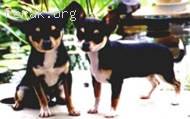
Head: Well-rounded «apple-dome» skull. Parietal fontanelle remaining. Pronounced stop. Nose fairly short and slightly pointed. Thin cheeks. Slight prognathism may be allowed. Nose dark black or lighter, depending on coat color.
Ears: Large, very widely spaced. Carried erect in action. Carried at a 45° angle at rest.
Eyes: Well spaced, not greatly protruding. Luminous black, brown, blue, or ruby.
Body: Cylindrical, compact, longer than it is tall. Round, well-proportioned neck. Slender shoulders. Muscular hindquarters.
Tail: Moderately long. Carried curled over the back or hanging loosely to the side. Well-furnished with hair; hairless is also allowed.
Hair: Long, wavy (rare variety). - Short, dense, glossy. A small collar on the neck is prized.
Coat: All colors and combinations are allowed. The most common and most prized colors are fawn or brown, chocolate, brindle fawn or brown, white, cream, silver fawn, silver grey, black and tan, and black.
Size: 16 to 20 cm.
Weight: 0.9 to 3.5 kg.

History

This ancient breed was named after the region in northern Mexico where it might have originated. The Chihuahua’s origins are uncertain. He might have been brought to Mexico by the Chinese; yet it is more likely that he descended from various Aztec ancestors, including the Techichi. The Chihuahua was a favorite sacred animal of the Aztecs, who consumed the dogs as holy food and sacrificed them to the gods. The Chihuahua also brought good luck to the home. Several specimens are thought to have been brought to Spain during the Spanish conquest. The Chihuahua was first bred in the United States in the nineteenth century. The breed soon became highly prized and was recognized by the American Kennel Club in 1904. He arrived in Europe after World War II and in France around 1960. He is still not very well-known in France, but his numbers are growing. In 1995, the FCI recognized a new standard with a weight range of 0.5 to 3 kg, but a weight between 1 and 2 kg is still preferred.

Behavior

Stout, quite hardy, bold, and very lively, the Chihuahua is fairly independent, courageous, proud, and strong-willed. He is very attached to his owner, even possessive. He is not very good with children. Quite vocal and sometimes aggressive toward strangers, he makes a good watchdog. He needs firm training.

Advice

He is an apartment dog who needs daily walks. He is sensitive to cold. His eyes need regular attention, and his teeth should be checked regularly for tartar build-up. He needs regular brushing.

Function

Pet.
Chihuahua.jpg

Group
Toy Group - American Kennel Club, Continental Kennel Club, Kennel Club of Great Britain, Australian National Kennel Club, National Kennel Club, New Zealand Kennel Club, American Pet Registry Inc., American Canine Registry, Fédération Cynologique Internationale
Native Country
China - Great Britain
Other Names
Cinses Hairless Dog
Breed Description

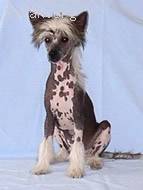
Head: Graceful, smooth, without wrinkles. Slightly rounded and elongated skull. Slightly pronounced stop. Muzzle tapering gradually to prominent nose. Cleanly cut, flat cheeks. Strong jaws. Thin lips. Crest of long hair beginning at the stop and ending on the neck.
Ears: Set on low, large, erect, with or without feathering. Drop ears allowed in powder puff variety.
Eyes: Medium-sized, very widely spaced. So dark they appear black.
Body: Long. Neck long, slender, without dewlap. Chest well let-down. Strong loin. Moderate tuck-up.
Tail: Set on high, long, slender, very straight. Hanging down at rest. Long, supple feathering limited to the last third.
Hair: No large hairy patches anywhere on the body. Coat of powder puff variety consists of an undercoat of long, fine hair forming a veil.
Coat: All colors and all combinations of colors are allowed.
Size: Dog: 28 to 33 cm.Bitch: 23 to 30 cm.
Weight: Variable, but under 5.5 kg.

History

Archaeologists have found ten thousand-year-old remains of a Chinese hairless dog. The Chinese Crested Dog could be the ancestor of the Mexican Hairless Dog, or he could be the result of a cross between the Mexican Hairless Dog and the Chihuahua. The Chinese Crested Dog was first shown in the West in 1885 in New York and appeared in France in 1975. He is most common in the United States and England. There are two varieties: hairless and powder puff with veil coat. Two different body types are also described: a fine-boned (deer type) and a more solidly boned (cobby type).

Behavior

Lively, alert, and energetic, the Chinese Crested Dog is very affectionate and intelligent, making him an excellent pet. He is wary of strangers but not aggressive. He needs firm but gentle training beginning when he is still very young.

Advice

He should live inside but needs daily walks. He is sensitive to cold and does not like being left alone. He needs regular baths.

Function

Pet.
Chinese_Crested_Dog.jpg

Group
Non-Sporting Group - American Kennel Club, Continental Kennel Club, United Kennel Club, Kennel Club of Great Britain, Canadian Kennel Club, Australian National Kennel Club, National Kennel Club, New Zealand Kennel Club, American Pet Registry Inc., American Canine Registry
Native Country
China Sponsored by Great Britain
Other Names
Chou
Breed Description

Head: Large. Flat, broad skull. Stop not pronounced. Broad muzzle. Large nose matches coat color. Tongue, palate, and lips are blue-black. Black gums.
Ears: Small, thick, wide set. Held rigidly erect and forward, giving the face its characteristic scowl.
Eyes: Almond shape, fairly small. Dark color. Blue and fawns may have eyes the color of their coat.
Body: Balanced proportions. Strong, full neck. Broad chest. Powerful loin. Short, horizontal, strong back.
Tail: Set high and carried well over the back.
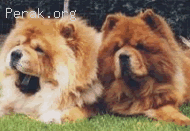
Hair: Rough-coated variety: very abundant, dense, straight, harsh, and stand-off; particularly thick around the neck (mane or collarette) and on the back of the thighs (culottes). Soft, wooly undercoat.Smooth-coated variety: abundant, dense, straight, and smooth.
Coat: Solid black, red, blue, fawn, cream, or white, often nuanced but never spotted or parti-color. Underside of the tail and rump are often lighter in color.
Size: Dog: 48 to 56 cm (19-22 in).Bitch: 46 to 51 cm (18-20 in).
Weight: Dog: 20 to 25 kg (44-55 lb).Bitch: 18 to 20 kg (18-20 lb).

History

The Chow Chow (named Chou, hunting dog in its native land) has been popular in China for more than two thousand years. The Huns, Mongols, and Tartars used the breed in war, for hunting, and as a draft and guard dog. This furry dog was sometimes eaten (chow means food), and its fur was used for clothing. The breed first appeared in Europe in 1865 when Queen Victoria was given a magnificent specimen. Selective breeding began in England in 1887 in an attempt to develop a more sociable Chow. The breed was recognized by The Kennel Club in 1894. The first Chows arrived in France in the early 1900s. This breed is now considered a luxury pet.

Behavior

This sturdy, courageous, independent, calm dog has a strong, aloof personality. The Chow Chow rarely barks and is not particularly active. He forms a strong bond with his owner, but is rather distant and not demonstrative. Extremely suspicious of strangers, the Chow Chow is an excellent guard dog. He is aggressive with other dogs. Firm but patient, gentle training must start at a very young age.

Advice

The Chow Chow can adapt to life in the city provided he gets out for long, daily walks. Daily brushing and combing is required for this very clean dog. A curry brush is needed during seasonal shedding. The Chow Chow despises being tied up and does not tolerate heat well.

Function

Hunting dog, draft dog, pet.
Chow_Chow.gif

Group
National Kennel Club, American Pet Registry Inc., American Canine Registry, American Canine Association
Native Country
Italy
Other Names
Sicilian Greyhound
Breed Description

Head: Long. Skull is almost flat. Distinct stop. Straight nose bridge. Pointed muzzle. Flat cheeks. Fine, thin, tight, lips.
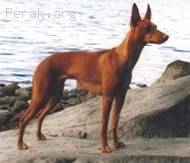
Ears: Set high and close together. Triangular with narrow, pointed tips. Held rigidly erect and forward.
Eyes: Small, almond shape. Ocher (not too dark), amber, or gray color.
Body: Square body outline. Top profile of neck is well arched. Tapered neck. Rather narrow chest. Ribs barely sprung.
Tail: Set low. Rather thick and long. Carried in the shape of a saber at rest and curving up to the back when in action.
Hair: Stiff like horse hair. Short on the head, ears, and legs. Longer (3 cm), smooth, and close-lying on the body and tail.
Coat: Solid fawn, either bright or diluted (Isabella, tawny). Fawn with white markings. Solid white with orange markings is permissible, but not desirable.
Size: Dog: 46 to 50 cm.Bitch: 42 to 46 cm.
Weight: Dog: 10 to 12 kg.Bitch: 8 to 10 kg.

History

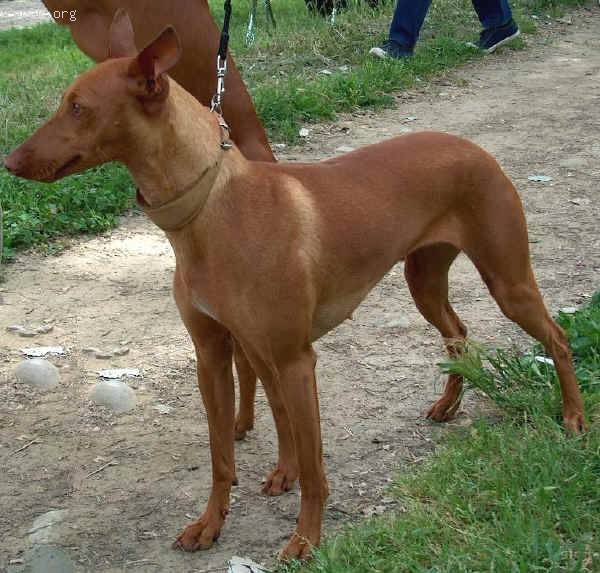
Some experts believe the Cirneco was brought to Sicily by the Phoenicians and that it is descended from the Pharaoh Hound. According to current thinking, however, the Cirneco is an indigenous breed that originated around the Sicilian volcano Mount Etna as early as the fourth century before the common era. The breed closely resembles the dog depicted in bas-reliefs on Egyptian tombstones. The Cirneco was used to hunt rabbit, pheasant, and partridge on rough terrain. The first standard for the breed was written in 1939.

Behavior

This very rustic, hardy, lively, agile, powerful dog has a strong personality, but a good temperament. He is an affectionate, cheerful, gentle pet. Reserved toward strangers, but not aggressive, the Cirneco makes a good guard dog. This sighthound specializes in rabbit hunting. Early, firm training is required.

Advice

The Cirneco adapts easily to city-living. However, it needs constant exercise. Regular brushing is required.

Function

Hunting dog, guard dog, pet.
Cirneco_dellEtna.jpg
Cirneco dellEtna.jpg

Group
Sporting Group - American Kennel Club, Continental Kennel Club, United Kennel Club, Kennel Club of Great Britain, Canadian Kennel Club, Australian National Kennel Club, National Kennel Club, New Zealand Kennel Club, American Pet Registry Inc., American Canine Registry
Native Country
Great Britain
Breed Description

Head: Angular, massive. Broad skull. Pronounced occipital peak. Heavy brow bones. Strongly pronounced stop. Heavy, angular muzzle. Strong jaws.
Ears: Large, shaped like grape leaves, hanging slightly forward. Feathering.
Eyes: Dark amber. Conjunctiva slightly visible.
Body: Massive, long, close to the ground. Thick, powerful neck. Chest well let-down. Well-sprung ribs. Flanks well let-down. Very powerful hindquarters. Muscular loin. Straight, long, broad back.
Tail: Set on low, carried level with the topline. Well-feathered.
Hair: Thick, dense, silky, and straight. Feathering on the legs and chest.
Coat: White with lemon markings, orange is allowed. Light markings on the head and flecks on the muzzle.
Size: Dog: approx. 48 cm. (19 in).Bitch: approx. 46 cm. (18 in).
Weight: Ideal: dog: 34 kg. (75 lb).Bitch: 29.5 kg. (65 lb).

History

The Clumber Spaniel, the largest of the spaniels, is thought to be of French origin. In the eighteenth century, the Duke of Noailles apparently gave a pair of these dogs to the Duke of Newcastle, who lived in the Clumber Park castle near Nottingham. Uncommon in England, the breed is quite rare in France.

Behavior

The Clumber Spaniel has an excellent nose, and his search is slow, silent, and limited in range but persistent. He is a good flusher of rabbit, woodcock, and pheasant. He is a good retriever, fearing neither brambles nor water. In England he is used in packs on pheasant hunts. He is less friendly than other spaniels but calm, playful, and kind, making him a good pet. He has no aggressive tendencies. He needs firm, patient training.

Advice

Preferably, he should live in the country. He needs space and exercise, as well as frequent brushing and regular attention to the ears.

Function

Hunting dog, companion dog.
Clumber_Spaniel.jpg

Group
Sporting Group - American Kennel Club, United Kennel Club, Kennel Club of Great Britain, Canadian Kennel Club, Australian National Kennel Club, National Kennel Club, New Zealand Kennel Club, Continental Kennel Club, Canadian Canine Registry, American Pet Registry Inc., American Canine Registry
Native Country
United States Of America
Other Names
American Cocker Spaniel, Cocker.
Breed Description

Head: Finely chiseled. Rounded skull. Clearly pronounced brow bones. Pronounced stop. Broad, high muzzle. Black or brown nose, depending on coat color.
Ears: Long, thin, well-feathered.
Eyes: Slightly almond-shaped, brown, as dark as possible, with an irresistible pleading expression.
Body: Short, compact. Fairly long, muscular neck without dewlap. High, broad chest. Well-sprung ribs. Strong back. Broad croup
Tail: Set on and carried level with the topline or slightly higher. Docked. Wagging in action.
Hair: Short and fine on the head. Medium in length on the body. Ears, chest, abdomen, and legs well-feathered. Hair is silky, flat, or slightly wavy. Undercoat.
Coat: Solid black. Black with tan tips. A small amount of white on the chest and/or throat is allowed. Any solid color other than black. Parti-color: two or more well-broken, well-distributed colors, one of which must be white. Roans are classified as parti-colors. Tan markings range from the lightest cream to the darkest red and should cover no more than 10% of the coat. Tan markings above each eye, on the sides of the muzzle and cheeks, on the underside of the ears, on all feet and/or legs, on the chest, and under the tail.
Size: Dog: 36 to 39 cm (14-15.5 in). Bitch: 34 to 36 cm (13.5-14 in).
Weight: 10 to 13 kg (22-28,5 lb).

History

The Cocker Spaniel is a direct descendent of the English Cocker Spaniel. In 1882 he was introduced to the United States, where breeders wanted to develop a small companion dog with a marvelous coat. Recognized by the American Kennel Club in 1946, the Cocker Spaniel has become the most popular dog in the US. He was brought to France in 1956.

Behavior

Solid, fast, easygoing, even-tempered, and merry, the Cocker Spaniel is a good companion. He is a show dog and a pet, rather than a hunting dog. A bit stubborn, he needs firm training.

Advice

He can adapt to apartment life, as long as he is taken on daily walks. He requires daily brushing and combing, bimonthly bathing, and monthly grooming. His ears need regular attention.

Function

Companion dog.
American_Cocker_Spaniel.jpg

Group
Herding Group - American Kennel Club, Continental Kennel Club, United Kennel Club, Kennel Club of Great Britain, Canadian Kennel Club, Australian National Kennel Club, National Kennel Club, New Zealand Kennel Club, American Pet Registry Inc., American Canine Registry
Native Country
Great Britain
Other Names
Scotch Collie
Breed Description

Head: Long, clean, wedge-shaped. Size in proportion to body. Flat skull. Slight stop.
Ears: Medium size, fairly wide set. Carried forward and semi-erect.
Eyes: Medium size, almond, set obliquely in the skull. Dark brown color, except blue merles that often have blue or blue flecked eyes.
Body: Medium size, longer than tall. Powerful neck. Deep chest. Ribs well sprung. Straight back with a slightly arched loin.
Tail: Long, reaching the hocks. Generally carried low. Profuse covering of hair.
Hair: Rough Collie: straight, harsh, long, and dense; soft, dense undercoat; abundant on the mane and frill; feathering on the legs. Smooth Collie: flat and harsh; dense undercoat.
Coat: Three colors are accepted: Sable – from light gold to dark mahogany. Tricolor – predominantly black with tan shadings on the head and legs, and white markings. Blue merle (marbled) – blue-gray marbled or mottled with black.
Size: Dog: 56 to 61 cm. Bitch: 51 to 56 cm.
Weight: Dog: 20 to 29 kg.Bitch: 18 to 25 kg.

History

The Collie is descended from Scottish herding dogs. When the Romans invaded, their dogs were crossed with native Scottish dogs. Early shepherds began crossing the short-tailed and long-tailed shepherd dogs, and the result was the superb animal with an aristocratic bearing that we know today. The origin of this breed’s name is disputed. Some believe the name comes from the word (colley), an early variety of Scottish sheep with a black mask and tail. Others believe the breed is named for its beautiful collar. The Smooth Collie is much less common than the Rough Collie.

Behavior

This active, lively dog is typically well-balanced, but can be anxious and timid. This gentle, sensitive Lassie dog is a faithful companion. The Collie is reserved toward strangers, but not aggressive. He should receive firm, but gentle training.

Advice

The Collie can live in the city but he will be happier with a yard and space to run. Regular exercise is required. Brushing two times per week is adequate.

Function

Sheepdog, police dog, guide dog, pet.
Collie.jpg

Group
National Kennel Club, American Pet Registry Inc., American Canine Registry, American Canine Association
Native Country
France - Belgium
Breed Description

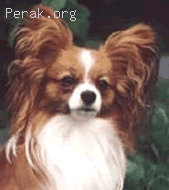
Head: Slightly rounded. Skull not very rounded. Fairly pronounced stop. Straight nosebridge. Muzzle tapering, shorter than the skull. Thin, tight, pigmented lips. Small, black nose.
Ears: Set on fairly far back. - Drop-eared variety, or Phalene. - Prick-eared variety, or Papillon, with ears slanted at a 45° angle. Crossing the two varieties often produces semi-erect ears with the tips falling forward. This mixed version is a serious fault.
Eyes: Fairly large, almond-shaped, dark. Well-pigmented eyelids.
Body: Slightly elongated. Neck of medium length. Topline neither arched nor hollow. Chest wide, fairly well let-down. Slight tuck-up. Solid, slightly arched loin. Straight back.
Tail: Set on fairly high, rather long, thickly feathered, forming a lovely plume. Carried raised, in line with the spine and curving inward. Tip may touch the back.
Hair: Abundant, wavy. Short on the foreface, muzzle, and fronts of the legs. Medium in length on the body, ears, and backs of the forelegs. Ample culotte on the backs of the hind legs. Hair 7.5 cm long on the withers. Feathering 15 cm long on the tail.
Coat: All colors allowed on white ground. White on the body and legs must dominate colored markings. White on the head extending into a fairly broad flare is prized. White is allowed on the lower part of the head, but dominant white markings on the head are a fault.
Size: 28 cm maximum.
Weight: One category under 2.5 kg. One category over 5 kg.

History

All of today’s Continental Toy Spaniels are thought to be descended from a strain maintained by French and Flemish kennels. This explains the breed’s mixed French and Belgian origins. An ideal pet, the Continental Toy Spaniel was a favorite guest of royal courts and salons of the aristocracy. There were once several varieties, but only two remain: - The Phalene Continental Toy Spaniel (with drop ears, named after a moth with folded wings) was popular and then suffered a decline before regaining popularity; and- The Papillon Continental Toy Spaniel (with prick ears) appeared in the late nineteenth century and is probably descended from a cross with the Toy German Spitz. The standard was accepted by the FCI in 1937.

Behavior

Tough, hardy, lively, enthusiastic, and quick, the even-tempered Continental Toy Spaniel is very intelligent and charming but sometimes jealous. He is always distant toward strangers, making him a good watchdog. He needs firm but gentle training.

Advice

He adapts well to city life. He is very clean and requires daily brushing and combing. He cannot tolerate intense heat. His drop ears need regular checking.

Function

Pet.
Continental_Toy_Spaniel.gif

Group
National Kennel Club, American Pet Registry Inc., American Canine Registry, American Canine Association
Native Country
Madagascar
Breed Description

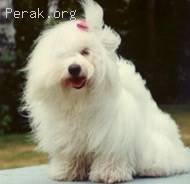
Head: Short, triangular when viewed from the top. Domed skull. Stop not very pronounced. Straight nosebridge. Thin lips. Black or dark reddish-tan nose.
Ears: Set on high, pendulous, thin, triangular. Covered with white or colored hair (yellow spots, a combination of yellow and black, or a few black hairs).
Eyes: Round, dark, widely spaced.
Body: Long. Muscular neck without dewlap. Well-developed chest. Loin very slightly arched, well-muscled. Standing low to the ground. Very slightly arched, well-muscled back. Rounded, broad croup.
Tail: Set on low, approximately 18 cm long, thick at the base, thin at the tip. At rest hanging below the hock with the tip raised.
Hair: Approximately 8 cm long, thin, slightly wavy, cottony.
Coat: White. Some yellow spots, particularly on the ears, are allowed.
Size: Dog: 25 to 32 cm. Bitch: 22 to 28 cm.
Weight: Dog: 4 to 6 kg. Bitch: 3.5 to 5 kg.

History

The Coton de Tuléar, named for his cottony coat, is a bichon breed. His ancestors were ratters brought to Madagascar by French troops. These ratters gave rise to the Coton de Réunion on the island of the same name. Now extinct, this breed was modified in Madagascar through crosses with the Maltese, in particular. The new breed was named after Madagascar’s city of Tuléar. The Coton de Tuléar was popularized by French nobility living on islands in the Indian Ocean during colonial times. In 1970 the breed was recognized by the FCI.

Behavior

The stout, hardy, very lively Coton de Tuléar likes to swim. In Madagascar, he was used as a terrier, watchdog, and to eliminate pests. He is restless, rambunctious, and strong-willed but very affectionate and devoted to his owner. He may be aggressive towards other dogs and barks often. He needs firm, early training.

Advice

He can adapt to apartment life. This athlete needs long walks and hates being left alone. He requires daily dematting, brushing, and combing, as well as regular baths and grooming three or four times a year.

Function

Pet.
Coton_de_Tulear.jpg

Group
National Kennel Club, American Pet Registry Inc., American Canine Registry, American Canine Association
Native Country
Croat Republic
Breed Description

Head: Fine, wedge-shaped (approx. 20 cm long), dry overall. Eyebrows not pronounced. Cheeks filled out. Stop not pronounced. Straight nose bridge.
Ears: Triangular, erect or semi-erect. Moderate length. Attached toward the sides of the head. Erect ears are preferred and must not be cropped.
Eyes: Chestnut to black color. Medium size. Almond shape. Dark rims.
Body: Slightly longer than tall. Short, muscular back, particularly in the short lumbar region. Chest not prominent. Ribs well sprung. Solid, well-filled out flanks. Croup slightly sloped.
Tail: Set on moderately high. Long, bushy hair. Carried below the line of the back at rest, above when alert.
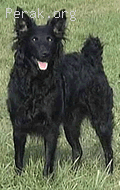
Hair: Relatively soft. Wavy or curly. Never wooly. Short on the face. Long (7 to 14 cm) on the back. Feathering and culottes on the legs. Bushy undercoat.
Coat: Black background. Some white markings on the throat, forechest, and chest are permissible. White markings on the feet and toes are tolerated, but not desirable.
Size: Approx. 40 to 50 cm.
Weight: 15 to 20 kg.

History

This dog of eastern origin is almost unknown outside his home country, where he has guarded farms and herds for centuries. The breed is thought to be descended from northern Croatian sheepdogs.

Behavior

Lively, attentive, and of uncommon endurance, the Croatian Sheepdog is easy to train.

Advice

This dog requires exercise and room to run.

Function

Herder, guard dog.
Croatian_Sheepdog.gif

Group
Sporting Group - American Kennel Club, Continental Kennel Club, United Kennel Club, Kennel Club of Great Britain, Canadian Kennel Club, Australian National Kennel Club, National Kennel Club, New Zealand Kennel Club, Curly-Coated Retriever Club of America, American Pet Registry Inc., American Canine Registry
Native Country
Great Britain
Breed Description

Head: Long. Skull flat and long. Strong jaws. Wide nostrils. Nose black or brown (liver). Lips not pendulous.
Ears: Set on low, small, lying flat against the head, covered with short curls of hair.
Eyes: Large. Black or dark brown.
Body: Rectangular build. Neck moderately long, without dewlap. Chest well let-down. Well-sprung ribs. Short loin.
Tail: Moderately short, carried straight, covered with curly hair, tapering toward the tip, never carried gaily or curled.
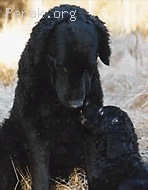
Hair: A mass of crisp, tight curls covering entire body.
Coat: Black or brown (liver).
Size: Dog: 68.5 cm. (27 in).Bitch: 63.5 cm. (25 in).
Weight: 30 to 25 kg (66-77 lb).

History

The Curly-coated Retriever, the oldest of the English retrievers, is believed to be descended from a cross between the Newfoundland and the Irish Water Spaniel. The Poodle and the Labrador may also have contributed to the breed. He was shown for the first time in 1860. A breed club was founded in 1896, and the standard was established in 1913. In the mid-nineteenth century in England, he was more popular as a pet than as a hunting dog. Today, the breed is very limited in number except in a few countries, including New Zealand.

Behavior

Tough, strong, active, and courageous, the Curly-coated retriever has great endurance and a very subtle nose. He is an excellent swimmer and a very good retriever. He hunts duck in swampland. He is calm, poised, and affectionate but very independent. He needs firm but patient and gentle training.

Advice

He is not suited to city life because he needs lots of exercise. He does not like being confined or left alone. He must be brushed twice weekly.

Function

Hunting dog.
Curlycoated_Retreiver.gif

Group
National Kennel Club, American Pet Registry Inc., American Canine Registry, American Canine Association
Native Country
Czech Republic
Other Names
Cesky Vlcak
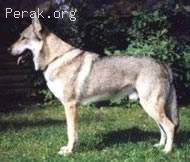
Breed Description

Head: Obtuse cone-shape. Slightly domed forehead. Stop moderately pronounced. Rectangular nose bridge. Oval nose.
Ears: Held erect. Narrow, short, triangular.
Eyes: Narrow, set obliquely in the skull. Amber color.
Body: Robust. Rectangular body outline. Smooth, muscular neck. Full chest. Short, muscular loin. Short, slightly sloped croup. Rectangular.
Tail: Set on high, hanging straight down at rest. Sickle tail when in action.
Hair: Straight, close-lying. Undercoat is abundant in winter.
Coat: Wolf coloring or silvery gray with characteristic light mask. Light hairs at the base of the neck and on the chest. Dark gray mask is tolerated.
Size: Dog: at least 65 cm. (25.5 in).Bitch: at least 60 cm (23.5 in).
Weight: Dog: at least 26 kg. (57.5 lb). Bitch: at least 20 kg (44 lb).

History

In 1955, German Shepherds and Carpathian wolves were crossed in Czechoslovakia. In 1965, a project to selectively breed this animal was undertaken in the hope of combining the best of the wolf and the dog. In 1982, the Czechoslovakian Wolfdog was recognized as a national breed by the Czechoslovakian Committee of Breeder Associations. In 1994, the FCI recognized the breed. A few Ceskoslovensky Vlcak have been introduced in France since that time.

Behavior

This eager, extremely active dog has great endurance and quick reflexes. He is bold and courageous. While he is exceptionally loyal to his owner, he is distant and wary around strangers (men in particular). His sense of smell is considerably more developed than that of most dogs. With his powers of dissuasion, perhaps this breed should be trained as a guard and defense dog.

Advice

This Wolfdog should be owned only by individuals who have an excellent understanding of animal behavior.

Function

Guard and defense dog.
Czechoslovakian_Wolfdog.jpg

Group
Continental Kennel Club, Fédération Cynologique Internationale, United Kennel Club, Kennel Club of Great Britain, Canadian Kennel Club, National Kennel Club, Club Español de Terriers (Spanish Terrier Club), American Cesky Terrier Club, Australian National Kennel Club, American Pet Registry Inc., American Canine Registry
Native Country
Czech Republic
Other Names
Cesky Terrier, Cesky Terier, Bohemian Terrier
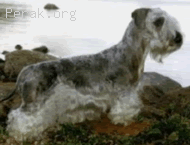
Breed Description

Head: Long. Large nose. Thick beard. Powerful jaws.
Ears: Folded above the level of the head and hanging against the cheeks.
Eyes: Light or dark chestnut color. Bushy eyebrows.
Body: Long and compact. Very muscular hindquarters. Back slightly arched.
Tail: Approx. 20 cm (8 in) long, carried straight out in line with the back when in action.
Hair: Silky, abundant.
Coat: Gray-blue or light coffee. Puppies are born black and attain their final color around two years of age.
Size: 27 to 35 cm (10,5-14 in).
Weight: 6 to 9 kg (13-20 lb).

History

This breed was created in the 1930s by Czech breeder F.Horak, who crossbred the Scottish and Sealyham Terriers. The Czesky Terrier hunts small game and vermin, but is now often kept as a guard dog and a pet. The breed was recognized by the FCI in 1963.

Behavior

This hardy, obstinate dog has a strong personality, but is a very gentle, playful pet. He is wary of strangers, but lives peacefully with other domestic animals.

Advice

The Czesky Terrier requires considerable exercise. Regular brushing is required. This breed should be professionally groomed every two to three months.

Function

Guard dog, hunting dog, pet.
Czesky_Terrier.gif

Group
Hound Group - American Kennel Club, Fédération Cynologique Internationale, United Kennel Club, Kennel Club of Great Britain, Canadian Kennel Club, Australian National Kennel Club, National Kennel Club, New Zealand Kennel Club, Canadian Canine Registry, Continental Kennel Club, American Pet Registry Inc., American Canine Registry
Native Country
Germany
Other Names
Standard Dachshund (Normalgrösse), Miniature Dachshund (Zwerg), Rabbit Dachshund (Kaninchen).
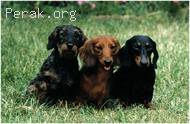
Breed Description

Head: Fine lines, elongated and narrowing toward the nose. Slightly arched skull. Stop not pronounced. Slightly arched, narrow muzzle. Finely chiseled nose of black or brown color depending on coat color. Very well developed jaw bones. Tight lips.
Ears: Set on high. Rounded at the tips and hanging against the cheeks.
Eyes: Medium size, oval. Reddish brown to black-brown color. Walleyes permitted in grays and harlequins.
Body: Long. Muscular, dry neck without dewlap. Powerful, fairly prominent sternum. Deep, broad chest. When viewed from the front, rib cage is oval. Fairly flat ribs. Belly well tucked up. Long, rounded, compact croup slopes very slightly to the root of the tail.
Tail: Not too curved and not carried too gaily.
Hair: Smooth variety: flat and smooth.Wirehaired variety: dense with undercoat. Mustache, bushy eyebrows, smooth and short, flat on the ears.Longhaired: soft, flat, slightly wavy (like an Irish Setter). Longer on the throat, body, ears, upper legs, and tail (feathering).
Coat: Smooth variety: Single color – red, golden red, golden with or without mixture of black hairs. Bi-color – Black, brown, gray, white on extremities, tan with markings above the eyes, on the sides of the muzzle, on the forechest, upper legs, and feet, etc. Harlequin – Light brown, light gray, or white background with irregular dark brown, golden, golden red, or black spots.Wirehaired variety: All colors permissible.Longhaired variety: Same as smooth variety.
Size: 26 to 37 cm, depending on variety.
Weight: Standard: less than 9 kg; ideally 6.5 to 7 kg; ideally 6,5 to 7 kg (14,3-15,5 lb).Miniature: less than 4 kg at eighteen months. Diameter of chest less than 35 cm.Kaninchen: less than 3.5 kg. Diameter of chest less than 30 cm.

History

The FCI has dedicated an entire group (Group 4) to this hunting dog. There are three varieties of Dachshunds: Standard, Miniature, and Rabbit. Each variety is divided into three types according to coat: Smooth (Kurzhaar), longhaired (Langhaar), and wirehaired (Rauhhaar). The origins of the Dachshund have been obscured by time. The smooth variety is the oldest and is thought to have been produced by crossing a short Jura Bruno with a pinscher. The smooth Dachshund gave rise to the other two varieties. Type was fixed for the longhaired variety in the seventeenth century. The wirehaired variety was created in late nineteenth century by crossing the smooth Dachshund, the schnauzer, the Dandie Dinmont Terrier, and perhaps the Scottish Terrier. The first standard for the breed was writen in 1879. The Deutscher Teckel Club (German Dachshund Club) was formed in 1888. The standard variety (particularly the wirehaired standard) is used as a scenthound for large game, hare, and rabbit, as well as an earth dog for fox and badger. The Kaninchen (Rabbit Dachshund) was created specifically for hunting rabbit. In the early twentieth century, fanciers preferred the smooth variety, then later turned their favor to the longhaired variety. Today, the wirehaired Dachshund is the most popular.

Behavior

This robust, courageous dog has great endurance, but does not always have a good disposition. The Dachshund is independent, belligerent, has a tendency to bite, and tries to exert his dominance over other dogs. His habit of barking at the least noise makes him a good guard dog. The Dachshund is affectionate and cheerful, but tends to be possessive and often jealous. The smooth variety is the most energetic, while the wirehaired variety is the most rustic and has the greatest hunting instinct. The longhaired variety is the calmest of the three. All Dachshunds must receive firm but gentle training from a very young age.

Advice

The Dachshund is well-suited to life as a house dog, particularly the longhaired variety. However, this small dog needs plenty of exercise to maintain his mental health. The wirehaired and longhaired varieties require regular brushing and combing.

Function

Hunting dog, guard dog, pet.
Dachshund.jpg

Group
Non-Sporting Group - American Kennel Club, Continental Kennel Club, Fédération Cynologique Internationale, United Kennel Club, Kennel Club of Great Britain, Canadian Kennel Club, Australian National Kennel Club, National Kennel Club, New Zealand Kennel Club, American Pet Registry Inc., American Canine Registry
Native Country
Central Mediterranean Basin
Breed Description

Head: Long. Flat skull. Well-pronounced stop. Muzzle long and powerful, not tapering. Powerful jaws. Tight-lipped.
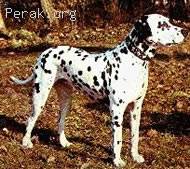
Ears: Set on high, medium-sized, carried against the head. Rounded tips. Thin, smooth, covered with coin-sized spots.
Eyes: Medium-sized, well-spaced, round. Dark in the variety with medium-brown spots, ranging to amber in the variety with liver spots.
Body: Square build. Neck moderately long, well-arched, without dewlap. High, wide chest. Well-sprung ribs. Well-defined withers. Well-muscled, slightly clean-flanked loin. Powerful, straight back.
Tail: Thick at the base, tapering gradually to the tip. Carried curved loosely upward but never curled.
Hair: Short, hard, dense, smooth.
Coat: Pure white ground. Black variety has dark black coin-sized spots; brown variety has liver brown coin-sized spots. Spots should not blend together but instead be round, well-defined, well-distributed, and 2 to 3 cm in diameter. Spots on the head, tail, and extremities should be smaller.
Size: Dog: 56 to 61 cm. (22-24 in).Bitch: 54 to 59 cm. (21-23 in).
Weight: Dog: approx. 27 kg. (59.5 lb).Bitch: approx. 24 kg. (53 lb).

History

The Dalmatian is believed to have originated in the Mediterranean region. He was named after Dalmatia either because it was his birthplace or because he was used in this region during the Balkan war. The Dalmatian is thought to be descended from the now extinct Bengal Pointer crossed with the Bull Terrier and the English Pointer. In the seventeenth century, the Dalmatian was popular at the Vatican. In eighteenth-century England, he was kept by the aristocracy to escort horse-drawn carriages, thus earning the nickname (coach dog). In the United States, the Dalmatian was adopted by firefighters as their mascot. Walt Disney’s movie “101 Dalmatians” (1961) helped popularize the breed.

Behavior

Tough and athletic, the Dalmatian has great stamina and was first used as a draft dog and an escort for horse-drawn carriages. Calm, docile, affectionate, and very gentle with children, the Dalmatian is a wonderful pet. He rarely barks, is not aggressive, and is somewhat distant toward strangers, making him a good watchdog. He needs firm and early training.

Advice

He can live in an apartment as long as he gets enough exercise. He needs regular brushing. Puppies are born all white; spots appear gradually and are not fully developed until the dog is one year old.

Function

Companion dog, seeing-eye dog, watchdog.
Dalmatian.jpg

Group
Terrier Group - American Kennel Club, Continental Kennel Club, Fédération Cynologique Internationale, United Kennel Club, Kennel Club of Great Britain, Canadian Kennel Club, Australian National Kennel Club, National Kennel Club, New Zealand Kennel Club, Club Español de Terriers (Spanish Terrier Club), American Pet Registry Inc., American Canine Registry
Native Country
Great Britain
Breed Description

Head: Solidly built, strong. Broad skull. Domed forehead. Deep, b muzzle. Strong jaws. Muscles covering the foreface are particularly well developed.
Ears: Set on low, hanging close to the cheeks. Length varies between 7.6 to 10.2 cm. Color must blend with coat color. Ears are dark in peppers and dark mustard in mustards.
Eyes: Large, round, wide set. Dark hazelnut color.
Body: Long and short. Very b, muscular neck. Ribs well sprung. Topline rather low at the shoulder. Both sides of backbone are well muscled.
Tail: Rather short (20 to 26 cm) (8-10 in), fairly thick at the root and tapering toward the tip. Carried in a curve like a scimitar.
Hair: Long, hard, giving a crisp texture. Hind legs are feathered. Undercoat is soft, like linen.
Coat: Pepper – ranging from dark bluish black to silvery gray with legs ranging from rich tan to pale fawn.Mustard – ranging from reddish brown to pale fawn with legs and feet of a darker shade than the head.
Size: 25 to 30 cm (9,8-11,8 in).
Weight: 8 to 11 kg (17,6 to 24,3 lb).

History

The first record of the Dandie Dinmont Terrier appears in the eighteenth century. The breed was probably the result of a cross between an old Scottish terrier and the Bedlington Terrier (and possibly the Otterhound). The breed gained widespread fame in Walter Scott’s 1815 Guy Mannering, in which the hero, a farmer named Dandie Dinmont, kept a pack of Basset Terriers. The farmer’s name was given to the breed, which has been known as the Dandie Dinmont Terrier ever since. Around 1820, a Scottish farmer named James Davidson selectively bred the Dandie. The first Dandie club was formed in 1875. An excellent ratter by profession, the Dandie is a loving pet.

Behavior

This robust, lively, courageous, tireless dog has a strong personality. He is independent, tenacious, and sometimes stubborn. He is a loving, cheerful pet. The Dandie Dinmont hunts vermin (rodents, badger, polecat, weasel, etc.). He is also an excellent guard dog with a loud bark. Firm training is called for.

Advice

The Dandie Dinmont can adapt to life as a house dog provided he gets long daily walks. Brushing two or three times per week is required. This breed should be professionally groomed two times per year.

Function

Hunting dog, pet.
Dandie_Dinmont_Terrier.jpg

Group
National Kennel Club, American Pet Registry Inc., American Canine Registry, American Canine Association
Native Country
Denmark
Breed Description

Head: Strong and broad. Carried slightly down. Relatively short muzzle. Pendulous lips.
Ears: Small. Set on moderately high.
Eyes: Round. Black or dark amber color.
Body: Square body outline. Thick neck. Broad forechest. Long back. Croup slightly sloping.
Tail: Medium length, thick. Carried low at rest, saber when in action.
Hair: Short, thick, weather-resistant.
Coat: Fawn (light yellow, golden) with black mask; black. White markings on the forechest, feet, and tip of the tail are permissible.
Size: Dog: at least 75 cm. (30 in).Bitch: at least 70 cm. (28 in).
Weight: 50 to 60 kg. (110.5-132.5 lb).

History

This ancient herder’s appearance is rather like that of a mastiff.

Behavior

This is a steadfast, peace-loving, well-balanced, good-natured breed. The Broholmer is well known for his even temper and courage. Firm training is required to temper any aggressive tendencies he may have with strangers.

Advice

This dog needs space and a lot of exercise. Weekly brushing is sufficient.

Function

Herder, guard dog, pet
Danish_Broholmer.jpg

Group
Hound Group - American Kennel Club, Continental Kennel Club, United Kennel Club, Kennel Club of Great Britain, Fédération Cynologique Internationale, Canadian Kennel Club, Australian National Kennel Club, National Kennel Club, New Zealand Kennel Club, American Pet Registry Inc., American Canine Registry
Native Country
Scotland
Other Names
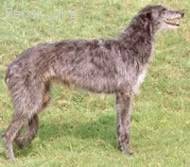
Scottish Deerhound
Breed Description

Head: Long. Skull fairly flat, covered with hair of medium length and softer than on the rest of the body. No stop. Muzzle tapering toward the nose. Tight-lipped. Strong jaws.
Ears: Set on high, small, folded back at rest. Black or dark in color.
Eyes: Dark, either dark brown or hazel. Edge of eyelids black.
Body: Like that of a Greyhound, but larger. Neck very strong, without dewlap. Chest taller than it is wide. Well-arched loin. Broad, powerful croup.
Hair: Shaggy, thick, close-lying, uneven, rough or crisp. Hard, wiry hair 7 to 10 cm long on the body, neck, and hindquarters. Much softer on the head, chest, and abdomen. Light feathering on the inner legs.
Coat: Dark blue-grey; darker and lighter shades of grey; brindle and yellow; sand or reddish-fawn with black extremities; white chest and toes and a small white spot on the tip of the tail are allowed.
Size: Dog: at least 76 cm. (30 in).Bitch: at least 71 cm. (28 in).
Weight: Dog: approx. 45.5 kg. (100.5 lb).Bitch: approx. 36.5 kg.

History

The Deerhound has long existed in Scotland, where he might have arrived with Phoenician merchants or Celtic invaders. The breed quickly became a favorite of clan leaders. He received his name because he was once used to hunt fallow deer. When fallow deer became scarce, Deerhound breeding was nearly abandoned. British breeders worked to preserve and improve the Deerhound, and the first standard was written in 1892. The breed was introduced to France in the 1970s. A Deerhound and Irish Wolfhound breed club was founded in 1974.

Behavior

Very hardy, active, and not as fast as the Greyhound, the Deerhound seldom barks and is gentle, calm, good-natured, and a devoted pet. He loves children and is neither mistrusting nor aggressive. He needs firm training.

Advice

He is not suited to apartment life. He prefers to live outdoors, where he can get lots of exercise. He does not tolerate heat well, and he requires regular brushing.

Function

Companion dog.
Deerhound.jpg

Group
Toy Group - American Kennel Club, Kennel Club of Great Britain, Canadian Kennel Club, Australian National Kennel Club, National Kennel Club, New Zealand Kennel Club, Continental Kennel Club, American Pet Registry Inc., American Canine Registry
Native Country
Germany
Other Names
Affenpinscher
Breed Description

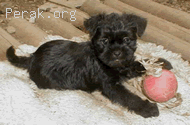
This dog exhibits a mixture of exuberance and serenity. He is lively, alert, loyal, affectionate, bold, and rather obstinate. The affenpinscher is a hunter of vermin and an excellent guard dog that will bark a warning to alert his owner.

Head: Round. Monkey-like expression. Short muzzle. Slightly undershot bite. Black lips.
Ears: Small, set on high. If cropped, held erect and forward. If natural, v-shaped, drop or held erect.
Eyes: Round. Dark color.
Body: Square body outline. Short neck. Ribs slightly sprung. Well developed breast. Underline slightly tucked up at the loin. Straight short back sloping slightly from withers to croup.
Tail: Docked to approximately three vertebrae. Set high and carried erect.
Hair: Harsh and dense on the body. Less harsh on the head, standing off and framing the face. Bushy eyebrows, full beard.
Coat: Preferably black. Brown or gray markings or nuances permissible.
Size: 25 to 30 cm (10-12 in).
Weight: 4 kg (9 lb) or less.

History

One of the most ancient of toy dogs, the Affenpinscher (translated from German as Monkey-Terrier) originated in Central Europe. During the 17th century, small terriers were frequently kept around stables, on farms or in stores where they served as ratters. Bred down in size, these small terriers became companions in the home and kept mice from overrunning their mistresses’ boudoirs. The Affenpinscher is believed to have been a major influence in the development of many of the smaller rough-coated breeds of continental Europe, including the Brussels Griffon and the Miniature Schnauzer. The area around Munich, Germany, eventually became the heart of Affenpinscher breeding in Europe.

The breed was admitted to the American Kennel Club in 1936. This quaint little dog’s popularity has been overshadowed by that of his descendent, the Brussels Griffon, but more recently he is enjoying a return to favor.

Behavior

General demeanor is game, alert, and inquisitive with great loyalty and affection toward its master and friends. The breed is generally quiet, but can become vehemently excited when threatened or attacked, and is fearless toward any aggressor.

Advice

This breed can make a good house dog. Daily brushing and combing is required.

Function

Guard dog. Hunter of vermin. Pet.
Affenpinscher.gif