狗的种类 (应该有五百多种)

Group
Sporting Group - American Kennel Club, Continental Kennel Club, Fédération Cynologique Internationale, United Kennel Club, Kennel Club of Great Britain, Canadian Kennel Club, Australian National Kennel Club, National Kennel Club, New Zealand Kennel Club, American Pet Registry Inc., American Canine Registry
Native Country
Great Britain
Other Names
Flat-coated Golden, Goldens
Breed Description

Head: Well-proportioned, finely chiseled. Broad skull. Pronounced stop. Powerful muzzle. Black nose. Strong jaws.
Ears: Set on at about eye level, medium in size.
Eyes: Widely spaced, dark brown. Dark edges of eyelids.
Body: Powerful, well-balanced. Neck moderately long, cleanly cut, and muscular. Chest well let-down. Well-sprung ribs. Short, strong back.
Tail: Set on and carried level with the topline. Reaching to the hock. Does not curl at the tip.
Hair: Flat or wavy with abundant feathering. Dense, waterproof undercoat.
Coat: Any shade of golden or cream. Should not be red or mahogany. Sparse white hairs allowed only on the chest.
Size: Dog: 56 to 61 cm. (22-24 in).Bitch: 51 to 56 cm. (20-22 in).
Weight: Dog: 26 to 31.5 kg. (57.5-69.5 lb).Bitch: 25 to 27 kg. (55-59.5 lb).

History

The Golden Retriever most likely descended from the same strain as the Labrador and was improved through various crosses (of the yellow Flat-coated Retriever from Newfoundland with Scottish water spaniels and other breeds). The breed was stabilized in England in the nineteenth century. Some believe that the Golden Retriever was created by crossing the Bloodhound with yellow dogs from the Caucasus Mountains—Russian Yellow Retrievers—used in Scotland to retrieve wounded game. The Golden Retriever was recognized by the Kennel Club in 1913. In the United States, the Golden is a very popular pet. In France, the breed was virtually unknown in the early 1980s but is rapidly gaining popularity in the same function.

Behavior

Hardy, vigorous, and active, the Golden Retriever has an excellent nose and works both in water and in thickets. He is a tenacious tracker, although less methodical than the Labrador. He excels at retrieving waterfowl and has a remarkable memory. Lacking aggressiveness, he rarely barks and is not a watchdog. Very gentle, intelligent, calm, and even-tempered, he makes a wonderful pet. He needs firm but gentle training.

Advice

He is not suited to apartment life because he needs lots of exercise. He hates being left alone. He requires brushing once or twice weekly, as well as combing during the shedding season.

Function

Hunting dog, utility dog: guide dog, wreckage search dog, drug detection dog, companion dog.
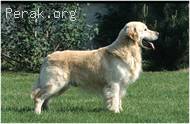
Golden Retriever.jpg

Group
Sporting Group - American Kennel Club, Continental Kennel Club, Fédération Cynologique Internationale, United Kennel Club, Kennel Club of Great Britain, Canadian Kennel Club, Australian National Kennel Club, National Kennel Club, New Zealand Kennel Club, American Pet Registry Inc., American Canine Registry
Native Country
Scotland
Other Names
Scottish Setter, Black and Tan Setter
Breed Description

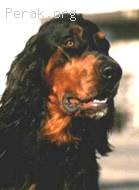
Head: Taller than it is wide, chiseled. Slightly domed skull. Pronounced stop. Long muzzle. Strong jaws. Lips not pendulous. Pink nose.
Ears: set on low, medium in size, thin, hanging against the head. Long, silky feathering at the tops of the ears.
Eyes: Dark brown.
Body: Medium in length. Brisket not too wide. Chest well let-down. Well-sprung ribs. Short back. Broad, slightly arched loin.
Tail: Thick at the base, tapering to thin tip. Straight or curved loosely in sickle fashion, carried level to the ground. Long, straight feathering (or fringe).
Hair: Short and fine on the head ad front of the legs. Medium in length on the rest of the body. Long, fine, flat feathering on the back of the legs. Feathering on the abdomen.
Coat: Rich, glossy, smoky black on without traces of rust, with tan-markings of a bright reddish-chestnut. Black pencil marks on the toes are allowed, as are black stripes below the jaws. Tan markings: two spots above the eyes, on either side of the muzzle. Two large spots on the chest. Markings on the inside of the hind legs. On the forelegs, tan markings from the feet to the elbows. Markings around the anus. A small white spot on the chest is allowed.
Size: Dog: approx. 66 cm (26 in).Bitch: approx. 62 cm (24.5 in).
Weight: Dog: approx. 30 kg (66 lb).Bitch: approx. 25 kg (55 lb).

History

The Gordon Setter was developed in the mid-sixteenth century in Scotland. By the late eighteenth century, the Duke of Gordon had arrived at a breed resembling that of today. Some believe that English and Irish Setters, the Collie, and the Bloodhound were used in developing the Gordon Setter. The first so-called “Black and Tan Scottish Spaniels” were imported to France by 1860. In 1923, a Gordon Setter club was founded. The Gordon Setter is less common than other setters.

Behavior

Tough and extremely hardy, the Gordon Setter can adapt to all kinds of terrain. He has an excellent nose and differs from the English Setter in his heavier structure, less impressive gallop, and standing point. His search range is more limited than that of other setters. He is a remarkable swimmer, tracks all sorts of game, and can retrieve. His specialties include woodcock and snipe. Calm, docile, and affectionate, he makes a wonderful pet. He needs firm but patient and gentle training.

Advice

He adapts fairly well to city life. He needs space and lots of exercise, as well as regular brushing and attention to the ears.

Function

Hunting dog, companion dog.
Gordon_Setter.jpg

Group
Working Group - American Kennel Club, Continental Kennel Club, Fédération Cynologique Internationale, United Kennel Club, Kennel Club of Great Britain, Canadian Kennel Club, Australian National Kennel Club, National Kennel Club, New Zealand Kennel Club, Canadian Canine Registry, American Pet Registry Inc., American Canine Registry
Native Country
Germany
Other Names
Deutsche Dogge, German Mastiff
Breed Description

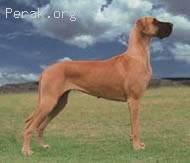
Head: Finely chiseled. Elongated, narrow. Very expressive. Always carried high. Strongly pronounced stop. Well developed superciliary arches. Broad nose bridge. Deep, rectangular muzzle. Black nose (lighter in the harlequin).
Ears: Set on high, naturally drop. Cropped to a point, carried rigid and erect.
Eyes: Medium size. Round. As dark as possible. Lighter eyes permissible in blue Danes. Lighter eyes or eyes of different color permissible in harlequin Danes.
Body: Square outline. Long, dry, muscular, well arched neck. Prominent forechest. Ribs well sprung. Wide croup sloping slightly. Belly well tucked up.
Tail: Medium length reaching the hocks. Set high, broad at the root tapering to a narrow tip. Curved slightly in the form of a saber when in action.
Hair: Very short, thick, smooth, shiny, lying close to the skin.
Coat: Brindle: background color is light to dark yellow gold always with strong, black cross stripes; a black mask is preferred. Fawn: light to dark yellow gold; a black mask is preferred. Black: glossy black; white markings are permissible. Blue: pure steel blue; white markings on the chest and feet are permissible. Harlequin: pure white background with glossy black torn patches of differing sizes well distributed over the entire body.
Size: Dog: at least 80 cm. (31,5 in).Bitch: at least 72 cm. (28 in).
Weight: 50 to 70 kg. (110,5-154,5 lb).

History

This large mastiff is thought to be descended from the Tibetan Mastiff introduced in Europe by the Phoenicians, then by the nomadic Persian Alans. In the Middle Ages, there were two varieties of this mastiff: A smaller Alaunt, powerful, agile, streamlined dog that hunted in packs for boar, wolf, and bear, and a heavier, more compact Alaunt used for guard duties. The immediate ancestors are the Bullenbeisser (now extinct) crossed with large hunting dogs descended from the more streamlined Alaunt. Later, names such as Ulm Dog, Great Dane, and Siberian Dog were used to indicate the different types of this breed. In 1878, all varieties were placed under the one name, Great Dane. The standard was written around 1890 in Germany. The French Doggen Club was founded in 1923.

Behavior

The Great Dane may be the most peace-loving of all the mastiffs. He is a gentle, tender, kind, sensitive, and affectionate dog, particularly with children. This stable, calm dog rarely barks and is never aggressive unless the situation warrants. He is alert, protective of his territory and his owners property, wary around strangers, and not easily swayed. His formidable size is enough to dissuade almost anyone. Training must start early. It should be firm, but undertaken with patience.

Advice

The Great Dane can be content living in an apartment, but he must get out daily to stretch his long legs. This athletic dog needs space and exercise. However, he should not exercise too vigorously until he has stopped growing, or he may damage his joints and ligaments. This dog has a short life-expectancy of only eight years. Must be combed daily.

Function

Guard dog, pet.

Group
Working Group - American Kennel Club, Continental Kennel Club, Fédération Cynologique Internationale, United Kennel Club, Kennel Club of Great Britain, Canadian Kennel Club, Australian National Kennel Club, National Kennel Club, New Zealand Kennel Club, Canadian Canine Registry, American Pet Registry Inc., American Canine Registry
Native Country
Germany
Other Names
Deutsche Dogge, German Mastiff
Breed Description

Head: Finely chiseled. Elongated, narrow. Very expressive. Always carried high. Strongly pronounced stop. Well developed superciliary arches. Broad nose bridge. Deep, rectangular muzzle. Black nose (lighter in the harlequin).
Ears: Set on high, naturally drop. Cropped to a point, carried rigid and erect.
Eyes: Medium size. Round. As dark as possible. Lighter eyes permissible in blue Danes. Lighter eyes or eyes of different color permissible in harlequin Danes.
Body: Square outline. Long, dry, muscular, well arched neck. Prominent forechest. Ribs well sprung. Wide croup sloping slightly. Belly well tucked up.
Tail: Medium length reaching the hocks. Set high, broad at the root tapering to a narrow tip. Curved slightly in the form of a saber when in action.
Hair: Very short, thick, smooth, shiny, lying close to the skin.
Coat: Brindle: background color is light to dark yellow gold always with strong, black cross stripes; a black mask is preferred. Fawn: light to dark yellow gold; a black mask is preferred. Black: glossy black; white markings are permissible. Blue: pure steel blue; white markings on the chest and feet are permissible. Harlequin: pure white background with glossy black torn patches of differing sizes well distributed over the entire body.
Size: Dog: at least 80 cm. (31,5 in).Bitch: at least 72 cm. (28 in).
Weight: 50 to 70 kg. (110,5-154,5 lb).

History

This large mastiff is thought to be descended from the Tibetan Mastiff introduced in Europe by the Phoenicians, then by the nomadic Persian Alans. In the Middle Ages, there were two varieties of this mastiff: A smaller Alaunt, powerful, agile, streamlined dog that hunted in packs for boar, wolf, and bear, and a heavier, more compact Alaunt used for guard duties. The immediate ancestors are the Bullenbeisser (now extinct) crossed with large hunting dogs descended from the more streamlined Alaunt. Later, names such as Ulm Dog, Great Dane, and Siberian Dog were used to indicate the different types of this breed. In 1878, all varieties were placed under the one name, Great Dane. The standard was written around 1890 in Germany. The French Doggen Club was founded in 1923.

Behavior

The Great Dane may be the most peace-loving of all the mastiffs. He is a gentle, tender, kind, sensitive, and affectionate dog, particularly with children. This stable, calm dog rarely barks and is never aggressive unless the situation warrants. He is alert, protective of his territory and his owners property, wary around strangers, and not easily swayed. His formidable size is enough to dissuade almost anyone. Training must start early. It should be firm, but undertaken with patience.

Advice

The Great Dane can be content living in an apartment, but he must get out daily to stretch his long legs. This athletic dog needs space and exercise. However, he should not exercise too vigorously until he has stopped growing, or he may damage his joints and ligaments. This dog has a short life-expectancy of only eight years. Must be combed daily.

Function

Guard dog, pet.
Great_Dane.jpg

Group
Working Group - American Kennel Club, Continental Kennel Club, Fédération Cynologique Internationale, United Kennel Club, Kennel Club of Great Britain, Canadian Kennel Club, Australian National Kennel Club, National Kennel Club, New Zealand Kennel Club, American Pet Registry Inc., American Canine Registry
Native Country
France
Other Names
Montagne des Pyrénées. Pyrenean Mountain Dog
Breed Description

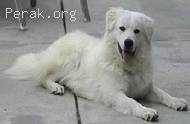
Head: Size in proportion to body. Slightly domed skull. Stop not pronounced. Broad muzzle tapering toward the nose. Black, very slightly drooping lips.
Ears: Small and triangular with rounded tips, hanging flat against the head.
Eyes: Fairly small. Dark amber color. Black rims.
Body: Powerful. Strong, moderately short neck. Deep, broad brisket. Ribs slightly sprung. Belly slightly tucked up. Croup slightly sloped. Broad, straight, level back.
Tail: Fairly long and bushy (plume). Carried low at rest and carried over the back making a wheel when alert.
Hair: Long, flat, resistant, and thick. Longer on the tail, thighs, and neck where it may be slightly wavy. Thick, wooly undercoat.
Coat: White with or without gray spots (badger coat) or pale yellow or orange on the head, ears, and root of the tail. Badger coat is preferred. A few body spots are permissible.
Size: Dog: 70 to 80 cm (27.5-31.5 in).Bitch: 65 to 72 cm (25.5-28 in).
Weight: Dog: approx. 60 kg (132.5 lb).Bitch: approx. 45 kg (99 lb).

History

Like many Molossians, the Great Pyrenees’ distant ancestor may be Tibetan Mastiff, which was introduced in Europe during Asian invasions. Identified as early as the 12th century, the Great Pyrenees protected the shepherd and his flock from wolves and bears, guarded homes and castles, and even sat in the royal court of Louis XIV. The Argeles and Cauterets clubs, founded in 1907, established the first standard for this breed. This standard was officially accepted in the 1960s. The Great Pyrenees is one of the few French breeds that is common outside of France. The breed is particularly popular in the United States and Japan.

Behavior

The Great Pyrenees has a rather independent nature and is proud, dominant, and fairly strong-willed. Firm training from a very young age is required to bring this dog under control. This dog is tolerant, affectionate, gentle with children, and very protective, making him an excellent pet. Reserved around strangers, this dog is a born protector. His size and demeanor can make him appear fearsome indeed.

Advice

This dog is not suited to city living. He needs exercise and room to run, or he will develop behavioral problems. He does not like to be shut in. Brushing three times per week and bathing several times per year is required.

Function

Herder, guard dog, pet.
Great_Pyrenees.jpg

Group
Working Group - American Kennel Club, Continental Kennel Club, Fédération Cynologique Internationale, National Kennel Club, American Pet Registry Inc., American Canine Registry
Native Country
Switzerland
Other Names
Grosser Schweizersennenhund
Breed Description

Head: Powerful without bulkiness. Broad, flat skull. Stop not pronounced. Powerful muzzle. Black lips.
Ears: Medium size, set on moderately high, triangular, hanging flat against the cheeks.
Eyes: Medium size, almond shape. Hazelnut or chestnut color.
Body: Powerful but not massive. Powerful, thick neck without dewlap. Broad, well let down chest. Broad forechest. Belly and flanks slightly tucked up.
Tail: Thick, hanging down and reaching the hocks at rest.
Hair: Medium length, dense. Thick undercoat.
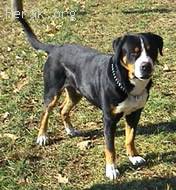
Coat: Black background with symmetrical rich rust and white markings. Rust markings between the black and white markings on the cheeks, above the eyes, inside the ears, on each side of the chest, on all four legs, and under the tail. White blaze and muzzle; white markings on forechest, feet, and tip of the tail.
Size: Dog: 65 to 72 cm Bitch: 60 to 68 cm.
Weight: Dog: approx. 40 kg Bitch: approx. 35 kg

History

The ancestors of the Greater Swiss Mountain Dog are the powerful tri-color dogs referred to as «butcher mastiffs.» In the latter Middle Ages, this breed went to battle with Swiss soldiers. In 1908, two «Short-haired Bernese Mountain Dogs» were exhibited at a show. Dr. Albert Heim was present at the show and recognized them as survivors of the large butcher mastiffs that were on the verge of extinction. In 1909, the Swiss registry recognized the variety as a distinct breed. The Swiss Greater Swiss Mountain Dog club, created in 1912, implemented a breeding program to restore the breed. The standard for the Greater Swiss Mountain Dog was published for the first time by the FCI in 1939.

Behavior

This attentive, alert dog has remarkable endurance. He is easy to train and serves many purposes, such as guard dog protecting cattle, farms, and homes, draft dog, and rescue dog searching out victims buried in avalanches. As a pet, he is loyal and gentle and very fond of children.

Advice

The Greater Swiss Mountain Dog is not suitable as a house dog. He needs a lot of exercise and room to run. Regular brushing is required.

Function

Cattle driver, draft dog, guard dog, rescue dog, pet.
Greater_Swiss_Mountain_Dog.jpg

Group
American Canine Association, Continental Kennel Club, Fédération Cynologique Internationale, National Kennel Club, American Pet Registry Inc., American Canine Registry
Native Country
Scandinavian countries
Other Names
Gronlandshunden
Breed Description

Head: Wolf-like. Broad, slightly domed skull. Pronounced stop. Straight, broad nose bridge. Wedge-shaped muzzle. Nose must be black in summer but may be flesh colored in winter. Thin, close-fitting lips.
Ears: Rather small, triangular, rounded at the tips. Held erect.
Eyes: Set slightly oblique in the skull. Preferably of a dark color.
Body: Strong and muscular. Very strong, rather short neck. Very wide chest. Belly not tucked up. Straight back. Croup slightly sloped.
Tail: Thick and rather short. Set high and carried curled over the back.
Hair: Dense, straight, harsh. Short on the head and legs, longer on the body. Thick and long on the underside of the tail. Dense, soft undercoat.
Coat: Any color, solid or parti-color, is acceptable, except albinos.
Size: Dog: at least 60 cm Bitch: at least 55 cm
Weight: Approx. 30 kg

History

This polar spitz breed undoubtedly has northern wolf blood. Originating in the arctic, this pure breed was selectively bred for thousands of years by Eskimos for its energy and power. P. E. Victor introduced the breed to the world in 1936 when he brought back the dogs he used for his polar expeditions. The breed is rare in France.

Behavior

This rustic, exceptionally vigorous dog has remarkable endurance and can withstand even the lowest temperatures. The Greenland Dog is intelligent, lively, affectionate and sociable, making him a good pet. While he makes a good guard dog, he is not aggressive. The breed communicates emotion by making various sounds: whining to express submission, emitting a rumbling groan to express aggression, barking to express excitement, and howling to express his unity with the greater pack. The Greenland Dog is aggressive with other dogs. Firm training is required.

Advice

This dog is not suited to indoor living, nor to hot climates. This sled dog requires abundant exercise. Regular brushing is required.

Function

Hunting dog (seals and bear), sled dog, guard dog, pet.
Greenland_Dog.jpg

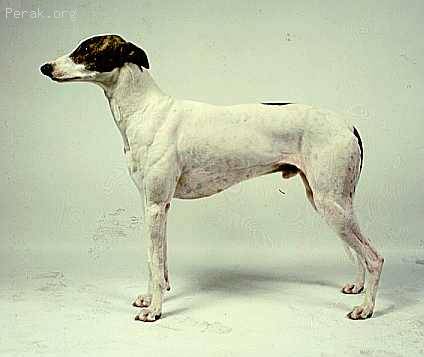
Group
Hound Group - American Kennel Club, Canadian Kennel Club, Fédération Cynologique Internationale, United Kennel Club, Kennel Club of Great Britain, Continental Kennel Club, Australian National Kennel Club, National Kennel Club, New Zealand Kennel Club, American Pet Registry Inc., American Canine Registry
Native Country
Great Britain
Other Names
English Greyhound
Breed Description

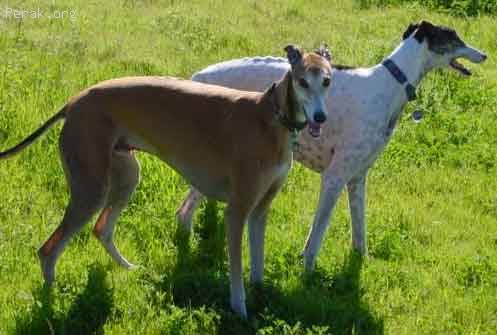
Head: Long, moderately wide. Flat skull. Slight stop. Long muzzle. Powerful jaws. Black, pointed nose.
Ears: Small, thin, rose-shaped.
Eyes: Oval, set at a slant. Preferably dark.
Body: Generously proportioned. Neck long, arched, without dewlap. High, ample chest. Long, well-sprung ribs. Powerful, arched loin. Pronounced tuck-up.
Tail: Set on fairly low, long, thick at the base, and tapering toward the tip. Carried low and curving slightly inward.
Hair: Close-lying or short, fine, and dense.
Coat: Black, white, red, blue, fawn, pale fawn, brindle, or any of these colors with white patches.
Size: Dog: 71 to 76 cm. (28-30 in).Bitch: 68 to 71 cm. (27-28 in).
Weight: Approx. 30 kg (66 lb).

History

Like the Arabian Greyhound and the Saluki, the Greyhound is thought to be descended from the Tesem, an ancient Egyptian sighthound featured on the tombs of the pharaohs. He arrived in Europe via Greece and was brought to Britain by the Phoenicians. «Greyhound» is thought to be derived from «Greek Hound.» The Spanish Greyhound imported to England is thought to have contributed to the breed, developed during the reign of King Henry VIII for hunting hare, or coursing. At the request of Queen Elizabeth I, the Duke of Norfolk established guidelines for judging sighthounds in outdoor hare coursing. By 1927, the Greyhound was used in artificial hare coursing at dog race tracks. Built to race, the Greyhound is to sighthounds what the thoroughbred is to horses—a magnificent running machine.

Behavior

Lively, vigorous, and bold, the Greyhound has great stamina and is known as the world’s fastest sighthound, able to reach speeds of 70 km/h. With his excellent eyesight, he is a first-rate hunter and courser. At the dog track, the Greyhound is the Formula 1 of the canine world. He is affectionate, gentle, calm, intelligent, and good-natured. He is indifferent toward strangers and needs firm training.

Advice

He needs space and must run every single day. He requires daily brushing.

Function

Hunting dog, racing dog, companion dog.
Greyhound.jpg

Group
Fédération Cynologique Internationale, National Kennel Club, Continental Kennel Club, American Pet Registry Inc., American Canine Registry, American Canine Association
Native Country
Norway
Other Names
Haldenstövare
Breed Description

Head: Medium-sized, finely chiseled. Slightly domed skull. Pronounced stop. Straight nosebridge. Lips not too pendulous. Flat cheeks.
Ears: Curled, pendulous, must reach mid-muzzle when outstretched.
Eyes: Medium-sized, dark brown.
Body: Rectangular. Neck fairly long, arched, well-knit, without dewlap. Deep chest. Well-sprung ribs. Broad loin. Straight, solid back. Well-developed, rounded, slightly sloping croup.
Tail: Hanging nearly to hocks, fairly thick, carried low.
Hair: Smooth, very dense, neither too fine nor too short.
Coat: White with black spots or brown shading on the head and legs and between black and white markings. Small black or brown spots are considered a fault. Black should not be predominant. Any other color or pattern is cause for disqualification.
Size: Dog: 47 to 55 cm. (18.5-21.5 in).Bitch: 44 to 52 cm. (17-20.5 in).
Weight: Approx. 20kg

History

This breed was named after the town of Halden in southeastern Norway. He is believed to be the product of crosses between local, Swedish, German, and English scenthounds. The standard for the Halden Hound was established in the 1950s. He is virtually unknown outside his native country.

Behavior

The Halden Hound can withstand cold and is a fast hunter able to chase quarry for long periods at a quick pace. He is not a pack hound. He hunts hare and other plains quarry. Kind and affectionate, he makes a good pet.

Advice

He needs space and exercise for his well-being. He requires regular brushing.

Function

Hunting dog.
Halden_Hound.jpg

Group
Fédération Cynologique Internationale, National Kennel Club, Continental Kennel Club, American Pet Registry Inc., American Canine Registry, American Canine Association
Native Country
Sweden
Other Names
Swedish Foxhound
Breed Description

Head: Long, slender, chiseled. Slightly domed, moderately wide skull. Fairly pronounced stop. Well-developed nose.
Ears: Set on high, pendulous.
Eyes: Dark brown.
Body: Rectangular. Long, solid neck. Powerful loin. Straight back. Broad, muscular croup.
Tail: Set on high, thick at the base, carried straight or loosely in saber fashion.
Hair: Short, hard, dense. Undercoat short, thick, fine.
Coat: Tricolor. Black markings on the top of the neck, on the back, sides of the body, and underside of the tail. Brown markings on the head, legs, and the sides of the lower neck, trunk, and tail. White band on the neck extending from the chin to the chest. The tip of the tail and the feet are also white.
Size: Dog: 50 to 60 cm. (19.5-23.5 in).Bitch: 46 to 57 cm. (18-22.5 in).
Weight: Approx. 25 kg (55 lb).

History

The Hamilton Hound is named after the founder of Sweden’s Kennel Club, who developed the breed by crossing German hounds (the Hanoverian Hound, the Hölsteiner Hound, etc.) with the English Foxhound.

Behavior

With his endurance and resistance to the cold, this courageous dog usually hunts alone for large game (including deer and wild boar).

Advice

He needs a great deal of exercise and requires regular brushing.

Function

Hunting dog.
Hamilton_Hound.jpg

Group
Fédération Cynologique Internationale, National Kennel Club, Continental Kennel Club, American Pet Registry Inc., American Canine Registry, American Canine Association
Native Country
Germany
Breed Description

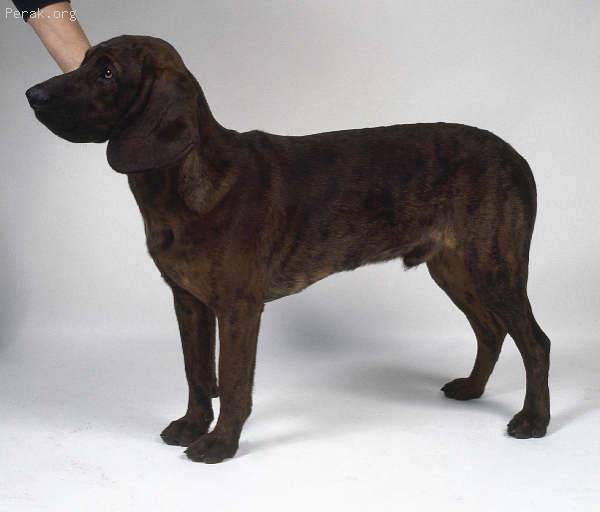
Head: Large, long. Broad, slightly domed skull. Prominent brow bones. Pronounced stop. Slightly curved nosebridge. Solid, broad muzzle. Powerful jaws. Wide nose.
Ears: Set on high, medium in length, rounded at the tips, hanging very flat against the head, not curled.
Eyes: Dark brown.
Body: Long. Long, sturdy neck. Chest deeper than it is broad. Loin slightly domed, broad. Slight tuck-up.
Tail: Set on high, long, thick at the base, tapering toward the tip, slightly curved.
Hair: Short, dense, hard to harsh on the trunk. Longer and harsher on the backs of the thighs and underside of the tail.
Coat: Light to dark reddish-fawn, more or less strongly brindled. With or without mask. A small white spot on the chest is tolerated.
Size: Dog: 50 to 55 cm (19,7-21,7 in).Bitch: 48 to 53 cm (19-21 in).
Weight: 30 to 35 kg (66-77 lb).

History

The Hanoverian Hound, descended from the large bloodhounds of the Middle Ages and consequently from the Saint Hubert Hound, was developed in the seventeenth century and improved in the nineteenth century through crosses with scenthounds including the Heidebracke. Introduced to France in the 1980s, the Hanoverian Hound is very rare.

Behavior

Hardy, vigorous, and powerful, the Hanoverian Hound has a keen nose. He is a remarkable tracker, hard-driving and very determined on the trail. He is often used on deer and wild boar. He works alone or in pairs. Obedient and affectionate, he makes a good companion. He needs firm, patient training.

Advice

He is not a city dweller. He needs space and lots of exercise. He also requires regular brushing and attention to the ears.

Function

Hunting dog.
Hanoverian Hound.JPG

Group
Hound Group - American Kennel Club, Continental Kennel Club, Fédération Cynologique Internationale, Canadian Kennel Club, Australian National Kennel Club, National Kennel Club, New Zealand Kennel Club, Harrier Club of America, American Pet Registry Inc., American Canine Registry
Native Country
Great Britain
Other Names
Harehound
Breed Description

Head: Moderately wide, fairly long. Flat skull. Slight stop. Fairly long, pointed muzzle. Flews covering the lower jaw.
Ears: Set on high, V-shaped, nearly flat, fairly short.
Eyes: Medium-sized, oval, always dark.
Body: Powerful. Long, open neck. Chest taller than it is wide. Ribs not very rounded. Flank neither too full nor tucked up. Straight, muscular back. Strong, slightly arched loin.
Tail: Medium in length, slightly tufted and carried proudly.
Hair: Not too short and flat.
Coat: Usually white with black to orange shading. In France, generally tricolor with a black mantle covering the upper back.
Size: 48 to 55 cm (19-21.7 in).
Weight: approx. 25 kg (55 lb).

History

The Harrier is an ancient breed born in southern England and developed for hunting hare. He is a close cousin of other old English scenthounds, including the Talbot Hound (white, close-lying coat) and the Old Southern Hound (white with blue spots), himself descended from a strain of Gascon Saintongeois. He is also believed to have a splash of Foxhound blood and contributed to improving the Small Game Anglo-French Hound.

Behavior

The Harrier is lively, quick, and keen-nosed, with great endurance and a very resonant voice. This little pack hound works well with other dogs and is easy to lead. He is ideal on hare and, in England, also runs fox. He is also used in shooting deer and wild boar. He needs firm training.

Advice

He needs space and exercise, as well as regular brushing.

Function

Hunting dog.
Harrier.jpg

Group
Toy Group - American Kennel Club, Canadian Kennel Club, Fédération Cynologique Internationale, United Kennel Club, Kennel Club of Great Britain, National Kennel Club, Continental Kennel Club, Australian National Kennel Club, American Pet Registry Inc., American Canine Registry
Native Country
Western Mediterranean Basin - Cuba
Other Names
Havana Silk Dog
Breed Description

Head: Moderately long. Flat, broad skull. Moderate stop. Gradually tapering muzzle. Tight-lipped. Flat cheeks.
Ears: Set on high, hanging against the cheeks with a subtle fold. Covered with long feathering.
Eyes: Fairly large, almond-shaped, dark brown.
Body: Slightly long. Moderately long neck. Well-sprung ribs. Pronounced tuck-up. Straight back. Strongly sloping croup.
Tail: Raised either in snap fashion or, preferably, curled on the back. Long, silky feathering.
Hair: Very long (12 to 18 cm), soft, flat or wavy. May form curly tufts. Undercoat woolly, sparse or absent.
Coat: Two varieties: - completely pure white (rare), pale fawn to Havana brown (reddish-tan tobacco color), spotting in these colors, some smokiness allowed. - coat colors and spotting as above (white, light fawn to Havana brown) with black spots, black coat.
Size: 21 to 29 cm.
Weight: No more than 6 kg.

History

The Havanese, possibly descended from the Bolognese, comes from the western Mediterranean region and was developed along the Spanish and Italian coasts. Some believe that the Havanese was brought to Cuba early in his development by Spanish conquistadors or Italian explorers. Others believe he arrived in Cuba after being brought to Argentina and crossed with small Poodles. The main coat color of this breed, Havana brown (reddish-tan), inspired the myth that the Havanese comes from Havana, Cuba’s capital city. The old Havanese strain in Cuba is now extinct. A few descendents were smuggled off the island to the United States, where the breed became quite popular.

Behavior

Intelligent, extremely affectionate, and gentle with children, the Havanese is a charming pet. Very alert, he makes a good watchdog. He needs firm training.

Advice

This apartment dog does not need much exercise. He requires daily brushing and combing. Any kind of grooming, trimming, or stripping is not allowed.

Function

Pet.
Havanese.gif

Group
Fédération Cynologique Internationale, National Kennel Club, Continental Kennel Club, American Pet Registry Inc., American Canine Registry, American Canine Association
Native Country
Greece
Other Names
Hellenikos Ichnilatis, Greek Harehound, Greek Hound
Breed Description

Head: Long. Flat skull. Stop not very pronounced. Straight or slightly curved nosebridge. Strong jaws. Fairly developed lips.
Ears: Medium-sized, set on high, flat, rounded at the tip, pendulous.
Eyes: Normal in size, brown.
Body: Slightly longer than it is tall. Mesomorph. Neck powerful, muscular, without dewlap. Well-developed chest. Slightly circular ribs. Slightly arched, short, strong, well-muscled loin. Slight tuck-up. Long, straight back. Croup long, broad, nearly level.
Tail: Short, thick at the base and tapering slightly toward the tip. In action, carried in saber fashion.
Hair: Close-lying, dense, somewhat hard.
Coat: Black and tan. A small white spot on the chest is tolerated. Visible mucosa, nose, and nails are black.
Size: Dog: 47 to 55 cm. (18.5-21.5 in).Bitch: 45 to 53 cm. (17.5-21 in).
Weight: 17 to 20 kg (37-44 lb).

History

This very ancient breed indigenous to Greece is believed to be descended from hounds brought from Egypt by the Phoenicians. The Hellenic Hound is not very well-known outside his native land.

Behavior

Very hardy, vigorous, and lively, the Hellenic Hound has a subtle nose and a far-reaching, melodic voice. Skilled in hunting on rugged terrain, he is a speedy and light-footed tracker of all game alone or in small packs. He is not well-suited to being a pet. He needs firm training.

Advice

He needs space and a lot of exercise. Regular brushing.

Function

Hunting dog.
Hellenic_Hound.jpg

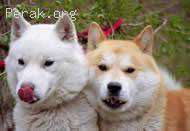
Group
National Kennel Club, Continental Kennel Club, American Pet Registry Inc., American Canine Registry
Native Country
Japan
Other Names
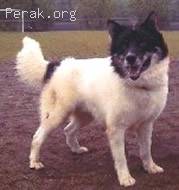
Ainu Dog
Breed Description

Head: Triangular, foxlike. Broad, flat skull and forehead. Distinct stop. Straight nose bridge. Wedge-shaped muzzle. Black nose (flesh color in whites). Tight lips.
Ears: Small, triangular. Held erect and slightly forward.
Eyes: Small, triangular, wide set. Dark brown color.
Body: Strongly constructed. Powerful neck without dewlap. Pronounced withers. Moderately wide loin. Prominent forechest. Deep chest. Belly is well tucked up. Straight, solid back.Nicely sloped croup.
Tail: Set high. Thick. Carried over the back, tightly curled or in the form of a sickle.
Hair: Short, harsh, straight. Slightly longer on the tail. Soft, compact undercoat.
Coat: Brindle (black, red, white, etc.). Black, red, or brown.
Size: 48.5 to 52 cm (19-20.5 in).Bitch: 45.5 to 48.5 cm (18-19 in).
Weight: Approx. 25 kg (55lb).

History

Dating back to 1,000 BC, the Hokkaido Dog is one of the oldest Japanese breeds. The Ainu originated in the mountainous regions of Hokkaido Island and was brought to Japan by the ancient Ainus. This hardy dog was used for hunting large game.

Behavior

This courageous, self-confident, very alert dog is docile and affectionate with his owners. The Hokkaido Dog has a remarkable sense of direction. Firm training is required.

Advice

The Hokkaido Dog requires considerable space and exercise. Regular brushing is necessary.

Function

Sled dog. Hunting dog (large game). Guard dog. Pet.
Ainu_Dog.jpg

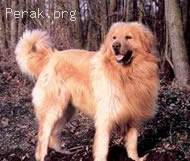
Group
Continental Kennel Club, Fédération Cynologique Internationale, Kennel Club of Great Britain, National Kennel Club, American Pet Registry Inc., American Canine Registry, American Canine Association, Inc.
Native Country
Germany
Breed Description

Head: Robust. Broad, arched forehead. Pronounced stop. Strong, long muzzle. Black lips.
Ears: Triangular, pendulous, hanging flat against the head.
Eyes: Oval. Dark or medium brown color.
Body: Muscular and streamlined. Powerful neck without dewlap. Broad, deep brisket. Straight, solid back. Croup slightly sloped.
Tail: Long, richly clad, reaching just below the hocks. Carried low at rest.
Hair: Long, coarse with slight wave. Short on the head and front of the legs. No streaking or curl. Little undercoat.
Coat: Fawn (blond) becoming lighter on the legs and abdomen. Black. Black and tan (most common) with fawn markings (above the eyes, on the chest, legs, and under the root of the tail). Each of the three varieties allows one small white spot on the forechest and mixture of a few lighter colored hairs, particularly on the tip of the tail.
Size: Dog: 63 to 70 cm Bitch: 58 to 65 cm
Weight: 25 to 40 kg

History

This old breed’s name comes from the German word Hofewart, meaning estate dog, revealing his traditional role as guard dog for German farms in the thirteenth century. His distant ancestors were probably Asian mastiffs. Over the centuries, the breed was gradually abandoned. It wasn’t until the 1920s that the breed was resurrected by crossing German Shepherds, Leonbergers, Newfoundlands, and others. The breed was recognized in 1936 and established as a utility dog by the FCI in 1964. Today, the Hovawart is quite popular in Germany and Scandinavian countries.

Behavior

This weatherproof, hardy, energetic dog loves to swim and is an excellent runner and jumper. He also has a keen sense of smell. The Hovawart is always on the alert, but is never aggressive without cause. This breed can fill several roles. The Hovawart is calm, even-tempered, affectionate with his owners, and gentle with children. He is highly trainable, but training must be firm and undertaken with patience. He rarely barks, but when he does, his bark is loud, deep, and resonant. This breed reaches full maturity around two years of age.

Advice

While this dog can adapt to city living, he needs exercise and room to run. Weekly brushing is sufficient to maintain the coat.

Function

Herder, utility dog: rescue (avalanches), tracker (drugs), guide dog, guard dog, pet.
Hovawart.jpg

Group
Fédération Cynologique Internationale, National Kennel Club, Continental Kennel Club, American Pet Registry Inc., American Canine Registry, American Canine Association, Inc.
Native Country
Hungary
Other Names
Magyar Agar
Breed Description

Head: From the top and sides, resembles a long triangle. Relatively broad skull. Slight stop. Powerful muzzle. Strong jaws. Strong cheeks.
Ears: Set on fairly high, medium-sized, not too thin, semi-pendulous, V-shaped.
Eyes: Medium-sized, preferably brown.
Body: Long, muscular. Neck not very long, well-muscled. Relatively wide brisket. Chest deep, not too flat. Slightly curved loin. Slight tuck-up. Firm, fairly broad, straight back. Broad, slightly sloping croup.
Tail: Long, not too thin, slightly curved at the tip, always carried below the topline.
Hair: Close-lying, not too fine. Thick in winter.
Coat: All colors are allowed, solid, spotted or brindle.
Size: Dog: 65 to 70 cm (25,5-27,5 in).Bitch: slightly smaller.
Weight: Dog: approx. 30 kg (66 lb).Bitch: approx. 25 kg (55 lb).

History

The Hungarian Greyhound is believed to be descended from Asian Greyhounds brought to Hungary in the ninth century by the Magyars and probably crossed with local hounds. In the nineteenth century, crosses were made with the Greyhound to make the breed faster. Originally named the Magyar Agar (agar means “greyhound” in Hungarian).

Behavior

Tough, active, persistent and bold, the Hungarian Greyhound is not as fast as the Greyhound but is hardier and is a tireless tracker. In Hungary, it is used to catch and kill hare and fox. It has a mediocre nose. Gentle, affectionate, calm and loyal, it is a delightful pet. It is fairly independent but even-tempered and needs firm training.

Advice

It can live in the city but needs regular opportunities to run. As with other sighthounds, it should be kept away from cattle. It does not like cold and must be brushed twice a week.

Function

Hunting dog, companion dog.
Hungarian Greyhound.JPG

Group
Canadian Kennel Club, North American Versatile Hunting Dog Association, American Rare Breed Association, United Kennel Club, Fédération Cynologique Internationale, Continental Kennel Club, National Kennel Club, American Pet Registry Inc., American Canine Registry, American Canine Association, Inc.
Native Country
Hungary
Other Names
Hungarian Wirehaired Vizsla, Hungarian Wire-haired Pointing Dog, Drotzörü Magyar Vizsla
Breed Description

Head: Chiseled, dignified. Moderately wide, slightly domed skull. Moderate stop. Straight nosebridge. Broad muzzle. Well-developed nose. Chestnut, fairly tight lips.
Ears: Chiseled, dignified. Moderately wide, slightly domed skull. Moderate stop. Straight nosebridge. Broad muzzle. Well-developed nose. Chestnut, fairly tight lips.
Eyes: Slightly oval, the darker the better, matching coat color. Brown eyelids.
Body: Slightly elongated but powerful. Neck medium in length, well-muscled, slightly curved, without dewlap. Pronounced withers. Chest moderately wide, well let-down. Moderately curved ribs. Level loin. Straight, short back. Slightly rounded croup.
Tail: Set on fairly low, moderately thick. Tip curving slightly upward. Usually docked by one-fourth. Docked by one-third in wirehaired variety.
Hair: Short, dense, straight, harsh. Lying flat and silkier on the ears. Beard on the chin. Short and crisp on the head. Thick, hard eyebrows. Hard and dense on the neck and trunk, 2 to 4 cm long. Dense undercoat. Longer on the backs of the legs. Dense and thick on the tail.
Coat: Dark golden or a shade of sable fawn. Tiny white spots on the chest and feet. Dotting is not a fault.
Size: Shorthaired variety: dog: 56 to 61 cm ( 22-24 in); bitch: 52 to 57 cm (20.5-22.5 in). - Wirehaired variety: dog: 58 to 62 cm (22.8-24.5 in) ; bitch: 54 to 58 cm (21-22.8 in).
Weight: Shorthaired variety: 22 to 30 kg. (48.5-66 lb).- Wirehaired variety: 25 to 32 kg. (55-70.5 lb).

History

The Hungarian Pointing Dog comes in two varieties:- Shorthaired (rövidszörü): This is the older variety. Its ancestors include the Hungarian Pointing Dog, the Turkish Yellow Dog, and the Sloughi. The first specimens with the current comformation appeared by the early eighteenth century. The variety received blood from other hunting dogs, including the German Pointing Dog. The Shorthaired Hungarian Pointing Dog is the more popular variety in France and was recognized by the FCI in 1938.- Wirehaired (drotszörü): This variety dates to the 1930s and is believed to be the result of crosses between the shorthaired variety and the Drahthaar. His ancestors also include the Weimaraner, the Transylvanian Pointing Dog, etc. This variety is very rare in France. Interbreeding the two varieties is forbidden.

Behavior

This lively, very adaptable dog with an excellent nose is skilled on rough terrain and tolerates heat well. He does not search widely, preferring to hunt near his owner. He points precisely, retrieves well, and is a good swimmer. The shorthaired variety has a swifter gallop and is thus preferred in flat areas. The wirehaired variety excels on small quarry, including woodcock, and is used in tracking wounded large game. Both are even-tempered and very comfortable in a family. They need firm but not harsh training.

Advice

He needs space and exercise, as well as regular brushing and checking of the ears.

Function

Hunting dog, companion dog.
Hungarian Pointing Dog.jpg

Group
Fédération Cynologique Internationale, National Kennel Club, Continental Kennel Club, American Pet Registry Inc., American Canine Registry, American Canine Association
Native Country
Norway
Other Names
Hygenhund
Breed Description

Head: Neither heavy nor long, a bit broad. Slightly domed skull. Very pronounced stop. Straight nosebridge. Broad, fairly short muzzle. Tight lips.
Ears: Wide, fairly short, moderately thick. Front edge lying against the cheek.
Eyes: Medium-sized, dark or hazel.
Body: Compact. Strong neck, slight dewlap. Deep, long chest. Loin strong and muscular. No tuck-up. Short, straight, strong back. Long, broad, slightly rounded croup.
Tail: Thick at the base, tapering toward the tip. Carried gaily, but not curled over the back.
Hair: Short, dense, glossy, slightly harsh to the touch.
Coat: Brown or yellowish-red, with or without black shading. Black and tan. The two colors may be combined with white. White with tan and yellow markings or white with black and tan markings. All these colors are of equal value.
Size: Dog: 47 to 55 cm.Bitch: slightly smaller.
Weight: 20 to 25 kg ( 44-55 lb).

History

This superb hunting dog was named after Hygen, the man who developed the breed in the nineteenth century by crossing the German Hölsteiner Hound with other scenthounds. The breed was then crossed with the more lightweight Norwegian Hound. The Hygen Hound is rare outside his native country.

Behavior

This lively breed with great stamina is a distance runner. He can follow a trail to find wounded game. He hunts all sorts of quarry on all kinds of terrain in all types of weather. A fine watchdog, he is also a good companion.

Advice

He needs space and lots of exercise.

Function

Hunting dog.
Hygen_Hound.jpg

Group
Hound Group - American Kennel Club, Continental Kennel Club, Fédération Cynologique Internationale, United Kennel Club, Kennel Club of Great Britain, Canadian Kennel Club, National Kennel Club, New Zealand Kennel Club, The Ibizan Hound Club of the United States, Australian National Kennel Club, American Pet Registry Inc., American Canine Registry
Native Country
Spain
Other Names
Podenco Ibicenco, Ca Eivissencs, Charnigue
Breed Description

Head: Long, narrow, extremely dry. Long, flat skull. Narrow forehead. Stop not pronounced. Long, narrow, slightly Roman convex muzzle. Flesh color nose.
Ears: Medium size. Thin leather. Very mobile and always held rigidly erect. Pointed forward or up.
Eyes: Small, set obliquely in the skull. Clear amber color (caramel color).
Body: Slightly longer than tall. Very dry, muscular, slightly arched neck. Shoulder blades are well laid back. Deep, narrow, long chest. Flat ribs. Arched, powerful loin. Belly is tucked up. Slightly arched, powerfully muscled loin. Long, straight, flexible back.
Tail: Set low, tapers to the tip. Carried in a well curved saber position.
Hair: Smooth, hard, long. Shorthair must be smooth, rather hard, not silky. Wire hair must be hard, coarse, thick, and short on the head. Beard is desirable. Longest hair is the softest, very abundant on the head, and at least 5 cm long.
Coat: Preferably white and red, or solid white or red. Fawn permissible in shorthaired only if the dog is an exceptional specimen.
Size: Dog: 66 to 72 cm (26-28.3 in).Bitch: 60 to 67 cm23.6-26.4 in).
Weight: Dog: approx. 23 kg (50.8 lb).Bitch: approx. 19 kg (42 lb).

History

Pharaoh Hounds, the Ibizan was probably brought to the islands by the Phoenicians, the Carthaginians, and, eventually, the Romans. One of the oldest breeds known, the Ibizan is a very primitive, vigorous dog. At one point, the breed was called the French Hound because it was common in the nineteenth century in the regions of Langedoc, Roussillon, and Provence in France. It became very rare around the 1880s, when use of the Ibizan for hunting hare was outlawed.

Behavior

This tireless, fast, very agile dog is an excellent jumper. He uses his keen sense of smell for sniffing out partridge and his excellent eyesight to spot rabbit as well as hare and large game. He is a good retriever. The Ibizan Hound forms a strong bond with his owner, but he is strong-willed. He is wary of strangers and aggressive with other dogs. Firm training is required.

Advice

It is not recommended that this breed be kept as a house dog. The Ibizan Hound needs considerable exercise and space to run. Regular brushing is required.

Function

Hunting dog, pet.
Ibizan_Hound.jpg